
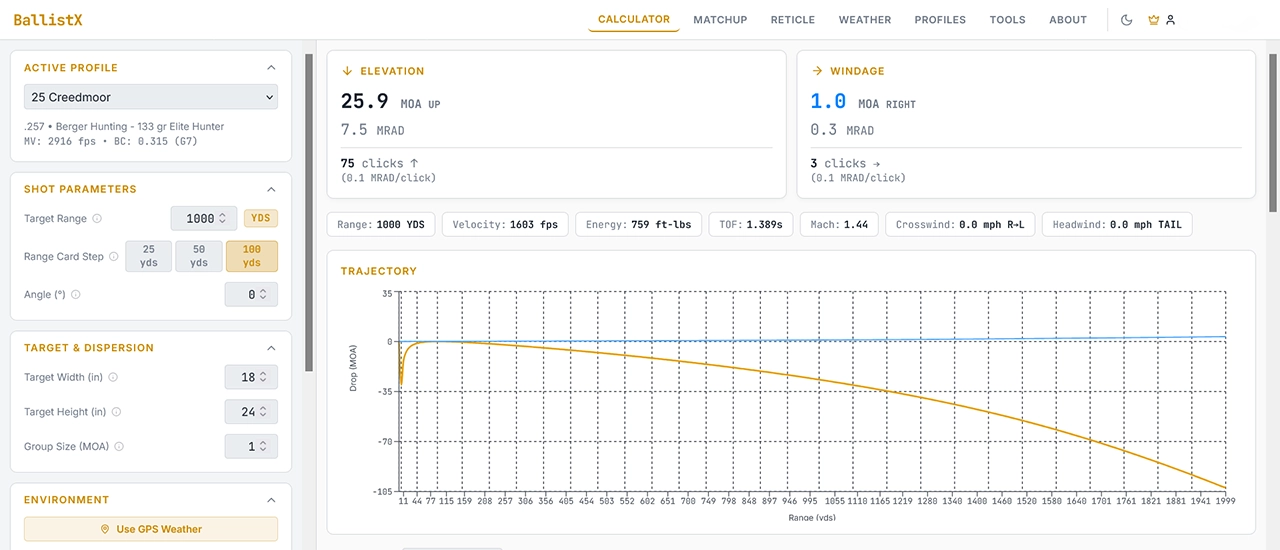
Precision Ballistic Calculator & Long-Range Shooting Guide
Master your long-range precision with our advanced ballistic calculator. Whether you are a competitive shooter or a long-range hunter, calculating accurate ballistic solver data is the difference between a hit and a miss. This tool provides a comprehensive applied ballistics solution to help you build a reliable dope card for any environment.
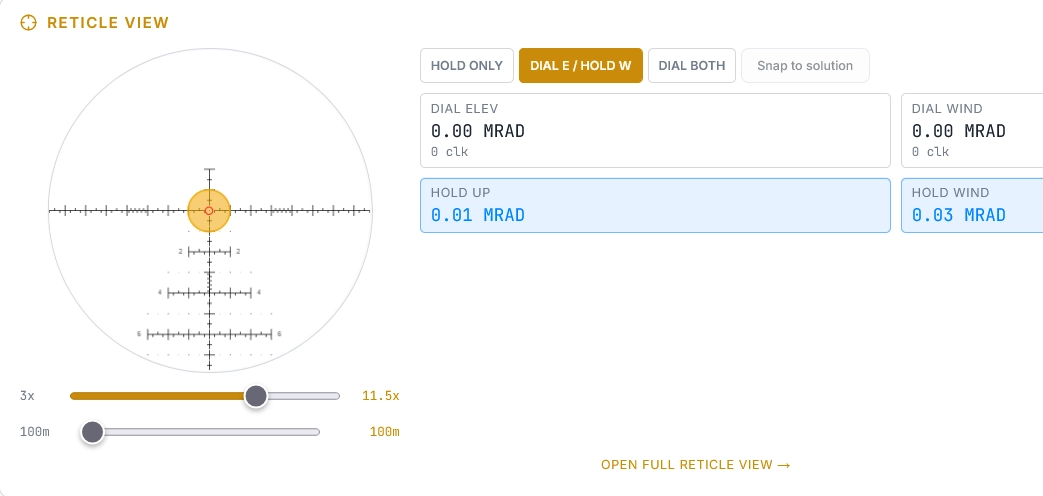
Now featuring the first Wind Drift Comparison Tool ever created.
How to Use the Ballistic Calculator
To get the most accurate firing solution, you must input precise data. Follow these steps to generate your “clicks to dial” for any distance.
Step 1: Input Your Rifle and Bullet Data
Create a new rifle profile:
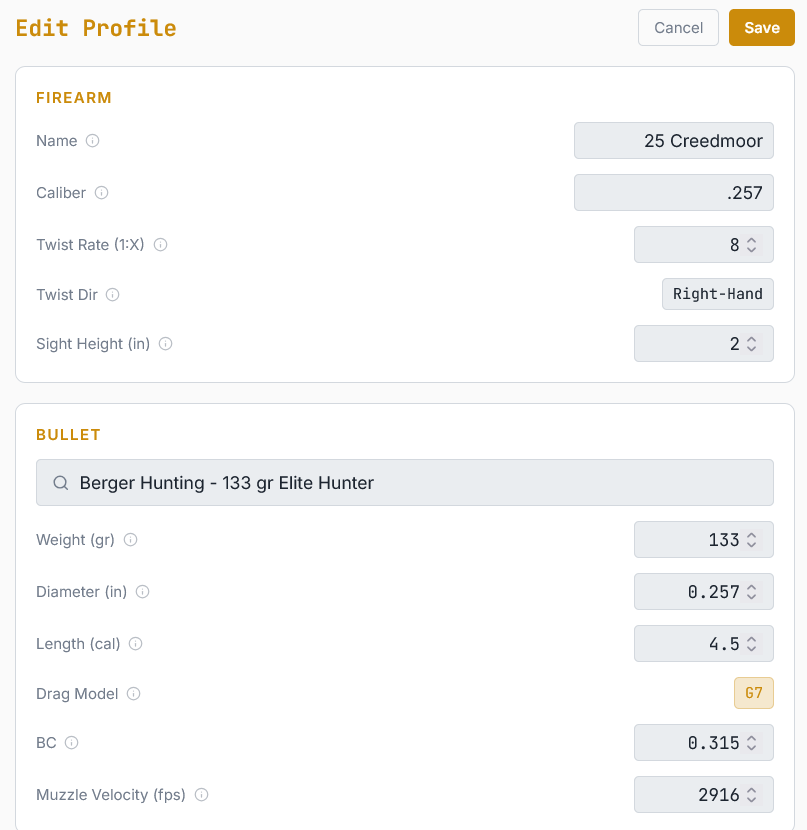
- Muzzle Velocity (FPS): The speed of the bullet as it leaves the barrel. For the best results, use a chronograph to find your average velocity.
- Ballistic Coefficient (BC): This measures how well the bullet cuts through the air. Most manufacturers provide G1 or G7 BC values. (Tip: Use G7 for modern long-range boat-tail bullets).
- Bullet Weight (Grains): The total mass of your projectile.
- Sight Height (Inches): The distance from the center of your rifle’s bore to the center of your scope’s tube.
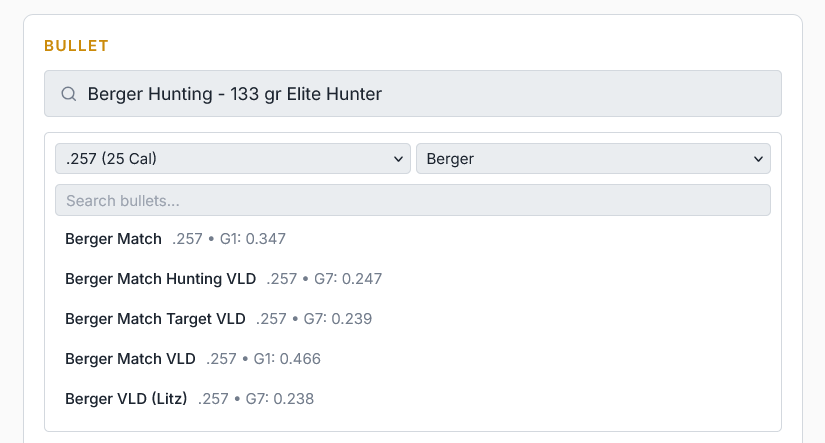
All these parameters automatically get filled for you when you select the bullet by caliber and manufacturer on the bullet card below the rifle card:
Step 2: Set Your Zero and Target Parameters
- Zero Range: Usually 100 yards or 200 yards. This is the distance where your point of aim meets your point of impact.
- Target Distance: The range to your target.
- Target Angle: If shooting up or downhill, the look angle significantly affects bullet drop.
Step 3: Account for Environmental Factors
Atmospheric conditions change air density, which directly impacts bullet drag.
- Temperature: Cold air is denser than warm air, causing more drag.
- Barometric Pressure / Altitude: Higher altitudes have thinner air, resulting in less bullet drop.
- Humidity: While it has a smaller effect, high humidity actually decreases air density slightly.
Step 4: Calculate Windage
- Wind Speed (MPH): The velocity of the wind at your location and downrange.
- Wind Angle: A “full value” wind (90 degrees to your shot) requires the most compensation, while a “no value” wind (headwind or tailwind) primarily affects vertical drop.
Understanding “Dope Cards” and “Clicks to Dial”
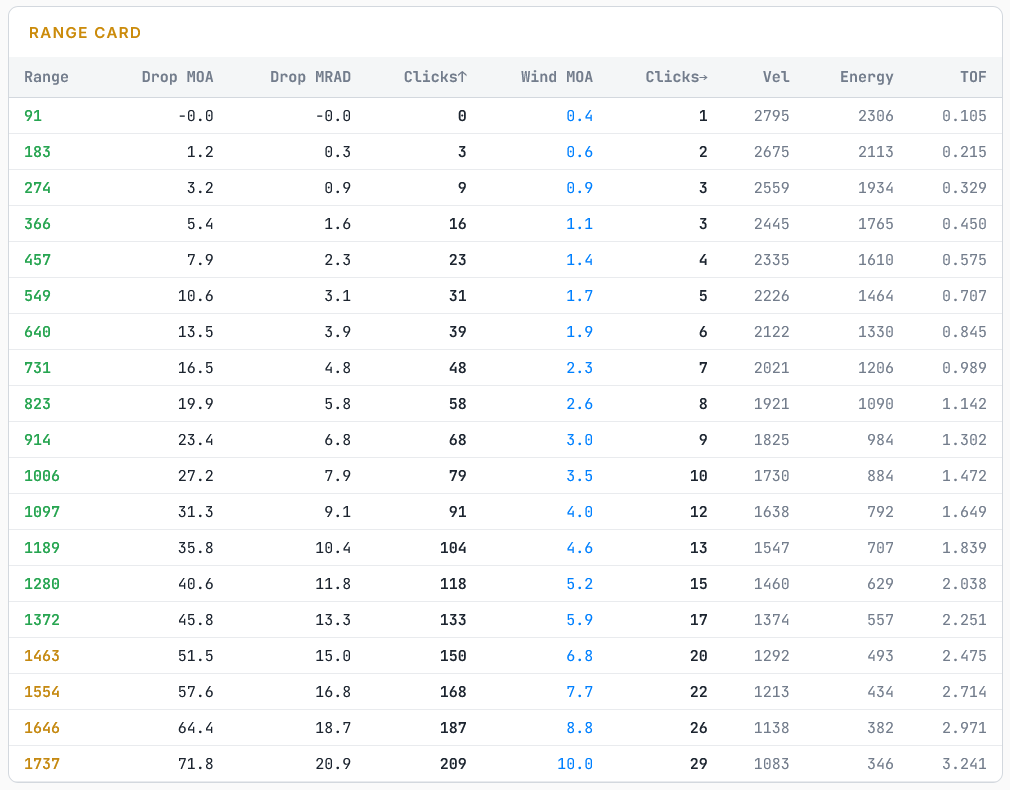
A dope card (Data Observed from Previous Engagement) is a reference table that tells you exactly how much to adjust your scope for different ranges. Your range card on the calculator above is also your DOPE card for that rifle with that load and it can be exported as a PDF and printed to keep with you in the field or at a shooting competition.
How Many Clicks to Dial?
Most precision scopes use either MOA (Minutes of Angle) or MRAD (Milliradians/Mils).
- MOA Scopes: Typically 1 click = 1/4 MOA. At 100 yards, 1 MOA is roughly 1 inch.
- MRAD Scopes: Typically 1 click = 0.1 Mil. At 100 yards, 0.1 Mil is roughly 0.36 inches.
Popular Calibers: Drop and Windage Examples
Below are calculated dope values at 500 yards for four common factory loads. Every figure was generated with the Trajek solver above, so you can reproduce any row yourself by entering the same inputs.
Conditions for all rows: 100 yard zero · 1.8 in sight height · ICAO standard atmosphere at sea level (59 °F, 29.92 inHg) · 10 mph full-value crosswind · spin drift and Coriolis excluded.
| Caliber | Load | BC | Muzzle velocity | Drop | Clicks (¼ MOA) | Mils | 10 mph wind |
|---|---|---|---|---|---|---|---|
| 6.5 Creedmoor | 143gr ELD-X | 0.292 G7 | 2700 fps | 54″ | 41 | 3.0 | 17″ |
| .308 Winchester | 175gr Sierra MatchKing | 0.243 G7 | 2600 fps | 63″ | 48 | 3.5 | 22″ |
| .223 Remington | 55gr FMJ-BT | 0.269 G1 | 3240 fps | 50″ | 38 | 2.8 | 33″ |
| .300 Winchester Magnum | 190gr Sierra MatchKing | 0.275 G7 | 2900 fps | 46″ | 35 | 2.6 | 16″ |
A note on the .223. It shoots flatter than the .308 out to 500 yards — it starts 640 fps faster — but it drifts half again as much in the same wind. That trade is the single most misunderstood thing about the cartridge. A 55gr FMJ has a low ballistic coefficient, so it sheds velocity quickly and spends longer in the wind despite its head start. If you shoot .223 past 300 yards, wind is your limiting factor, not drop.
A note on ballistic coefficients. The 6.5 Creedmoor row uses the Applied Ballistics measured G7 of 0.292 rather than Hornady’s published 0.315. Manufacturer BCs are generally measured over a shorter, faster part of the trajectory and tend to run optimistic; independently measured values are more conservative and usually closer to what you’ll see on paper at distance. Using Hornady’s 0.315 instead gives 53″ of drop and 15″ of wind — about 12% less drift than the measured value predicts. This is exactly why you should true your data at distance rather than trusting any published number.
Frequently Asked Questions (FAQ)
Start Calculating Now
Use our ballistic solver above to generate your custom dope card. Simply fill in your rifle’s specs and environmental data to get instant, accurate elevation and windage adjustments for any caliber.
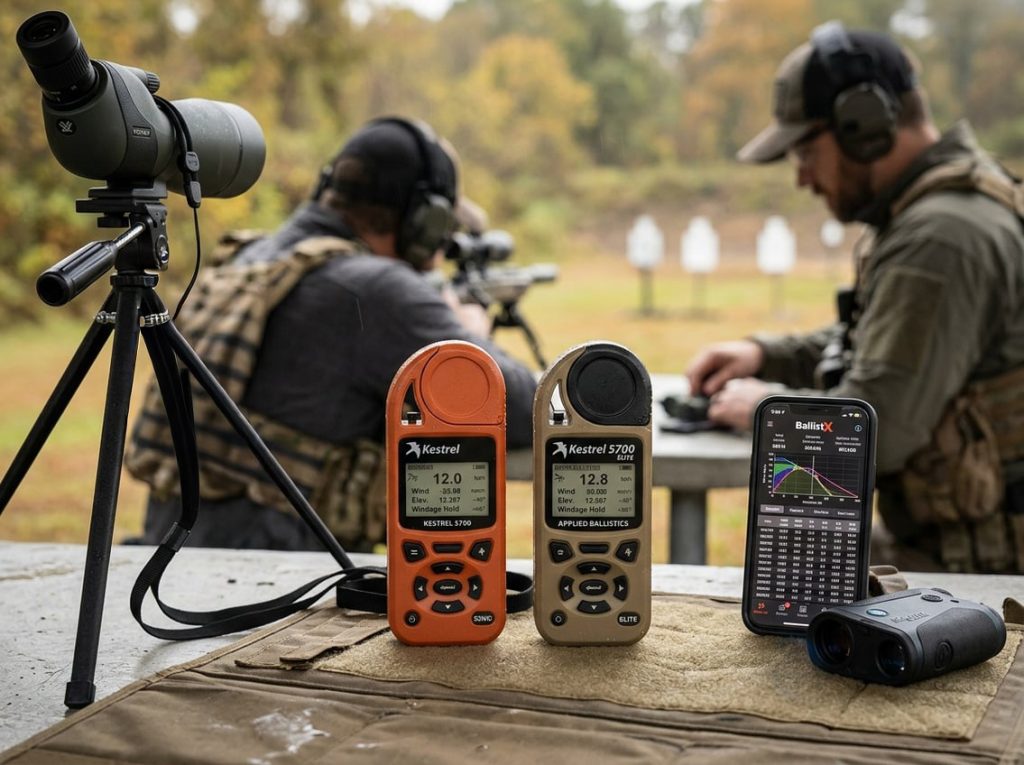
Kestrel 5700 vs Elite: Do You Really Need a $700 Weather Meter?
If you are getting serious about long-range shooting, you’ve probably been told that you must…
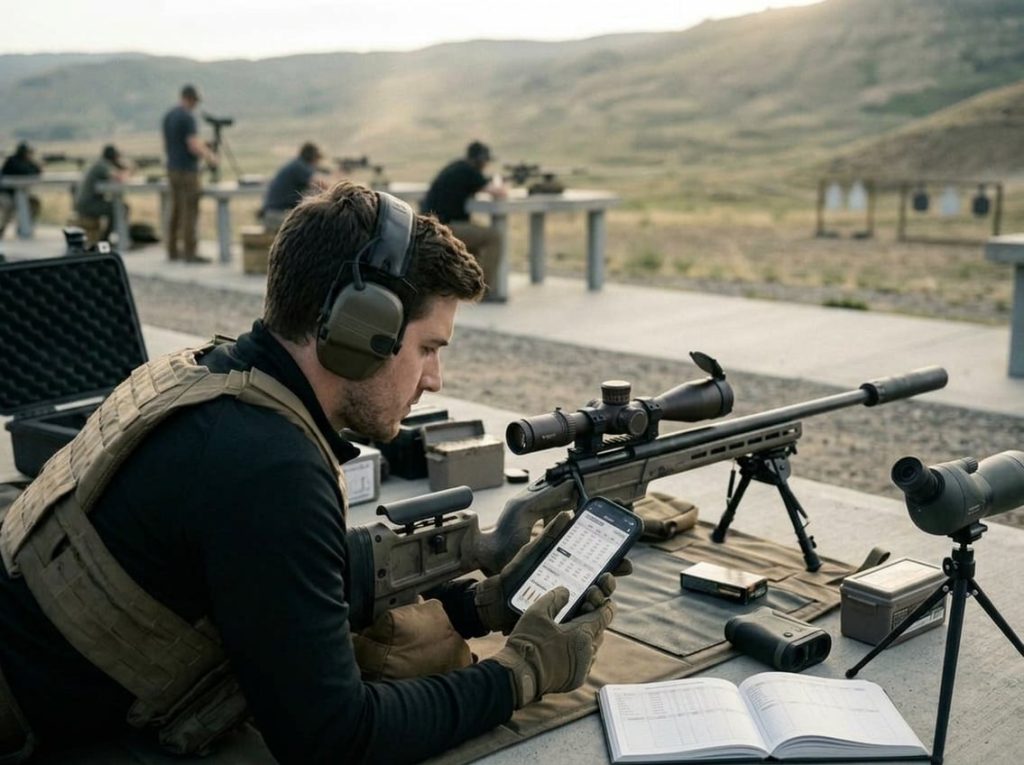
The Best Strelok Pro Alternatives in 2026 (Since the App Store Ban)
If you’ve recently upgraded your phone, you probably discovered a massive problem: Strelok Pro is…