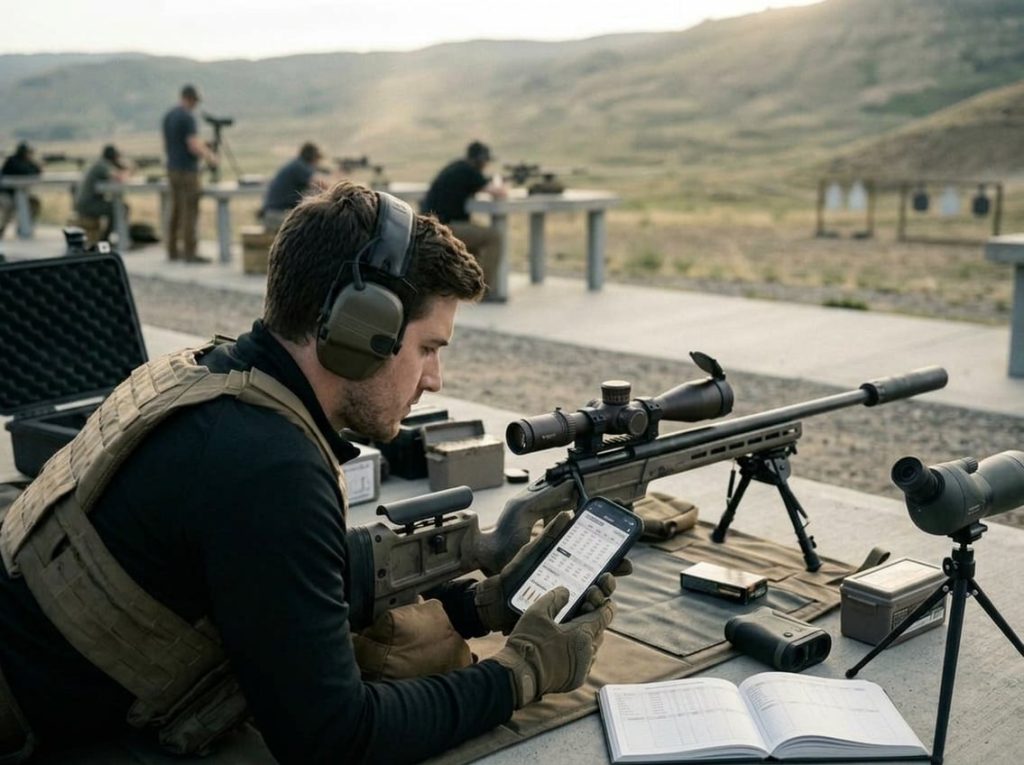
If you are getting serious about long-range shooting, you’ve probably been told that you must buy a Kestrel. Walk the firing line at any PRS match or ELR event, and you will see Kestrels hanging from tripods and strapped to spotting scopes.
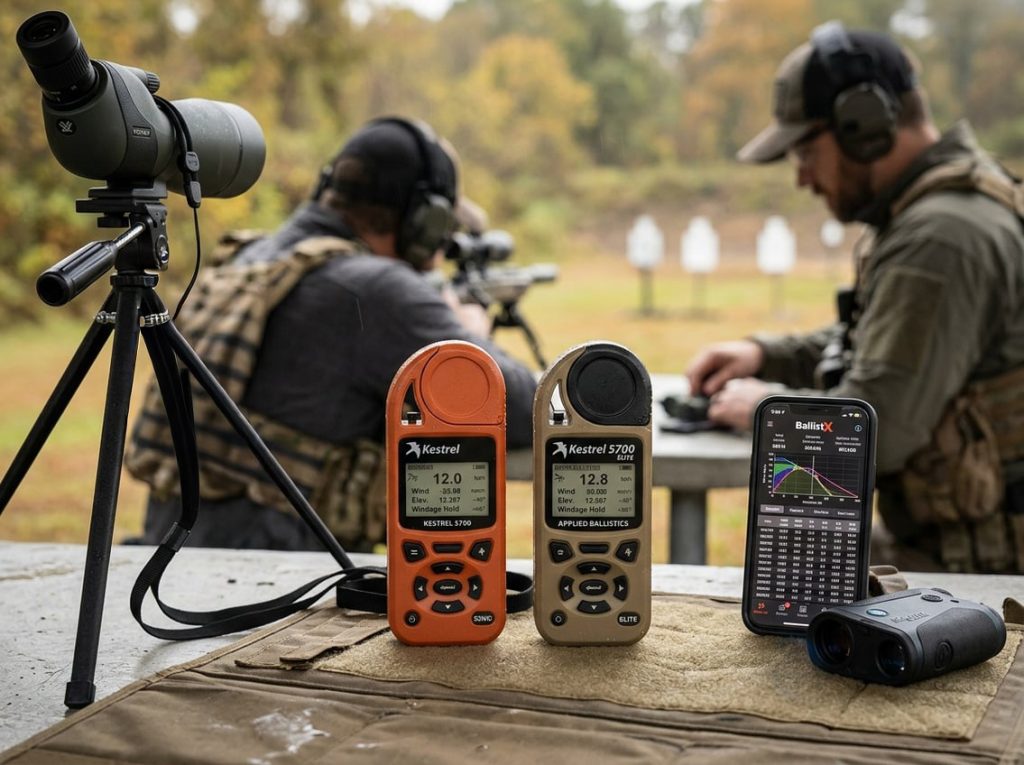
Shooters inevitably end up comparing the Kestrel 5700 Ballistics Weather Meter (around $400) against the flagship Kestrel 5700 Elite with Applied Ballistics (around $700).
But before you drop the price of a custom rifle barrel on a pocket calculator, you need to ask a hard question: Do you actually need dedicated hardware, or is a modern software app like Trajek a smarter choice?
Here is the no-nonsense breakdown of the Kestrel 5700 vs Elite, and why 95% of shooters are better off using their smartphones.
The Hardware Differences: Kestrel 5700 vs 5700 Elite
Both the standard 5700 and the Elite share the exact same physical chassis. They are both waterproof (IP67), drop-tested (MIL-STD-810G), and feature the exact same environmental sensors for wind, temperature, pressure, and humidity.
The difference is entirely in the software loaded onto the device.
Kestrel 5700 Ballistics (Standard)
- The Solver: Uses a simplified version of the Applied Ballistics (AB) solver.
- Drag Models: Relies on standard G1 and G7 Ballistic Coefficients.
- Limitations: It limits the number of custom rifle profiles you can store (usually 3) and restricts the number of targets you can build in a stage card. It does not account for Aerodynamic Jump or Spin Drift.
- Who it’s for: The shooter who wants environmental hardware but only shoots standard cartridges at moderate long-range distances.
Kestrel 5700 Elite with Applied Ballistics
- The Solver: Runs the full, unrestricted Applied Ballistics solver.
- Drag Models: Unlocks Custom Drag Models (CDMs). Instead of relying on a static G1/G7 BC, CDMs use Doppler radar-measured drag profiles for specific bullets, making them incredibly accurate as the bullet transitions through transonic flight.
- Advanced Features: Calculates Spin Drift, Aerodynamic Jump, and Coriolis effect. Allows for up to 30 custom rifle profiles and complex multi-target stage cards.
- Who it’s for: The extreme long-range (ELR) shooter pushing past 1,500 yards where secondary aerodynamic effects matter.
The Problem with Dedicated Hardware
The Kestrel Elite is an incredible piece of engineering, but it suffers from a massive bottleneck: the user interface.
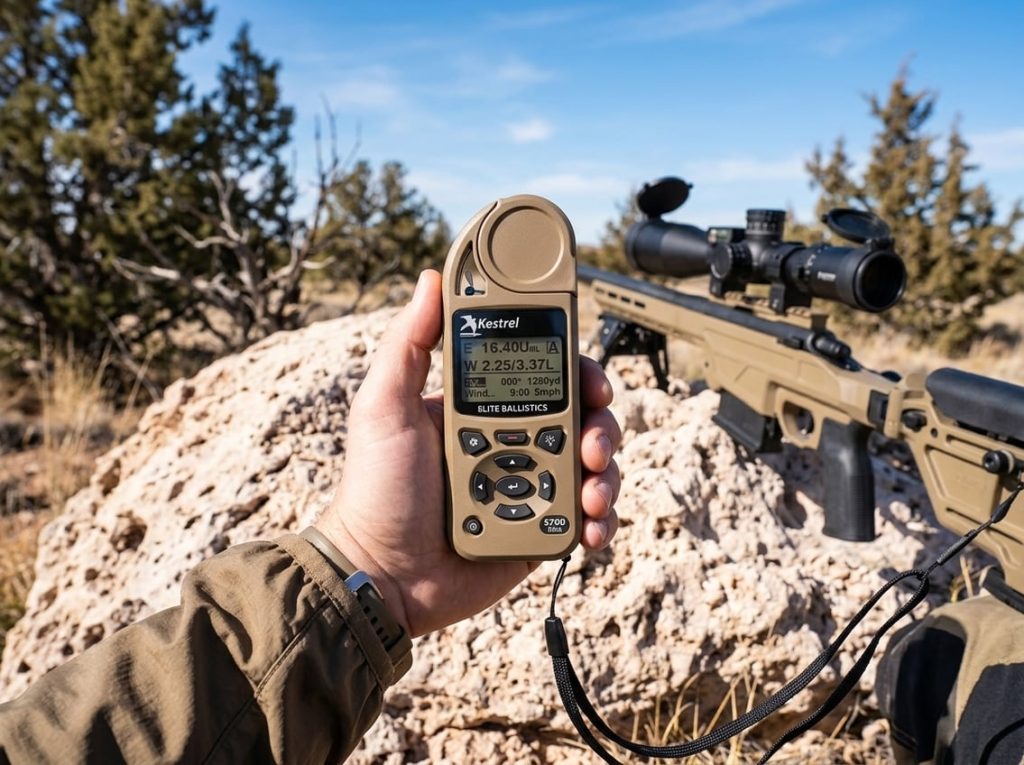
You are paying $700 for a device with a low-resolution, monochrome LCD screen and a clunky up/down/enter button pad. Building a rifle profile directly on a Kestrel is a miserable experience. Most users end up downloading the Kestrel LiNK app on their phone just to manage the data on the device.
If you have to use your phone to manage the Kestrel anyway, why are you paying $700 for the solver?
The Software Alternative: Trajek
Your smartphone has a vastly superior processor, a high-definition color touchscreen, and constant cloud connectivity. Instead of buying a Kestrel, you can run a modern, cloud-based solver like Trajek directly on your phone.
Here is why Trajek beats a Kestrel for the vast majority of shooters:
- Speed on the Firing Line: With Trajek, adjusting target distance or wind speed takes a fraction of a second on a touchscreen. On a Kestrel, you are mashing rubber buttons to scroll through menus while the wind condition changes.
- Visual Interface: Trajek displays your drop chart, truing data, and holdovers in a clear, instantly readable format.
- Cloud Backups: If you drop your Kestrel in a lake, your $700 hardware and all your rifle profiles are gone. If you drop your phone in a lake, you just log into Trajek on a new device, and your data is instantly restored.
- The Cost: You can buy a lifetime of premium software and a ton of reloading components for the cost of a Kestrel 5700 Elite.
“But what about the environmental sensors?”
This is the most common defense of the Kestrel. Yes, you need accurate wind, temperature, and station pressure data to make a long-range shot.
However, you do not need a $700 solver to get that data. You can buy a basic Kestrel 2500 or WeatherFlow WEATHERmeter for under $100 to capture your exact on-site atmospherics, and then plug those numbers into Trajek. You get the exact same environmental accuracy paired with a vastly superior user interface.
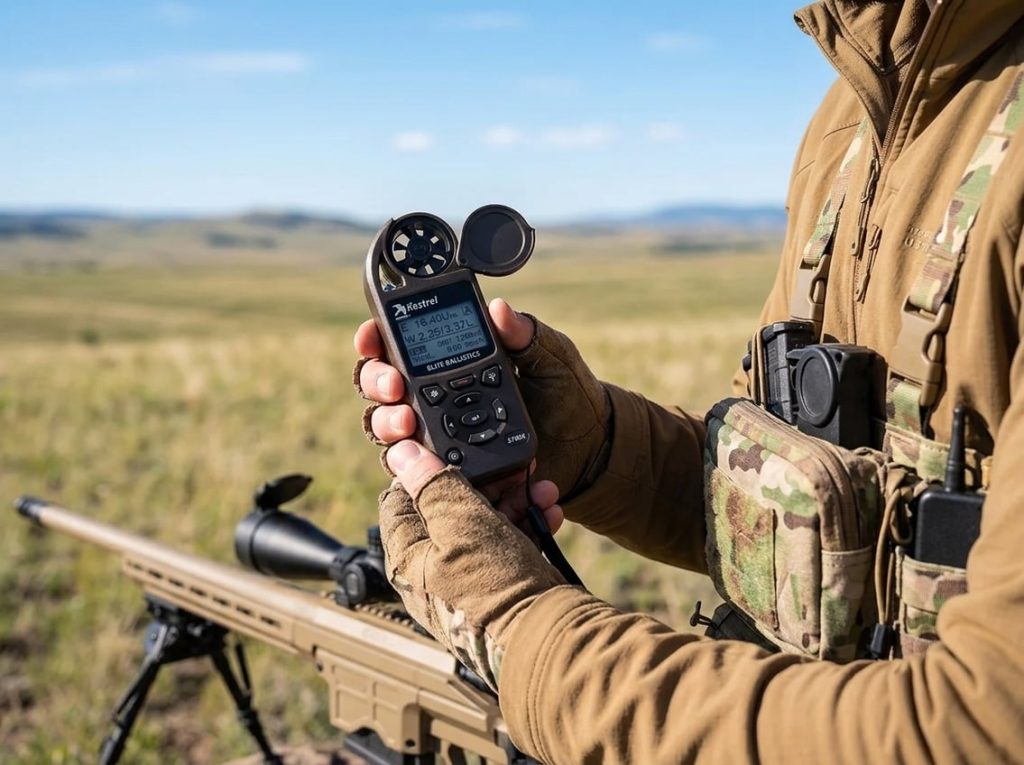
The Verdict: Which Should You Choose?
Buy the Kestrel 5700 Elite if:
- You shoot PRS matches in driving rain, mud, and snow where a smartphone touchscreen will fail.
- You are shooting ELR distances (1,500 to 2 miles+) and absolutely require Applied Ballistics Custom Drag Models.
- You are running a laser rangefinder (like a Terrapin X or Wilcox) that beams data directly to the Kestrel via Bluetooth.
Use Trajek if:
- You shoot at the range, hunt in normal conditions, or shoot local club matches.
- You want an intuitive, fast user interface.
- You want your rifle profiles safely backed up to the cloud.
- You’d rather spend $700 on a better scope, more powder, or a premium reloading scale.
Stop fighting with rubber buttons and monochrome screens. [Set up your rifle profiles in Trajek today] and see how much faster your workflow on the firing line can be.
Kestrel 5700 Applied Ballistics vs. Hornady 4DOF
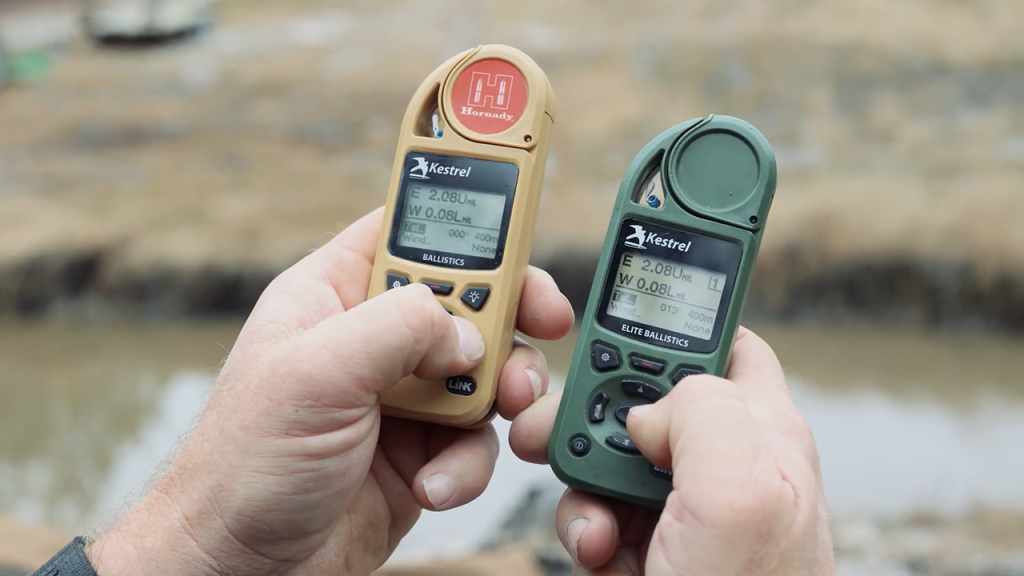
When you purchase a Kestrel 5700, you have to make a secondary choice: do you want the device loaded with the Applied Ballistics (AB) solver or the Hornady 4DOF solver?
The hardware is exactly the same, and both models cost roughly the same amount. The difference lies entirely in the math engine running inside the device. Here is the technical difference and how to choose.
The Applied Ballistics (AB) Engine
The Applied Ballistics solver is the industry standard. It relies on standard G1 and G7 Ballistic Coefficients, and (if you upgrade to the Elite version) Custom Drag Models (CDMs).
- How it works: It uses Doppler radar data to track exactly how a bullet slows down over distance.
- The Advantage: The absolute biggest advantage of the AB engine is its massive, universal bullet database. It doesn’t matter if you shoot Berger, Sierra, Nosler, or a boutique custom bullet—the AB library has data for it.
- The Downside: It requires you to input a significant amount of data (muzzle velocity, zero range, sight height, twist rate) and requires truing at distance to get perfectly dialed in.
The Hornady 4DOF Engine
Hornady’s 4DOF (Four Degrees of Freedom) solver takes a completely different mathematical approach. It completely throws out standard Ballistic Coefficients (G1/G7).
- How it works: Instead of comparing a bullet’s flight to a standard mathematical model (which is what a BC does), 4DOF calculates the exact aerodynamic drag based on the physical shape, mass, and center of gravity of the specific bullet. It calculates the bullet’s movement in four dimensions: windage, elevation, range, and the bullet’s pitch/yaw (angle of attack) relative to its trajectory.
- The Advantage: For the bullets it supports, 4DOF is incredibly accurate right out of the box, particularly at extreme long ranges where standard BCs begin to fail as the bullet transitions through the transonic zone. It requires less truing than the AB solver.
- The Downside: You are locked into the Hornady ecosystem. While Hornady has added non-Hornady bullets to the 4DOF library (like some Sierra and Berger projectiles), the library is vastly smaller than Applied Ballistics. If you shoot a wildcat cartridge or a projectile that isn’t in the 4DOF database, the device is useless to you.
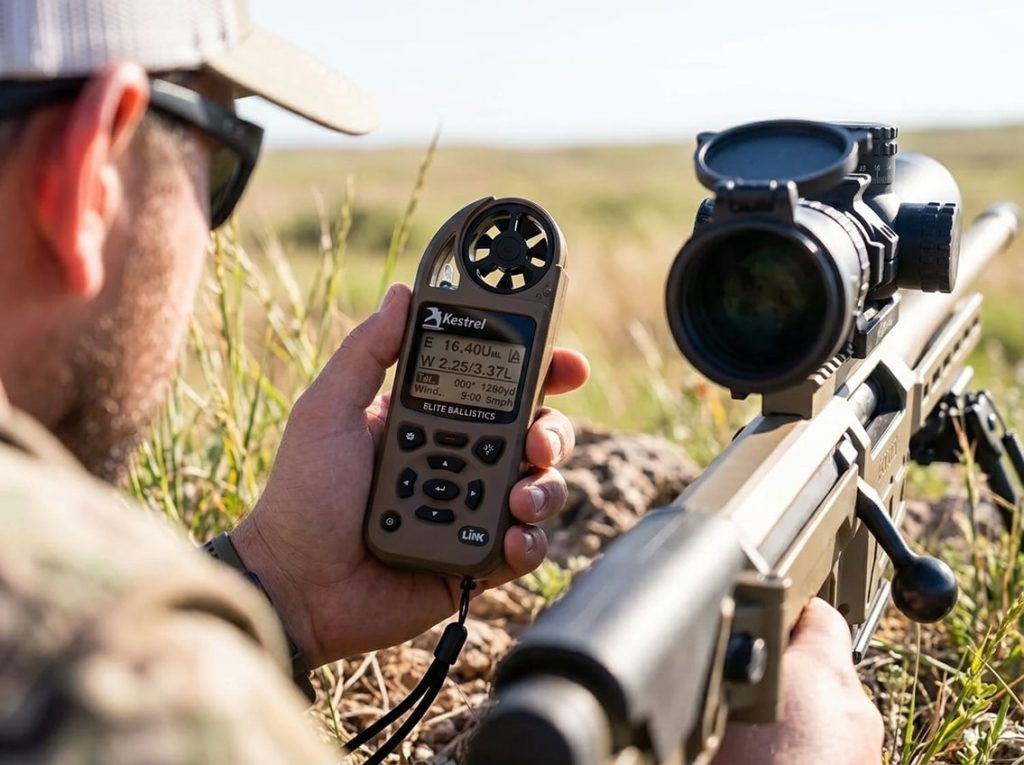
Which One Should You Choose?
Choose the Hornady 4DOF Kestrel if:
- You almost exclusively shoot Hornady bullets (like the ELD-M, ELD-X, or A-Tip) or factory Hornady ammunition.
- You want an incredibly accurate solver out of the box with minimal truing required.
- You are shooting extreme long range (ELR) with supported bullets and want aerodynamic jump and spin drift calculated automatically based on the bullet’s physical profile.
Choose the Applied Ballistics Kestrel if:
- You shoot a wide variety of bullet brands (Berger, Sierra, Nosler, Barnes, etc.).
- You want the flexibility to build custom profiles for wildcat cartridges.
- You are deeply integrated into the larger precision shooting community, as AB is the “universal language” used by most instructors and spotters.
The Software Alternative: Remember, before you buy either of these hardware devices, you can test both solvers on your phone. You can download the Hornady 4DOF app for free, and you can run a highly advanced external ballistics solver using Trajek. Test the user interfaces and the drop charts on your phone before you commit $400+ to dedicated hardware.
Frequently Asked Questions

AJ Deysel is a competitive rifle shooter in the PRS and NRL Hunter series, a lifelong hunter, and a recognized ballistics specialist whose load development expertise has been featured by industry leaders like Hornady. He is the founder and lead editor of LoadDevelopment.com. Read more about AJ or view our Editorial & Testing Guidelines.