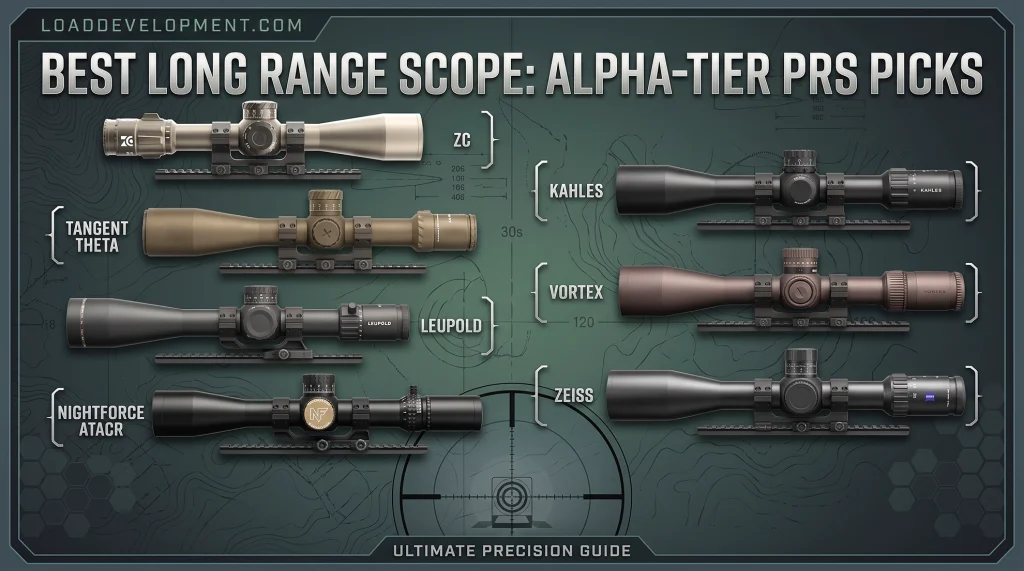
Most hunters overthink glass and underthink the system it sits on. The best hunting scope for you is the one that matches your rifle’s weight, your realistic shooting distance, and whether you plan to dial elevation or hold. Everything else is marketing.
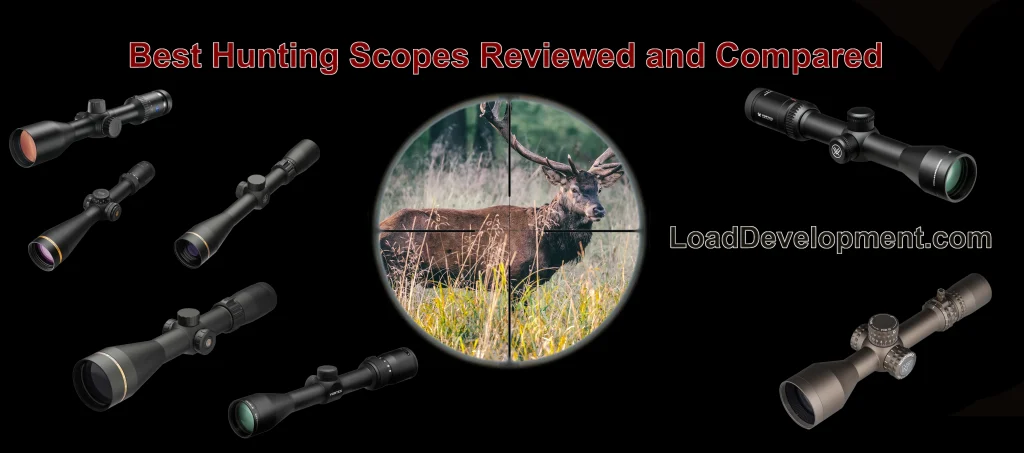
If you hunt inside 300 yards in timber, a 3-9×40 with capped turrets and a duplex reticle will do more for you than a 5-25x first focal plane scope you never learn to run. If you hunt open country and intend to dial a verified solution, you need repeatable turret tracking far more than you need another millimeter of objective lens.
I shoot PRS and I hunt. Those two disciplines pull optics in different directions, and most riflescopes marketed as hunting scopes are a compromise between them. This piece is a candid look at six hunting optics I would actually put on a rifle, plus the setup work that separates a scope that works from one that just looks good on a spec sheet.
At LoadDevelopment.com, the whole point is connecting the optic to the rifle, cartridge, and a verified trajectory. A scope only earns its keep when your load data is real, and that is where our ballistics calculators, cartridge pages, and bullet database do the heavy lifting.
Choose the Right Tool Before Chasing Features
The three variables that decide a scope purchase are magnification range versus terrain, weight versus low-light performance, and whether your rifle and load are actually proven. Get those settled and the shortlist writes itself.
Match Magnification Range to Hunting Distance and Terrain
Most big game hunting in the U.S. happens under 300 yards. A 3-9x or 2.5-10x variable optic covers that with room to spare, and the wide field of view at the bottom end matters when an animal appears at 40 yards and you have three seconds.
Western big game changes the math. A 4.5-14x, 4-16x, or 3-18x gives you enough magnification to read a shoulder crease at 500 yards without turning the image into mirage soup.
Here is the practical guidance I give people:
- Timber and stand hunting, 25 to 250 yards: 2-7x or 3-9x, 40mm objective lens
- Mixed terrain, 50 to 400 yards: 3-12x or 4-14x, 40-44mm objective lens
- Open country, 200 to 700 yards: 4-16x, 3-18x, or 4.5-22x, 44-50mm objective lens
A versatile hunting scope lives in the middle. Long-range hunting scopes above 20x are specialist tools, and most of the time you will still shoot them at 12x because heat shimmer eats resolution.
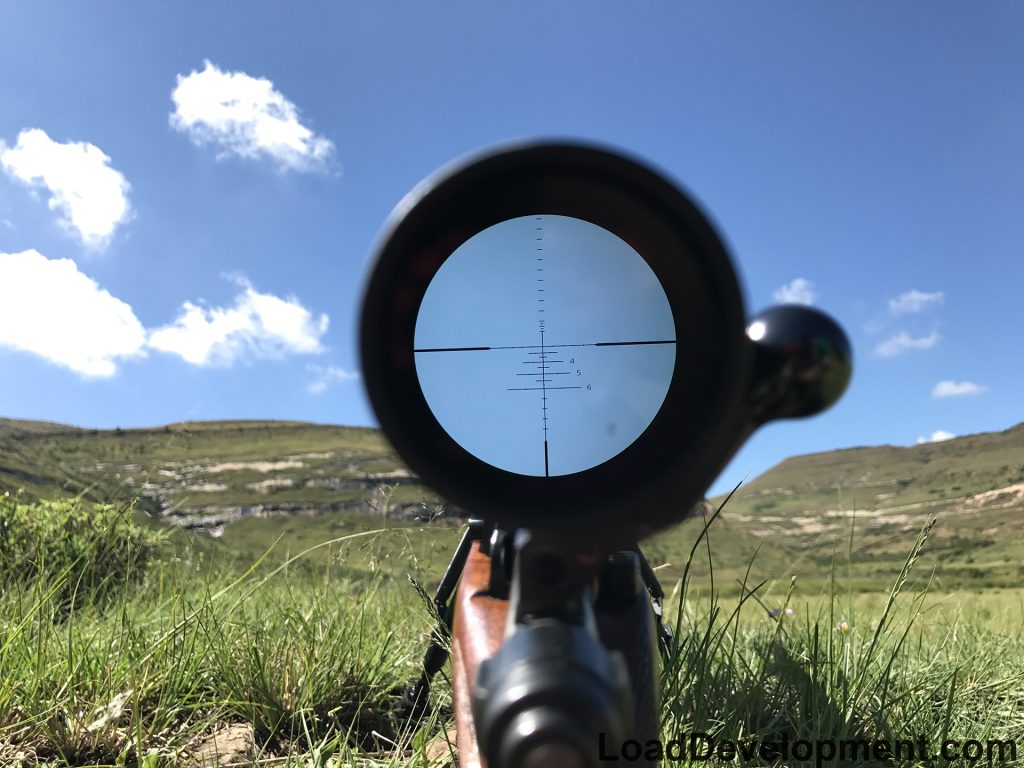
Decide Whether Weight, Low-Light Performance, or Dialing Matters Most
You cannot maximize all three. A 50mm objective lens and a 34mm tube buy you light transmission and elevation adjustment range at the cost of a half-pound and a taller mount.
Exit pupil is the number worth knowing: objective diameter divided by magnification. A 40mm objective at 10x gives a 4mm exit pupil, which is fine at legal light for most eyes. Push that same scope to 14x and you drop to 2.9mm, and the picture dims noticeably in the last ten minutes of shooting light.
Glass quality and coatings matter more than raw objective size. Good multi-coated lenses on a 42mm tube will beat mediocre glass on a 56mm every time.
Eye relief and eye box deserve equal weight. A scope with a forgiving eye box lets you find the picture from an awkward field position, and that is worth more than a marginal gain in resolution.
Start With a Verified Rifle, Load, and Zero
No scope fixes an unverified load. If you do not know your true muzzle velocity, your ballistic coefficient, and your actual zero distance, dialing is guesswork with expensive turrets.
Chronograph your hunting load, confirm your zero at the range, and run the numbers through a real solver. The internal and external ballistics calculators at LoadDevelopment.com exist for exactly this, and the bullet database will give you the BC values you need to build a trajectory you can trust.
Lightweight and Set-and-Forget Picks
Leupold still owns the lightweight hunting rifle scopes category for good reason: their 1-inch tube scopes hold zero, weigh little, and the Custom Dial System solves elevation without adding an exposed turret you have to manage. These two cover mountain rifles and woods rifles respectively.
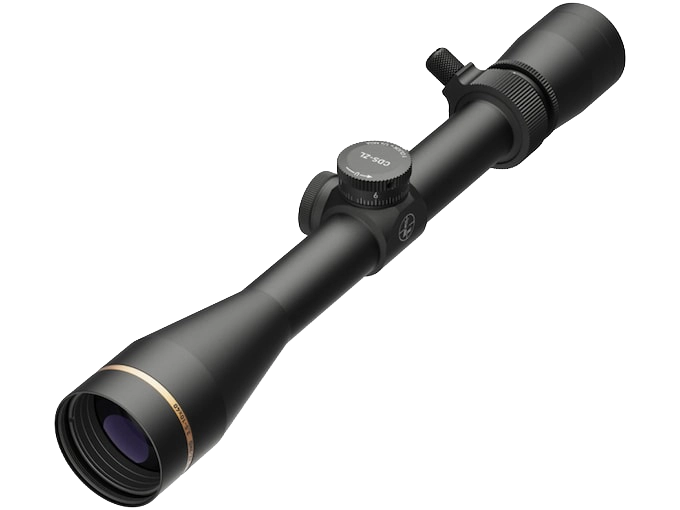
Leupold VX-3HD 4.5-14×40: Best Lightweight Mountain Scope
At roughly 15 ounces, this is the scope I reach for on a 6.5-pound mountain build where every ounce gets carried. The 40mm objective lens and 1-inch tube keep the mount low and the rifle balanced.
The CDS-ZL dial is the point. You send Leupold your verified velocity and conditions, they cut a custom turret matched to your load, and you dial a yardage number instead of counting MOA clicks. It works, but understand what it is: a hunting turret with limited travel, not a precision scope elevation turret meant for constant dialing across a range session.
The duplex or FireDot reticle sits in the second focal plane, so subtensions are only true at max power. Glass is honest for the price, and low-light performance is respectable through about 10x.
Best for: backcountry rifles, one dial per season, hunters who want simplicity.
When you use the link above to shop for one of the products, we receive a small commission from the sale, at no extra cost to you. This helps us keep this site going, and does not affect the price you would pay usually in any way whatsoever.
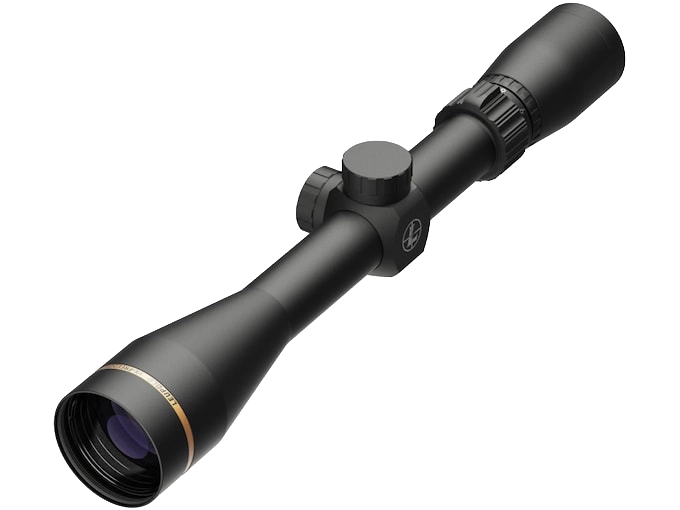
Leupold VX-Freedom 3-9×40: Best Set-and-Forget Woods Scope
This is the most forgiving scope on the list. Generous eye relief, a wide eye box, capped turrets, and a duplex reticle that disappears when you need to just put the crosshair on the shoulder.
Under 12 ounces on a 1-inch tube, it does not fight a light rifle. Zero it at 200 yards, cap the turrets, and forget it exists.
The tradeoff is honest: glass is entry-level, and past 9x you are not getting the resolution to judge a small target at distance. For whitetails inside 250 yards, that has never cost me an animal.
Best for: deer rifles, budget builds, hunters who hold rather than dial.
When you use the link above to shop for one of the products, we receive a small commission from the sale, at no extra cost to you. This helps us keep this site going, and does not affect the price you would pay usually in any way whatsoever.
Crossover and Budget Options for Hunters Who Dial
Once you commit to dialing elevation, a first focal plane scope with exposed turrets and a zero stop becomes worth the weight penalty. These two Vortex Optics models bracket that category from premium crossover down to value entry.
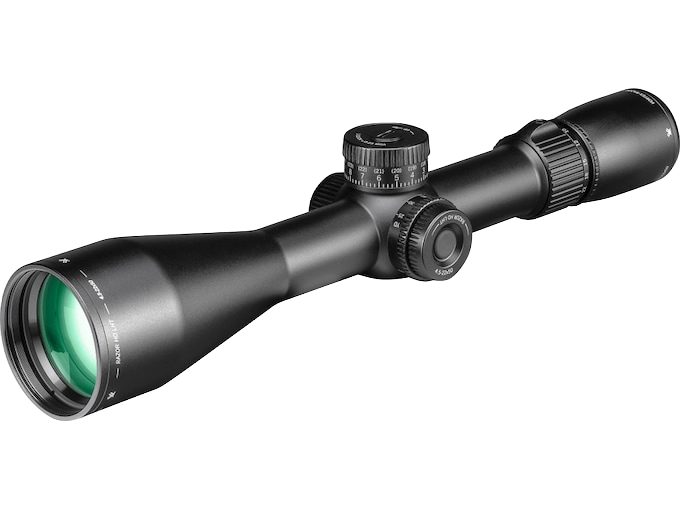
Vortex Razor HD LHT 4.5-22×50 FFP: Best Crossover Scope
At 21.7 ounces, the LHT is the closest thing to a genuine crossover between a hunting rifle scope and a precision optic. The 30mm tube, 50mm objective lens, and side focus parallax adjustment give you real long-range shooting capability without a two-pound scope.
The eye box is generous for a first focal plane scope in this magnification class, which matters more than most reviewers admit. Awkward prone position on a sidehill, and you still find the picture.
The XLR-2 reticle in MOA or MRAD gives usable holdovers at any power, and the RevStop zero stop returns you to your hunting zero by feel. Turret tracking has been consistent in my experience, though I still box-test every scope I mount.
Best for: western big game hunters who practice at distance and dial.
When you use the link above to shop for one of the products, we receive a small commission from the sale, at no extra cost to you. This helps us keep this site going, and does not affect the price you would pay usually in any way whatsoever.
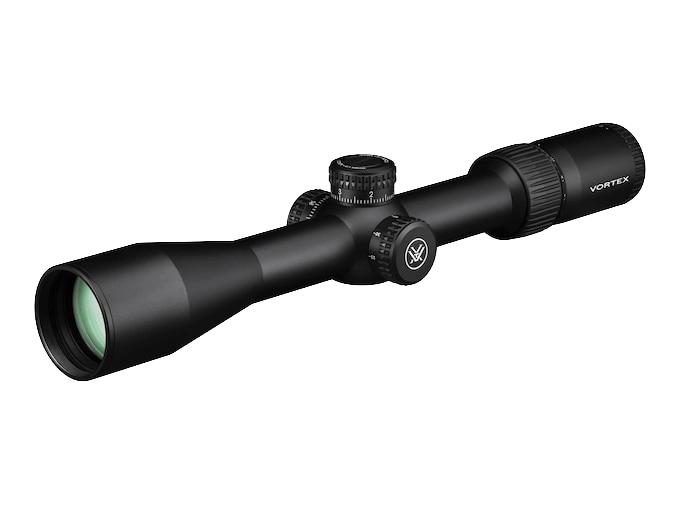
Vortex Diamondback Tactical 4-16×44 FFP: Best Budget First-Focal-Plane Option
This is the value entry point into a first focal plane reticle with exposed elevation and windage turrets. For a hunter who wants to learn dialing without spending a thousand dollars, it is a reasonable starting place.
Two honest limitations. There is no zero stop, so you count revolutions or mark your turret with tape, and image quality softens noticeably at 16x, especially at the edges. Owner feedback on tracking has been generally positive, but that is anecdotal user experience, not lab verification, so run your own box test.
Best for: first FFP scope, budget crossover rifles, learning MRAD or MOA holdovers.
When you use the link above to shop for one of the products, we receive a small commission from the sale, at no extra cost to you. This helps us keep this site going, and does not affect the price you would pay usually in any way whatsoever.
Premium Durability and Low-Light Performance
Above roughly $1,200 you stop paying for features and start paying for mechanical reliability and glass. The Nightforce NX6 and Zeiss Conquest V4 represent two different answers to that spend.
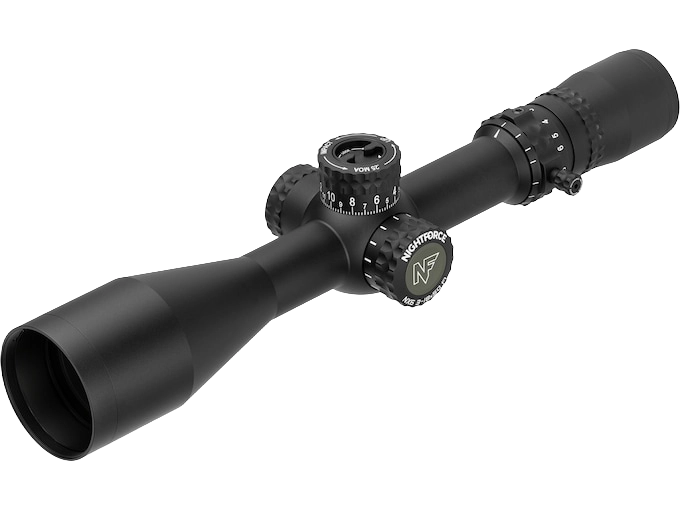
Nightforce NX6 3-18×50 F1: Best Premium Heavy-Duty Scope
New for 2026, the NX6 3-18×50 F1 is Nightforce’s play at a sub-$2,000 heavy-duty hunting scope, and at 27.1 ounces it is genuinely portable by their standards. The 30mm tube, 50mm objective lens, and 6x erector ratio cover close timber through open country.
The ZeroStop elevation turret and Nightforce’s build quality are the reason to buy it. These scopes survive magnum recoil and hard travel in ways lighter optics sometimes do not.
It has drawn substantial interest on the SnipersHide forums as a value contender in Nightforce’s lineup. Treat that as owner enthusiasm, not proof, but the underlying mechanical reputation is well established.
Best for: magnum rifles, hard-use hunts, shooters who dial every shot.
When you use the link above to shop for one of the products, we receive a small commission from the sale, at no extra cost to you. This helps us keep this site going, and does not affect the price you would pay usually in any way whatsoever.
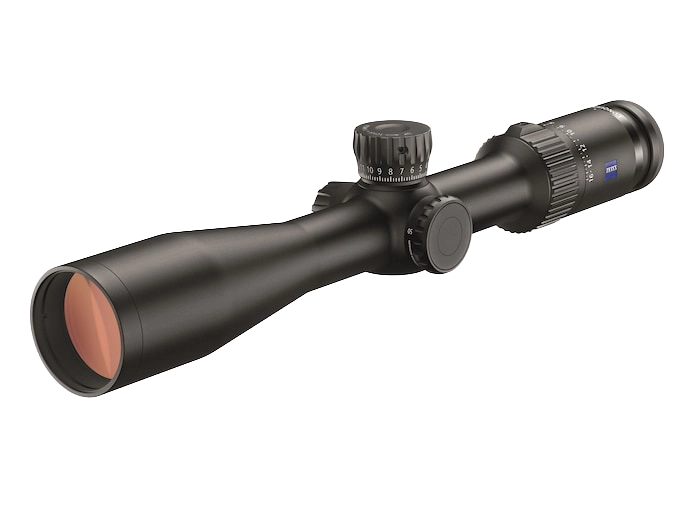
Zeiss Conquest V4 4-16×44: Best Low-Light Scope
Zeiss brings European optics glass to a price most hunters can reach. The multi-coated lenses and 44mm objective lens deliver the kind of low-light performance that extends your legal shooting window at both ends of the day.
The 30mm tube provides ample elevation adjustment, and the locking ZMOAi-T30 or ballistic reticle options cover most hunting needs. Return-to-zero on the locking turrets has been dependable in my use.
One caution worth stating plainly: some owners have reported zero shift on heavy magnums. Anecdotal, not universal, but if you are mounting this on a .300 Win Mag or larger, verify aggressively before you trust it. The lifetime warranty backs you up either way.
Best for: dawn and dusk hunting, standard-caliber rifles, hunters who value glass over turret travel.
When you use the link above to shop for one of the products, we receive a small commission from the sale, at no extra cost to you. This helps us keep this site going, and does not affect the price you would pay usually in any way whatsoever.
| Scope | Best For | Key Strength | Main Limitation |
|---|---|---|---|
| Leupold VX-3HD 4.5-14×40 | Lightweight mountain rifles | ~15 oz with CDS custom turret | Not built for constant dialing |
| Leupold VX-Freedom 3-9×40 | Woods and deer rifles | Forgiving eye box, set-and-forget | Entry-level glass |
| Vortex Razor HD LHT 4.5-22×50 FFP | Crossover hunting and practice | 21.7 oz FFP with generous eye box | Price and 50mm mount height |
| Vortex Diamondback Tactical 4-16×44 FFP | Budget FFP entry | Exposed turrets at low cost | No zero stop, soft at 16x |
| Nightforce NX6 3-18×50 F1 | Heavy-recoil, hard-use rifles | Mechanical durability, ZeroStop | 27.1 oz and premium price |
| Zeiss Conquest V4 4-16×44 | Low-light hunting | European glass, locking turrets | Some magnum zero-shift reports |
| Scope | Magnification | Objective | Tube | Focal Plane | Weight | Turrets |
|---|---|---|---|---|---|---|
| Leupold VX-3HD | 4.5-14x | 40mm | 1 in | SFP | ~15 oz | CDS-ZL / capped |
| Leupold VX-Freedom | 3-9x | 40mm | 1 in | SFP | ~12 oz | Capped |
| Vortex Razor HD LHT | 4.5-22x | 50mm | 30mm | FFP | 21.7 oz | Exposed, RevStop |
| Vortex Diamondback Tactical | 4-16x | 44mm | 30mm | FFP | ~24.6 oz | Exposed, no zero stop |
| Nightforce NX6 | 3-18x | 50mm | 30mm | FFP | 27.1 oz | Exposed, ZeroStop |
| Zeiss Conquest V4 | 4-16x | 44mm | 30mm | SFP | ~23 oz | Locking / capped |
Buying Guide: Focal Plane, Reticles, and Turrets
Three decisions drive whether a scope fits how you hunt: which focal plane your reticle sits in, how much information that reticle carries, and whether your turrets are meant to be touched in the field.
First Focal Plane vs. Second Focal Plane for Hunting
In a first focal plane scope, the reticle grows and shrinks with magnification, so every subtension stays true at any power. That is why FFP dominates precision shooting and why it makes sense on a crossover hunting rifle where you hold wind at 12x and 18x alike.
Second focal plane keeps the reticle the same visual size. Holdovers are only correct at one specified power, usually max, but the crosshair stays fine and clean at high power and thick enough to see at low power in dim timber.
For a straight deer rifle, second focal plane is the better tool. For anything where you will hold for wind or elevation at varying magnification, choose first focal plane.
When a Simple Duplex, BDC, or MOA Reticle Is the Better Choice
A duplex reticle does one thing perfectly: it shows you where the bullet goes without cluttering the picture. Paired with a 200-yard zero and a CDS dial, it covers the majority of hunting shots.
A BDC reticle like the Dead-Hold BDC gives you rough holdover marks without dialing. Useful, but the marks correspond to one specific velocity and BC, so verify them against your own trajectory rather than the box chart.
A full MOA or MRAD grid reticle is the most capable and the most cluttered. If you shoot enough to use it, it is the fastest way to correct for a miss. If you do not, it just makes low-light aiming harder.
Capped, Exposed, Locking, and Custom Elevation Turrets Explained
| Turret Type | How It Works | Best Use |
|---|---|---|
| Capped | Covered, set once, never touched | Woods rifles, hold-over shooting |
| Exposed | Always accessible, marked in MOA or MRAD | Dialing every shot, practice rifles |
| Locking | Exposed but must be unlocked to turn | Hunters who dial but fear snags |
| Custom (CDS) | Yardage-marked dial cut to your load | One verified load, seasonal use |
A zero stop is the feature I will not give up on a dialing scope. It lets you spin down to your hunting zero by feel in the dark without counting revolutions.
Side focus parallax adjustment matters above roughly 12x. Below that, a fixed parallax setting is close enough for hunting distances.
Set Up and Prove the Scope Before Hunting Season
A scope is an unproven component until you mount it correctly, verify it tracks, and build a range card from real data. This is the work that separates hunters who connect at 500 yards from hunters who tell stories about it.
Mount for Safe Eye Relief and a Repeatable Eye Box
Set eye relief with the rifle shouldered in your most likely hunting position, not on a bench. Prone and standing shift your head position, so split the difference toward the field.
On a magnum, give yourself a quarter inch more clearance than feels necessary. A scope ring to the eyebrow ends a hunt.
Level the reticle to the rifle, not to the world, and torque rings to spec with a proper wrench. A canted reticle costs you nothing at 200 yards and a significant amount at 600.
Zero, Box-Test, and Confirm Return-to-Zero With Your Hunting Load
Zero with the ammunition you will hunt with. Group size on paper matters less than knowing your point of impact is honest.
Then run a box test. Shoot a group, dial 10 MOA up, 10 right, 10 down, 10 left, shooting a group at each corner, and return to your original setting. The final group should land on your zero, and the corners should form a square.
If the box does not close or return-to-zero drifts, the problem is the scope, the rings, or the base. Find out in July, not on a mountainside in October.
Build a Range Card From Verified Ballistics
Feed your chronographed velocity, bullet BC, sight height, and zero distance into a solver, then confirm the output at actual distance. Predicted drop and real drop rarely match on the first try.
Tape a simple range card to your stock with dial values in 50-yard increments and a wind hold for a 10 mph full-value wind. Pair it with a laser rangefinder and you have removed most of the guesswork from long-range shooting.
The ballistics calculators and cartridge data at LoadDevelopment.com are built for this exact workflow, and the email tips going out to 4,000-plus shooters cover the verification steps most hunters skip.
Frequently Asked Questions
The Vortex Razor HD LHT 4.5-22×50 FFP delivers the most capability per ounce and per dollar for a hunter who dials, while the Leupold VX-Freedom 3-9×40 is unbeatable value for a straightforward woods rifle. Value depends entirely on whether you will use the turrets, so match the scope to your actual shooting style.
A 3-9x or 2.5-10x covers the overwhelming majority of deer hunting, which happens inside 250 yards. If you hunt open agricultural fields or western country, a 4-14x or 4-16x gives you more precision without becoming unwieldy at close range.
The Leupold VX-Freedom 3-9×40 and the Vortex Diamondback Tactical 4-16×44 FFP both land under that mark and serve different needs. Pick the VX-Freedom for a simple hold-over deer rifle and the Diamondback Tactical if you want to learn dialing with a first focal plane reticle.
Leupold, Vortex Optics, Zeiss, Nightforce, Swarovski, and Burris all build hunting optics that hold zero and back their products with strong warranties. Brand matters less than matching the specific model’s turret system, focal plane, and weight to your rifle and terrain.
Leupold generally builds lighter scopes and offers the Custom Dial System, which suits mountain rifles and hunters who want one verified dial. There are also slightly fewer Leupold failures in the high end precision market compared to Vortex, although not by much and both offer a lifetime warranty, so buy either with confidence.
At 1,000 yards you need a first focal plane reticle, at least 60 MOA of usable elevation adjustment, reliable turret tracking, and a zero stop. Of the six covered here, the Nightforce NX6 3-18×50 F1 and Vortex Razor HD LHT are the realistic candidates, and both still require a verified load and confirmed ballistic solution to hit at that distance.

AJ Deysel is a competitive rifle shooter in the PRS and NRL Hunter series, a lifelong hunter, and a recognized ballistics specialist whose load development expertise has been featured by industry leaders like Hornady. He is the founder and lead editor of LoadDevelopment.com. Read more about AJ or view our Editorial & Testing Guidelines.