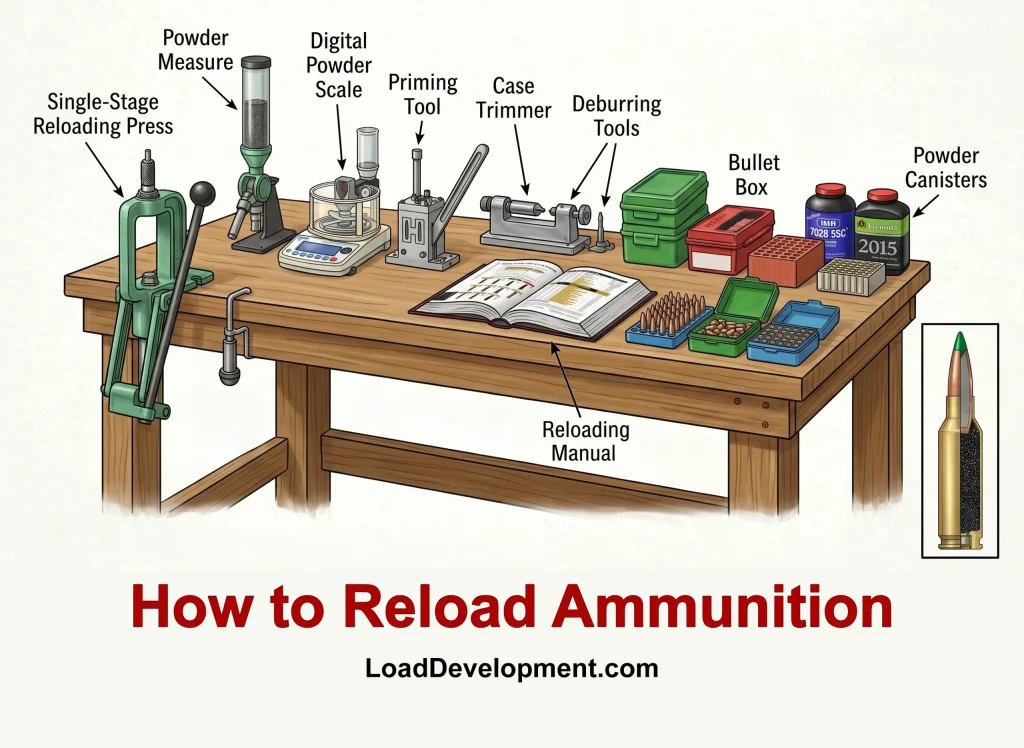
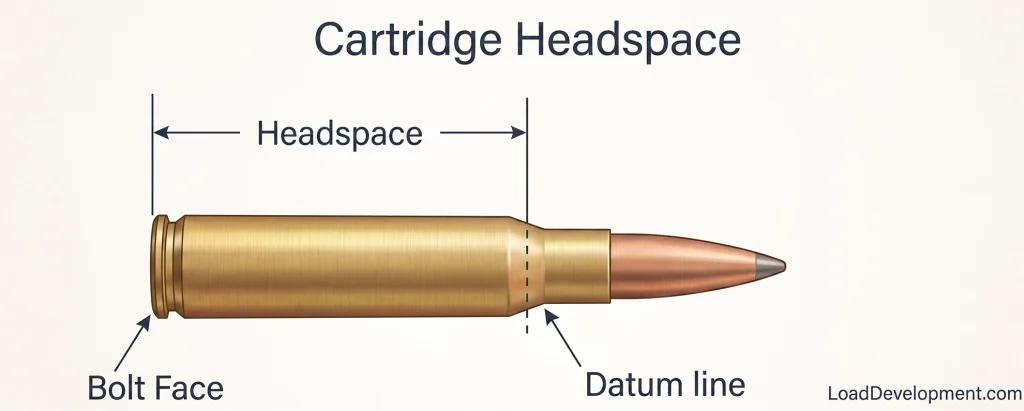
Headspace in a bottleneck rifle cartridge is the distance from the bolt face to a specific datum point on the shoulder, and that dimension governs how the case fits the chamber each time a round is fired. For reloaders, it is not an abstract specification, it is one of the measurements that directly affects chambering, brass life, and consistency at the bench.
For precision rifle work, the practical goal is usually to size brass so the shoulder is set back just enough for reliable chambering, often around 0.001 to 0.002 inch in a bolt-action rifle.
How Headspace Works In A Bottleneck Rifle
Headspace in a bottleneck rifle is controlled by the chamber geometry and the case shoulder relationship to the bolt face. The case does not stop on the rim in most modern centerfire rifles, it stops when the shoulder contacts the chamber at the correct point.
That relationship is the reason brass length, chamber dimensions, and sizing die setup all matter at the same time.
The Bolt Face To Shoulder Datum Relationship
The technical reference is the distance from the bolt face to the shoulder datum line, not the physical tip of the shoulder. The datum is a defined diameter on the shoulder that lets reloaders measure consistently with a comparator.
When the bolt closes, the brass shoulder should align with the chamber shoulder closely enough that the cartridge is supported without excess free movement.
Why The Chamber Sets The Reference Point
The chamber establishes the maximum allowable geometry for safe function. A fired case expands to match that chamber, then sizing returns part of that shape to a dimension the rifle can chamber again.
Because the chamber is the fixed reference, fired brass from one rifle often measures differently than brass from another rifle, even in the same cartridge.
How Cartridge Cases Interact With Chamber Dimensions
On firing, pressure drives the case outward until it seals the chamber. The shoulder, body, and case head all react to that pressure, and the brass records the chamber dimensions it just filled.
That is why fired brass is the best starting point for setting die adjustment. It shows what the rifle actually needs, not what a generic chart assumes.
Why Correct Dimensions Matter For Safety And Function
The wrong headspace relationship creates real problems at both ends of the tolerance range. Too much clearance stresses brass and too little clearance makes chambering unreliable.
Reloaders usually spot these issues before anything dramatic happens, if they measure carefully and watch how the rifle feels during bolt closure.
Excess Clearance And Case Head Separation Risk
If the shoulder is too far forward relative to the chamber, the case can stretch when it fires. Repeated stretching near the web can form a bright ring and eventually lead to case head separation.

That risk increases when brass is repeatedly sized too short and then forced to stretch back out on firing.
Insufficient Clearance And Hard Chambering Problems
If the shoulder is not set back enough, the case may fit too tightly for the bolt to close without resistance. In a bolt rifle, that can show up as a stiff handle, partial closure, or a round that will not chamber cleanly.
A cartridge that is too long at the shoulder can also prevent the lugs from fully locking, which is not where any reloader wants to be.
How Improper Sizing Shows Up At The Bench And Range
At the bench, the signs are usually straightforward: hard bolt lift, difficult chambering, or visible brass marks after extraction. On the range, inconsistent bolt feel and erratic ignition can point to sizing that is not controlled well.
If brass changes shape too much from firing to firing, precision tends to suffer long before the case fails outright.
How To Measure Fired Brass With A Comparator
A comparator gives the reloader a repeatable way to compare case shoulder position before and after sizing. The tool does not measure absolute headspace in the chamber, it measures case-to-datum length that can be tracked from one step to the next.
That is the practical metric that matters for die setup and brass management.
What A Headspace Comparator Actually Measures
A headspace comparator measures from the case head to a datum point on the shoulder using a bushing or insert sized for the cartridge family. The number it produces is only meaningful as a comparison to other cases measured the same way.
That is enough for precision reloading, because consistency matters more than a theoretical chamber printout.
Establishing A Fired Case Baseline
Start with a fired case from the rifle in question, clean enough to read consistently, and measure several times to confirm repeatability. Mark that value as the fired baseline.
The fired number gives the real chamber fit, and every sized case should be judged against it.
Comparing Sized Cases To Your Fired Reference
After sizing, measure the same case again and compare it to the fired baseline. The difference is the shoulder setback, also called shoulder bump, which shows how much the die moved the case shoulder.
For bolt-action rifles, a common target is about 0.001 to 0.002 inch of setback from the fired dimension.
Common Measurement Mistakes To Avoid
Pressing the case too hard against the comparator can change the reading. Mixed brass, dirty case heads, and inconsistent caliper pressure also create false numbers.
Another common mistake is chasing a single reading instead of averaging several measurements from the same setup.
Shoulder Bump For Precision Bolt-Action Reloading
Shoulder bump is the intentional movement of the case shoulder backward during sizing. For precision bolt guns, the goal is usually enough clearance for easy chambering without creating unnecessary case stretch.
That small amount of movement is one of the easiest ways to improve both reliability and brass life.
What Bumping The Shoulder Means During Sizing
When a sizing die pushes the shoulder back, it creates a slight gap between the case and the chamber shoulder on the next chambering cycle. The firing pin then helps seat the round fully as the case is pressed into the chamber under ignition.
Used correctly, that small setback reduces the effort required to close the bolt.
Why A 0.001 To 0.002 Inch Setback Is Common
That range is common because it usually gives smooth chambering without excessive clearance. It also limits how much the brass has to stretch when fired again.
For many bolt-action rifles, that balance supports accuracy and extends useful case life.
Balancing Chamber Fit, Reliability, And Brass Life
Tighter sizing can feel appealing for precision, yet too little clearance can make a match rifle less forgiving in dirt, heat, or a slightly dirty chamber. Too much setback increases case movement and can shorten brass life.
The right answer is usually the smallest bump that still allows reliable bolt closure with the rifle in real use.
How Die Adjustment Changes Setback
Small changes in die body position make measurable changes at the shoulder. A quarter turn on the die can be far more than the brass needs, so adjustments should be made in small steps and checked with a comparator each time.
Once the target bump is found, lock the die setting and verify it periodically.
Applying These Measurements In Real Load Development
Load development works better when brass behavior stays consistent from one firing to the next. Headspace measurement is part of that control loop, not a separate task.
A stable sizing routine helps isolate the effect of powder charge, seating depth, and bullet choice.
Using Sized Brass Consistency To Support Accuracy
Cases that are sized to the same shoulder dimension tend to chamber with the same feel and produce more repeatable ignition conditions. That consistency makes it easier to evaluate group size and pressure signs fairly.
A rifle that sees brass prepared the same way every time usually gives cleaner data during load testing.
Tracking Brass Growth Across Firings
Fired brass can grow in small increments, especially in rifles with generous chambers. Measuring that growth lets the reloader know when brass is approaching a point where sizing behavior changes or case life is becoming limited.
Tracking a handful of cases from the same lot is often enough to spot the trend.
When To Recheck Your Setup During A Load Workup
Recheck die setup whenever brass lot changes, after major temperature shifts in the loading area, or if chambering feel changes unexpectedly. A different press setup or shell holder can also alter the final dimension.
During a load workup, one quick comparator check can prevent a lot of confusion later.
LoadDevelopment.com’s Precision Reloading Takeaway
LoadDevelopment.com adds value when a reloader wants practical instruction without fluff. AJ has been in the shooting industry since 2016, and that experience shows in the brand’s focus on clear, usable load development guidance.
Where AJ’s No-Nonsense Guidance Adds Value
The main strength is simple, direct instruction that helps shooters measure, adjust, and verify instead of guessing. That approach is useful when setting shoulder bump, evaluating brass growth, or sorting out chambering problems.
For reloaders who want fewer opinions and more process, that style matters.
Tools And Resources That Support Better Sizing Decisions
LoadDevelopment.com also offers calculators, internal and external ballistics tools, a bullet database, a powder burn rate chart, and educational content on rifle cartridges and calibers. Those resources support the kind of careful measurement this topic requires.
Email tips and insider insights can also help shooters stay consistent as they refine their sizing routine.
Why The Upcoming Reloading Course Is The Next Step
A structured reloading course is the natural next step for anyone who wants to master comparator work, shoulder bump, and precision case setup. It gives the reloader a clearer path from basic measurement to repeatable results at the bench.
For shooters who want to build that skill the right way, joining the free email list at LoadDevelopment.com is a practical place to start.

AJ Deysel is a competitive rifle shooter in the PRS and NRL Hunter series, a lifelong hunter, and a recognized ballistics specialist whose load development expertise has been featured by industry leaders like Hornady. He is the founder and lead editor of LoadDevelopment.com. Read more about AJ or view our Editorial & Testing Guidelines.