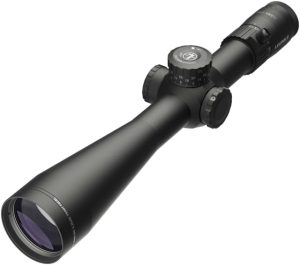
The Leupold Mark 5HD is one of those rifle scope platforms that generates strong opinions on both sides of the fence. After running the Mark 5HD 5-25x56mm hard for over five months across PRS matches, an NRL Hunter competition, and a grueling Kalahari desert hunt in Namibia, I have a definitive take. This scope punches well above its price point in optical performance and mechanical reliability, and the weight savings alone make it a serious contender against anything in its class. The 5-25×56 model sits in the sweet spot for competitive precision rifle shooting, and my time behind it has given me a clear picture of where it excels and where it falls short.

- The Bottom Line (TL;DR)
- Hands-On Testing: Mechanical Tracking & Turrets
- Optical Performance & Depth of Field
- The PR2 Reticle (Why It Wins for PRS)
- The 35mm Tube Advantage
- Weight and Form Factor (The Hidden Advantage)
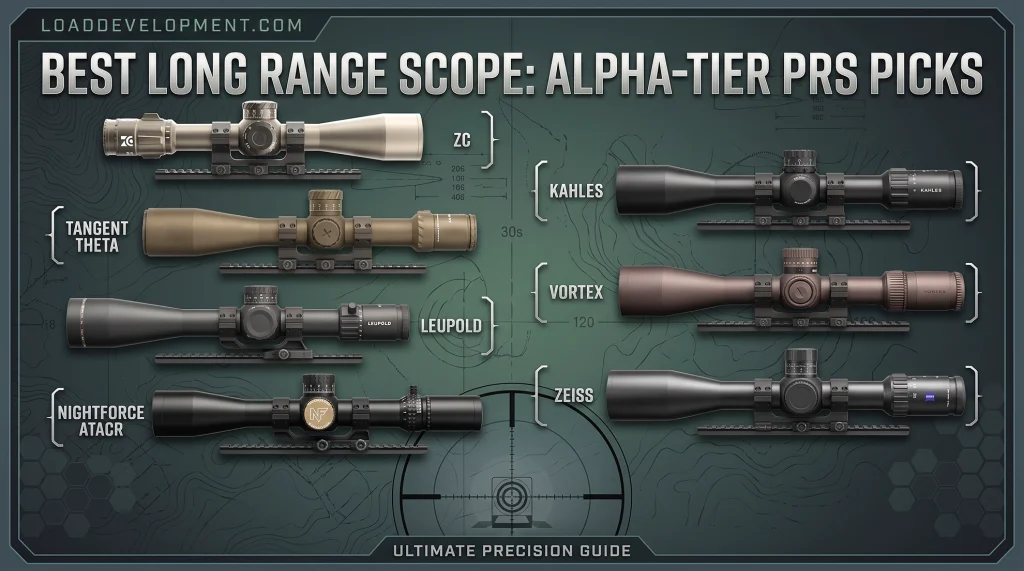
- Mark 5HD vs The Competition
- Final Verdict: Is the Mark 5HD Worth the Money?
- Leupold Optics: A Legacy of Quality and Innovation in Optics Industry
The Bottom Line (TL;DR)
If you are a PRS competitor, a long-range hunting enthusiast, or a tactical shooter who values a lightweight, mechanically sound optic with genuinely excellent glass, the Mark 5HD 5-25x56mm deserves your attention. It is not perfect, but its strengths are significant and its weaknesses are manageable.
Pros:
- Dramatically lighter than competitors at roughly 28-30oz
- Excellent M5C3 ZeroLock elevation turret with tactile revolution indicators that prevent costly dialing errors
- Strong optical performance, particularly in low-light transmission and glare reduction
- Forgiving parallax window, ideal for multi-distance PRS stages
- Comes with quality flip caps, sunshade, and a high-speed throw lever
- Lifetime warranty, built in the USA
- Close 20m focus capability makes it viable for rimfire
Cons:
- Narrower field of view and shallow depth of field compared to some competitors
- My test sample had a 1-degree reticle cant, which is a quality control issue Leupold needs to address
- Capped windage turret is less convenient for shooters who dial wind instead of holding
Who is this for? PRS and NRL competitors who want a proven, lightweight FFP optic. Hunters who need a scope that can survive harsh field conditions. Shooters who are tired of carrying a two-pound scope on their rifle.
Hands-On Testing: Mechanical Tracking & Turrets

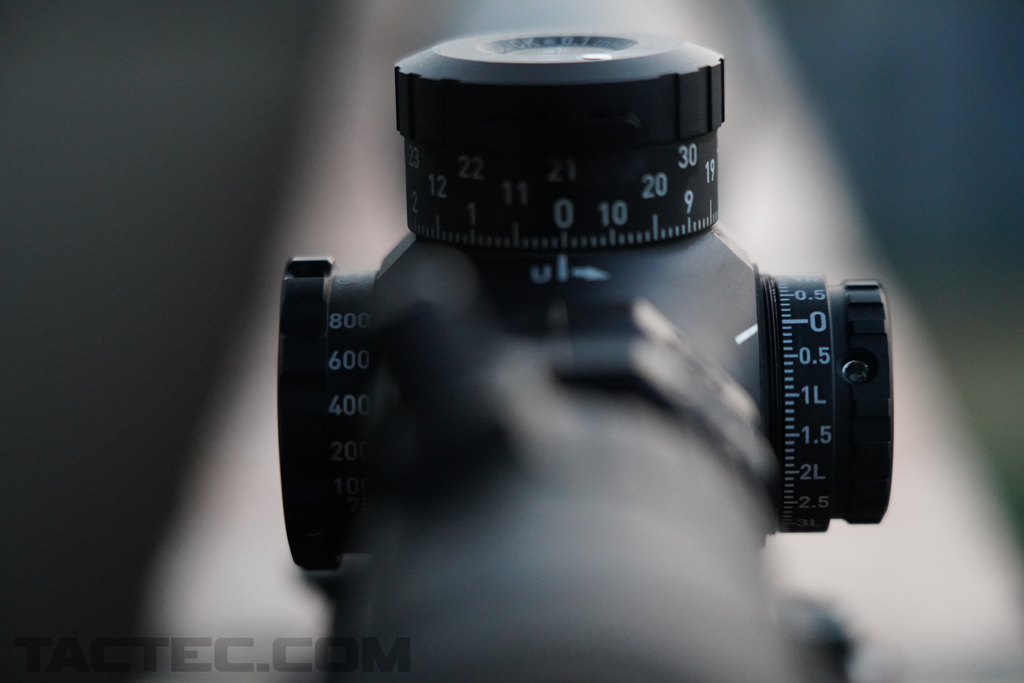
The M5C3 elevation turret on the Mark 5HD is one of its strongest features. Each click delivers 0.1 MRAD of elevation adjustment with a tactile, audible feel that inspires confidence. The turret provides 10.5 MILs per revolution across three full revolutions, giving you over 30 MILs of total travel.
Why 10.5 MILs instead of a clean 10? Leupold offset the number markings on each revolution so they do not stack on top of each other. This makes reading your current dial position fast and unambiguous, even under match pressure.
The ZeroLock button on the outside of the turret is brilliant in practice. You press it to unlock the turret from your zero, and when you need to return, you simply spin back until the button clicks and locks. I can do this without lifting my face off the scope. Once you build muscle memory with this button, returning to zero becomes nearly instantaneous.
The tactile revolution indicators are where this turret system truly separates itself. On the second revolution, the ZeroLock button sits completely flush with the turret body. On the third revolution, the button recesses further and a small stainless steel indicator knob pops up on top of the turret. These physical cues make it nearly impossible to lose track of which revolution you are on.
I watched a shooter in my squad at a recent match get burned badly with a different scope because he forgot he had already passed his zero by one full revolution. He was over 10 MILs high on his first target of the next stage. That kind of error is catastrophic in competition. The Mark 5HD’s revolution indicator system is specifically designed to prevent it, and it works.
The windage turret sits under a protective screw-on cap. Most long-range shooters hold for wind using their reticle anyway, so the capped design is not a significant drawback. What initially bothered me was the offset windage reference mark on the scope body. It is not centered horizontally like virtually every other scope on the market.
I assumed this was a pointless gimmick. I was wrong. Because the reference mark sits higher on the body, I can glance at my windage setting and make adjustments without pulling my cheek off the stock or shifting my body position behind the rifle. In timed competition stages, this saves real seconds. It is a purposeful design choice that only reveals its value through actual use.
Optical Performance & Depth of Field
Every shooter’s eyes are different. I have seen top-level competitors disagree completely about the optical quality of the same scope, so take any single optical opinion with appropriate context. That said, my experience with the Mark 5HD’s professional-grade optical system has been overwhelmingly positive.
Resolution and clarity through the center of the image are excellent. I found edge-to-edge clarity to be strong with no noticeable tunneling at the periphery. Color rendition is natural and accurate. Chromatic aberration was virtually undetectable across every lighting condition I tested.
Where this scope genuinely impressed me was in light transmission during early morning and late afternoon shooting. Shooting into a low sun produced almost zero lens flare or internal glare. I have experienced more glare from scopes that cost significantly more and carry reputations for “better glass.” Do not let internet consensus override what your own eyes tell you. Get behind a Mark 5HD next to whatever else you are considering and compare for yourself.
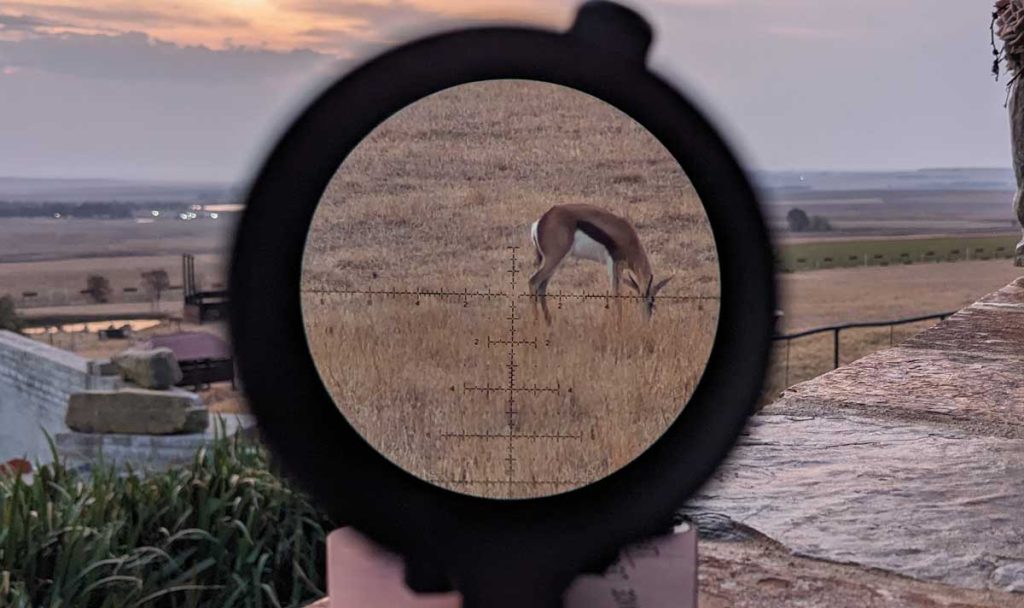
I put the optics through serious real-world testing during a Kalahari desert hunt in Namibia. Harsh dust, intense heat mirage rising off dry desert surfaces, and long-range shots on small Springbok at 450 yards and beyond. The scope handled it all without any degradation in image quality.
The eyebox is reasonably forgiving, which matters when you are shooting off awkward barricade positions in PRS where your cheek weld is rarely perfect. The parallax adjustment window is also notably forgiving. During multi-distance stages, I could set a middle-ground parallax value and leave it for the entire stage without getting punished on accuracy.
The trade-off: depth of field is shallow compared to some competitors. If you are shooting timed stages where targets span a wide range of distances and you need to quickly acquire without touching your parallax knob, this can become a minor limitation.
The PR2 Reticle (Why It Wins for PRS)
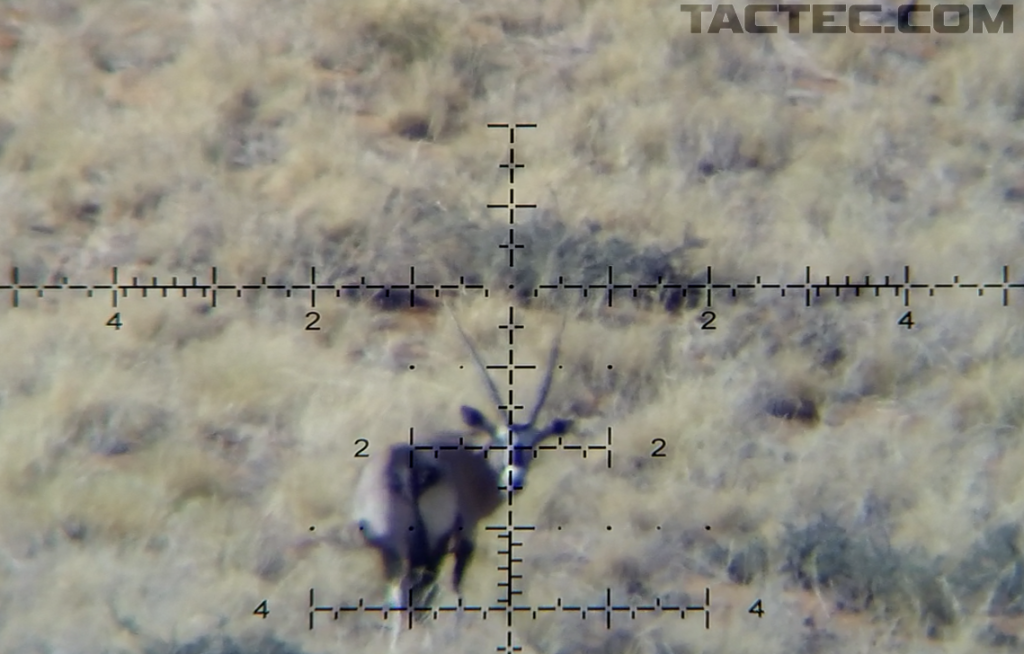
The Mark 5HD comes in fourteen different first focal plane reticle options, which can make choosing feel overwhelming. For my PRS-focused use, the PR2-MIL reticle was the clear choice. Leupold developed this reticle with direct input from professional PRS shooters, including Jon Pynch, and it shows.
The PR2-MIL is a Christmas tree style reticle, but with restraint. It provides enough holdover and wind-hold information for precise engagement at extended ranges without cluttering your image when you are using the main crosshair, which for most PRS shooters is about 90% of the time.
The open center and 0.25 MRAD hash marks with broken sub-tension lines are the key design wins here. The open gaps between hash marks let you place targets precisely for exact aiming. You can quickly identify quarter and half MRAD holds without counting dots or squinting at a busy grid. This matters enormously when you are spotting trace and holding wind on a timed stage.
Between the 3 and 4 MIL marks, the reticle includes 0.1 MRAD increments. This fine graduation is invaluable for milling targets when you need to range without a rangefinder, and it makes zeroing a rifle incredibly precise. You can measure exactly how far off you are, click the correction, and be zeroed. I use this feature regularly and consider it one of the smarter design elements in the reticle.
For shooters who prefer MOA, Leupold also offers the PR2-MOA reticle with the same design philosophy. An illuminated option is available as well. But for MRAD-based DOPE calculations in competition, the PR2-MIL is hard to beat.
The tree is not as aggressive as some competitors’ reticles, which is exactly why I prefer it. Hold-over-only stages at PRS matches are essentially impossible without a tree or milling reticle, but you do not want that tree getting in the way during the 90% of shooting where you are dialing and using the center crosshair.

The 35mm Tube Advantage
There is a common misconception that a larger main tube improves light transmission. It does not. Light transmission is determined by lens coatings, glass quality, and objective lens diameter, not tube diameter.
The 35mm main tube on the Mark 5HD exists for one reason: internal elevation travel. A larger tube allows the erector assembly more room to move, which translates directly into more total elevation adjustment. The Mark 5HD delivers over 30 MILs of total elevation across three revolutions. For shooters pushing into ELR distances or running cartridges with significant drop at range, this internal travel is not a luxury. It is a necessity.

The 35mm tube does require 35mm rings, which narrows your mounting options slightly compared to 34mm or 30mm scopes. But the trade-off in available adjustment range is worth it for serious long-range shooting applications.
Weight and Form Factor (The Hidden Advantage)
At approximately 28-30 ounces, the Mark 5HD 5-25x56mm is up to 20 ounces lighter than comparable scopes in its class. That is over a full pound of weight savings sitting on top of your rifle.
This matters more than most shooters realize. In PRS competition, total rifle weight is often capped or optimized. Every ounce you save on your optic is an ounce you can redistribute to your chassis, barrel profile, or other components where additional weight actually benefits recoil management and stability. A lighter scope also shifts the balance point of the rifle forward, which many shooters prefer for positional shooting off barricades and improvised rests.
Compare this to a Vortex Razor Gen III at nearly 48 ounces. That is roughly 18-20 ounces of additional weight sitting high on the rifle, raising the center of gravity. For a PRS shooter running through a multi-stage match all day, carrying the rifle between positions, and shooting from unstable platforms, the Mark 5HD’s weight advantage compounds stage after stage.
The scope also has a compact form factor and clean profile. The included high-speed throw lever for the magnification ring is easy to install or remove. The power ring itself is smooth out of the box, tight enough to hold position but light enough for quick adjustment during target acquisition.
Mark 5HD vs The Competition
Leupold Mark 5HD 5-25×56 vs Nightforce NX8 2.5-20×50:
The NX8 is even lighter and more compact, but it gives up magnification range (topping out at 20x) and has a notably smaller objective lens. The NX8’s eyebox can feel tighter at higher magnifications. The Mark 5HD offers a more versatile magnification range for PRS and better low-light performance with its 56mm objective. If weight is your absolute top priority and you do not need 25x, the NX8 is worth considering. Otherwise, the Mark 5HD is the more capable optic.
Leupold Mark 5HD 5-25×56 vs Vortex Razor Gen III 6-36×56:
The Razor Gen III has a higher magnification ceiling and arguably the best glass in its price tier. Its turret system is also excellent. But it weighs nearly 48 ounces, making it one of the heaviest scopes in the precision rifle category. The Razor also comes at a higher price point. For shooters who prioritize optical quality above all else and do not mind the weight penalty, the Razor is outstanding. For everyone else, the Mark 5HD delivers competitive optical performance at a significant weight and cost savings.
Both competitors are excellent scopes. The Mark 5HD’s combination of weight, mechanical reliability, and optical performance at its price point makes it the most balanced option for shooters who value the complete package rather than excelling in a single category.
Final Verdict: Is the Mark 5HD Worth the Money?
Yes. After five months of intense use across competitive PRS stages, NRL Hunter matches, and a demanding African hunt, the Leupold Mark 5HD 5-25x56mm has earned a permanent spot in my rotation.
The M5C3 turret system with ZeroLock and tactile revolution indicators is among the best mechanical interfaces I have used on any scope at any price. The optical performance punches at or above its class. The weight savings over competitors is a genuine, tangible advantage that affects match performance. And Leupold’s lifetime warranty, backed by a track record of replacing even decades-old scopes, provides real peace of mind.
The scope is not without flaws. The shallow depth of field can be a limitation in fast-paced timed competitions. The reticle cant on my test sample was a quality control miss that should not happen at this price point. And shooters who want an exposed windage turret will need to look elsewhere or invest in an aftermarket solution.
But the facts speak for themselves. The Mark 5HD has been the most frequently used scope among top-10 PRS finishers in recent seasons. You do not accumulate 300 match points across a full season if your optic is failing you. Leupold puts more Mark 5HD scopes into the US precision rifle market than most European competitors combined, and that volume is sustained by performance, not marketing.
For long-range shooting, whether competitive or in the field, the Mark 5HD delivers where it counts. It is not the cheapest option, and it is not the most expensive. It occupies the space where performance, reliability, weight, and value intersect. That is exactly where most serious shooters need their optic to be. If you are shopping for a precision rifle scope in this category, get behind a Mark 5HD before you make your decision. Your eyes and your match scores will thank you.
When you use the link above to shop for one of the products, we receive a small commission from the sale, at no extra cost to you. This helps us keep this site going, and does not affect the price you would pay usually in any way whatsoever.
Leupold Optics: A Legacy of Quality and Innovation in Optics Industry
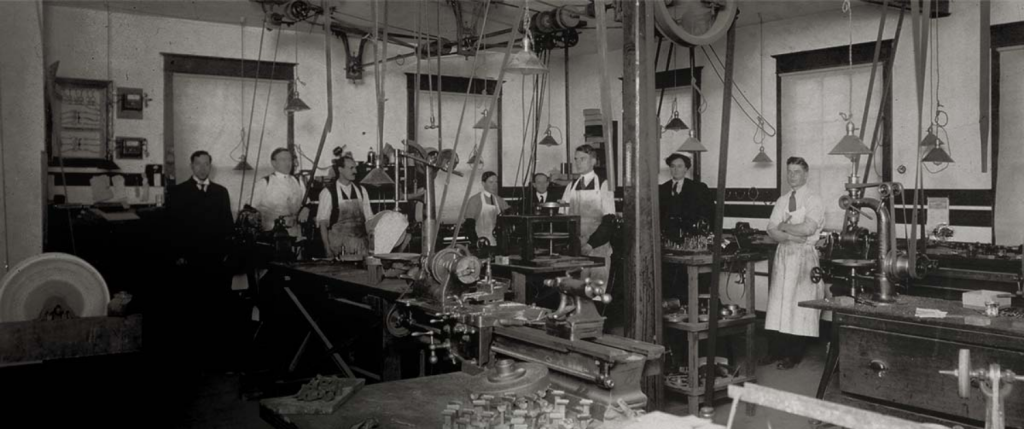
Leupold is not just another optics brand. It is arguably the most deeply embedded rifle scope manufacturer in American shooting culture, with a history that stretches back over a century. Understanding the company’s roots provides context for why the Mark 5HD exists in its current form.
Founding and Early Days
Fred Leupold and Adam Volpel started their Portland, Oregon business building surveying instruments. The pivot to sporting optics came quickly, and the company began producing riflescopes, binoculars, and spotting scopes with a clear focus on durability and precision. From the beginning, the standard was to build products that would not fail their users in the field.
Innovations in Optics
The Duplex reticle, introduced in the 1940s, became one of the most widely used hunting reticle designs in history. Its simple concept of thick outer posts tapering to fine center crosshairs improved target acquisition in low light dramatically. During the Vietnam War era, Leupold scopes gained a strong reputation among military snipers for reliability under extreme conditions. That military adoption accelerated the brand’s visibility and credibility.
In the 1980s, the Vari-X III series pushed optical quality and field of view forward. Leupold continued refining reticle designs and mechanical systems through subsequent decades, leading directly to the current Mark 5HD platform.
Commitment to Quality and Lifetime Guarantee
Leupold’s lifetime warranty is not just a marketing promise. I have read firsthand accounts from shooters who sent in old, used Leupold scopes, some inherited and decades old, and received brand-new replacements. That level of product backing is rare in any industry and reflects genuine confidence in manufacturing quality.
Community Participation
Leupold has invested millions of dollars in conservation organizations and wildlife habitat preservation. The company’s involvement in competitive shooting sports, from PRS to NRL to military marksmanship programs, is unmatched by any other optics manufacturer operating in the United States.
Family-Owned Business
Leupold & Stevens, Inc. remains family-owned. That independence allows the company to make long-term product development decisions without the pressure of quarterly earnings reports driving shortcuts. The Mark 5HD’s multi-year development cycle, incorporating input from professional competitive shooters, is a direct result of that ownership structure.
To Summarize
No other optics manufacturer is as deeply woven into the fabric of American precision shooting and hunting as Leupold. The company’s century-long track record of building durable, high-performance optics backed by a genuine lifetime guarantee is the foundation upon which products like the Mark 5HD are built. If buying American-made matters to you, Leupold is the standard.

AJ Deysel is a competitive rifle shooter in the PRS and NRL Hunter series, a lifelong hunter, and a recognized ballistics specialist whose load development expertise has been featured by industry leaders like Hornady. He is the founder and lead editor of LoadDevelopment.com. Read more about AJ or view our Editorial & Testing Guidelines.