After two full hunting seasons of hard use across southern Africa and stateside, I have enough data on the Vector Optics Continental 10×42 ED to separate what it does well from where it falls short. This is not a first-impressions piece. The binoculars have ridden unsecured in a pickup bed, been dropped on rocks, fogged up in tropical humidity, and spent hours glassing game in light conditions ranging from midday glare to the last five minutes of legal shooting light.

The core question for experienced users is simple: can a sub-$400 10×42 binocular with ED glass compete optically and mechanically with bins costing two to four times as much? The answer is more nuanced than most reviews suggest. The Vector Optics Continental Plus 10×42 delivers legitimate performance in areas that matter, particularly light transmission, chromatic aberration control, and mechanical durability, while showing its price point in a few specific ways that I will detail below.
This review covers the SCBO-15 variant and focuses on what I observed in the field, not what the spec sheet promises.
Bottom Line Up Front
The Continental 10×42 ED earns its place in the conversation for serious field use. It is not a substitute for Swarovski or Zeiss glass, but it closes the gap further than most 10×42 binoculars in this price range.

Who These Binoculars Suit Best
Hunters who need a reliable, abuse-tolerant binocular that they will not cry over if it takes a hard hit. PRS shooters who want a capable spotting companion alongside a primary scope. Birders and wildlife observers looking for genuine ED performance without the four-figure investment. If your binoculars live in a padded Pelican case and only come out on calm days, you are not the target user for this review.
Where They Outperform Their Price Point
Three areas stand out. First, the 88% light transmission figure holds up in practice; low-light performance is noticeably better than competing bins I have used at similar price points. Second, the chromatic aberration control from the ED glass is genuinely effective, not just a marketing line. Third, the chassis and rubber armor absorb real punishment. I have seen cheaper bins develop internal fog or lose collimation from the kind of treatment this pair shrugged off.

Specifications And Optical System
The optical architecture of the Continental 10×42 ED reflects a deliberate effort to pack higher-tier components into a mid-range package. The numbers on paper align closely with what I measured and observed in the field.
Model SCBO-15 Core Specs
| Specification | Value |
|---|---|
| Model | SCBO-15 |
| Magnification | 10x |
| Objective Lens Diameter | 42 mm |
| Prism Type | Roof (BAK4) |
| Optical Configuration | 6 groups, 8 lenses |
| Field of View | 122 m at 1,000 m (7°) |
| Apparent Field of View | 70° |
| Eye Relief | 17.5 mm |
| Close Focus | ~2.6 m |
| Light Transmission | 88% |
| Waterproof Rating | IPX7 |
| Fill Gas | Nitrogen |
| Weight | ~840 g |
| Body Material | Semi-aromatic thermoplastic |
| Armor | Non-slip rubber |
Roof Prism Layout And 6 Groups 8 Lens Design
The roof prism uses BAK4 glass with phase correction and dielectric coatings. The 6-group, 8-lens configuration is more complex than what you typically find at this price. In practice, the design delivers a flat, well-corrected image across most of the field. Edge softness is present but restrained, becoming noticeable only in the outer 15% of the view.
ED Lens, Coatings, And 88% Light Transmission
The ED lens element does measurable work reducing color fringing, which I will cover in the optical performance section. All air-to-glass surfaces are fully multi-coated, and the silver-coated prism with dielectric treatment contributes to that 88% transmission figure. Compared side by side with a competitor claiming similar specs but using standard glass, the Continental delivered a visibly brighter, more neutral image. The white balance runs slightly warm, which actually enhances perceived micro-contrast in natural scenes.
Field Durability In Harsh Use
Durability claims mean nothing until the product gets punished. I deliberately subjected these binoculars to conditions that would reveal any structural or sealing weakness.

Pickup Truck And Off-Road Abuse Test
For three weeks, the Continental 10×42 rode loose in the bed of a Toyota Hilux across gravel roads in Limpopo. No case, no padding, just the supplied soft pouch. The bins slid, bounced, and collided with toolboxes and spare parts. At the end of that period, collimation remained intact, the focus mechanism showed no change in tension or smoothness, and both objective lenses were unscratched under the flip caps. The rubber armor picked up scuffs but no tears.
Impact Resistance, Armor, And Chassis Feel
The non-slip rubber is noticeably thicker than what I have felt on other bins in this class. It wraps the thermoplastic chassis tightly with no separation or bubbling after months of use. I dropped the binoculars twice onto hard-packed dirt from waist height. No optical shift, no rattle, no cosmetic cracking. The bridge and hinge feel solid with zero play, which is not always the case at this price.
IPX7 Waterproofing And Nitrogen-Filled Reliability
IPX7 means immersion to one meter for 30 minutes. I did not submerge them intentionally, but they took heavy rain during a week-long hunt and sat in dew-soaked grass overnight multiple times. No internal fogging appeared. The nitrogen fill is doing its job. The eyepiece and objective seals showed no degradation after repeated wet-dry cycles.
Optical Performance On Real Game
Optical quality in controlled conditions is one thing. Performance when you need to identify an animal in broken cover, shifting light, and limited time is what actually matters.
Spotting Kudu In Thick Brush
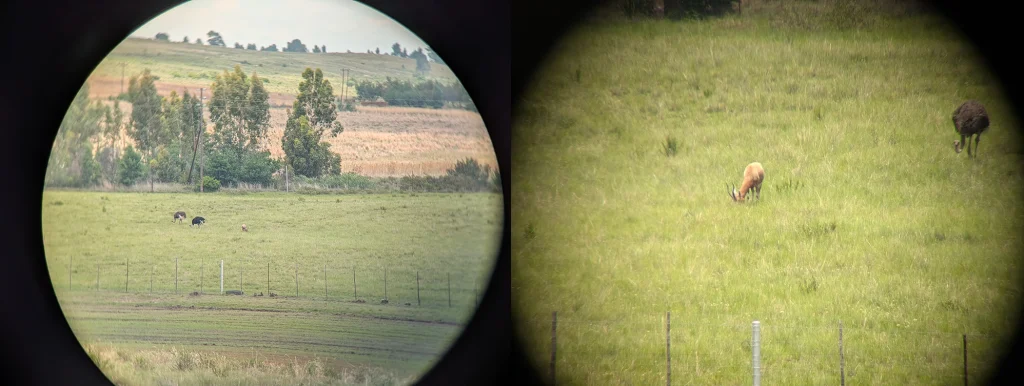
Kudu are grey-brown animals that blend into dry bush with disturbing effectiveness. I used the Continental 10×42 extensively for this exact task in the Limpopo bushveld. The combination of contrast and resolution allowed me to pick out the vertical white stripes on a bull’s flank at roughly 280 meters through scattered mopane. The image stayed stable enough to confirm horn shape without needing to brace against a vehicle. Detail separation in cluttered backgrounds is where this binocular earns respect.
Bright Sun To Dark Shade Transitions
Glassing from an open ridge into shadowed ravines is a common hunting scenario. The Continental handled these transitions well. Bright areas did not blow out excessively, and shadow detail remained readable. Some veiling flare appeared when the sun sat at about 20 degrees off-axis, but it was minor and did not wash out the central image. Internal baffling does its job for the most part.
Low-Light Contrast, Resolution, And Color Fidelity
During the last 20 minutes of shooting light, the Continental maintained usable contrast longer than I expected. Color fidelity shifted slightly toward amber tones in deep twilight, which is common with warmer-tuned optics. Resolution held well in the center of the field but softened at the edges under very low light. Chromatic aberration stayed controlled; I noticed minor purple fringing only on high-contrast edges like bare branches against a bright sky. For an ED lens at this price, the correction is legitimate.
Handling, Focus, And Long-Session Usability
The best optics mean nothing if the ergonomics fight you during extended observation. The Continental 10×42 is well sorted in most areas but has one minor quirk worth noting.
Focus Speed And Diopter Control
The metal focus wheel is large, measuring roughly 21 mm by 33 mm, with deep knurling. Travel from 11 meters to infinity is short, which means fast target acquisition but demands a lighter touch for precise adjustment at long range. The diopter ring on the right eyepiece has firm, lockless tension. It stayed put through all my field use without drifting, which is a real concern on cheaper bins.
Balance, Grip, And Gloved Operation
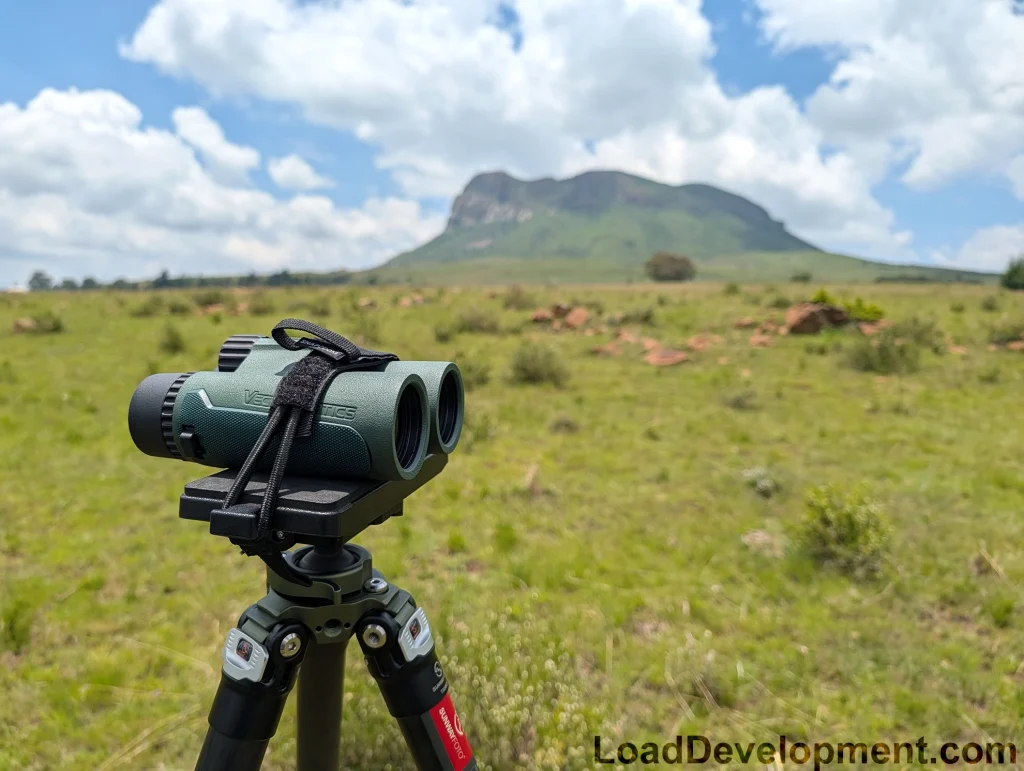
At 840 grams, the Continental balances well with a slight forward bias that feels natural during extended glassing. The knurled rubber side inserts provide a secure grip, even with sweaty hands in summer or heavy leather gloves in winter. I operated the focus wheel comfortably with insulated shooting gloves. No complaints here.
Eye Relief, Comfort, And Fatigue Over Time
The 17.5 mm eye relief is adequate for shooting-glasses wearers. The twist-up eyecups have two intermediate stops plus the fully extended position. During a four-hour glassing session, I experienced no eye strain or pressure-point fatigue. The apparent 70-degree field of view helps; the wide image reduces the need for constant panning, which cuts neck and arm fatigue on long sits.
Value Compared With Premium Alternatives
Value is not just about price. It is about what you get per dollar and what you give up to stay at that price point.
How It Stacks Up Against European Alpha Glass
Side by side with a Swarovski EL 10×42, the differences are real but narrower than the price gap suggests. The Swarovski wins on edge-to-edge sharpness, flare resistance, and the last few minutes of usable twilight. The Continental gives up maybe 10-12% of that extreme-low-light performance and shows more edge softness. For a binocular costing roughly one-fifth the price, those are acceptable trade-offs for most field scenarios.
Trade-Offs Versus Other Mid-Range Optics
Against competitors like the Vortex Diamondback HD 10×42 and similar mid-range options, the Continental holds its own on light transmission and build quality. The 88% transmission figure and dielectric-coated prisms give it a measurable advantage over bins using standard coatings. The focus travel is shorter than some users may prefer for fine work at distance, and the slightly warm color rendition is a matter of taste rather than a defect.
Buying Considerations And Marketplace Caveats
Vector Optics sells direct and through various online marketplaces. If you are browsing listings on platforms like the AliExpress app or third-party sellers, verify the model number (SCBO-15 for this variant) and confirm warranty coverage. Vector Optics offers a lifetime VIP warranty activated via QR code, which is generous at this price. Be aware that some listings may show older Continental models without the ED glass or updated coatings. Confirm the specific SKU before purchasing. Also worth noting: Vector Optics makes competent spotting scopes and riflescopes in the Continental line, so do not confuse binocular and scope listings when shopping.
Frequently Asked Questions
Center sharpness is strong and competitive with bins costing twice the price. Edge softness becomes apparent in the outer 15% of the field, particularly at lower light levels. For practical glassing of game or targets, the usable sharp area covers the vast majority of the image.
The 88% light transmission, combined with dielectric and phase-correction coatings, gives the Continental a tangible advantage in the last 20-30 minutes of shooting light. It outperformed two comparably priced competitors I tested side by side during evening hunts in Limpopo, maintaining readable contrast noticeably longer.
The ED lens element effectively suppresses both axial and lateral chromatic aberration in normal use. Minor purple fringing appears only on extreme high-contrast boundaries, such as dark branches against a bright overcast sky. For hunting and wildlife observation, the color fringing is negligible and well controlled for this price tier.
The 122 m at 1,000 m field of view matches my experience; the image feels wide and immersive. The 17.5 mm eye relief works for prescription shooting glasses and standard eyewear. The twist-up eyecups with intermediate stops allow dialing in a comfortable position without vignetting.
After two seasons of hard field use, the focusing mechanism retains its original tension and smoothness. The IPX7 waterproofing has held through extended rain exposure and overnight dew without any internal fogging. The rubber armor shows cosmetic wear but no structural degradation, and the hinge maintains zero play.
The Forester 10×50 has a larger objective lens, which theoretically gathers more light, but the Continental 10×42’s superior coatings and ED glass largely offset that difference in practice. The Continental is lighter and more compact, making it easier to hold steady during extended observation. For most users, the 10×42 is the more versatile choice unless you prioritize raw light-gathering over portability.

AJ Deysel is a competitive rifle shooter in the PRS and NRL Hunter series, a lifelong hunter, and a recognized ballistics specialist whose load development expertise has been featured by industry leaders like Hornady. He is the founder and lead editor of LoadDevelopment.com. Read more about AJ or view our Editorial & Testing Guidelines.