Thermal rifle scopes used to be a rich-hunter luxury. That is changing fast, and the Goyojo GRL335 is one of the reasons why. Priced around $850, this unit packs a 384×288 VOx sensor with a 12 μm pixel pitch, a 35mm germanium objective, and a 55 Hz refresh rate into an aluminum-magnesium housing that weighs under two pounds. On paper, those numbers compete with thermals costing twice as much.
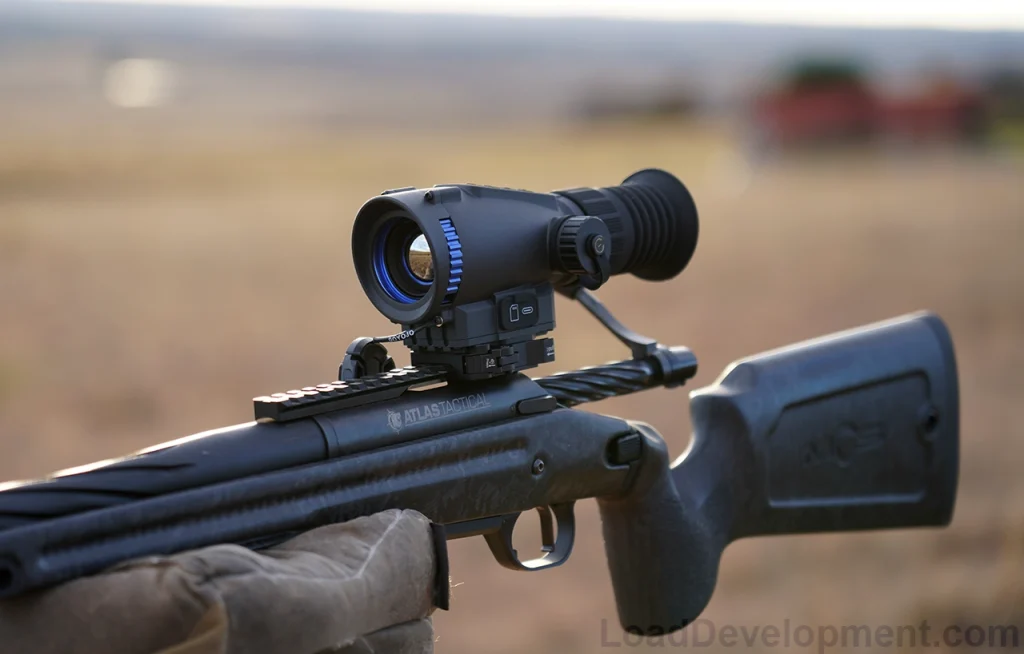
After running the GRL335 in real field conditions, I can say it holds zero reliably, produces a usable image inside realistic predator and hog hunting distances, and represents the most capable thermal I have handled at this price point. It is not a premium identification tool past a few hundred yards, and anyone expecting that will be disappointed.
What I want to do here is cut through the spec-sheet marketing and tell you exactly what this scope does well, where it falls short, and who should actually buy one. If you are comparing budget thermals for sub-200-yard night hunting, this is the review I wish I had read before pulling the trigger on my purchase.
Bottom Line Up Front
The GRL335 earns its place as a legitimate hunting tool inside moderate distances, but it demands realistic expectations from the buyer. It detects heat signatures out to nearly 2,000 yards in ideal conditions, holds zero through repeated recoil, and runs on swappable 18650 batteries that cost almost nothing. Its limits show up when you push past positive-identification range or compare image fidelity to units in the $3,000-plus tier.
Who This Scope Makes Sense For
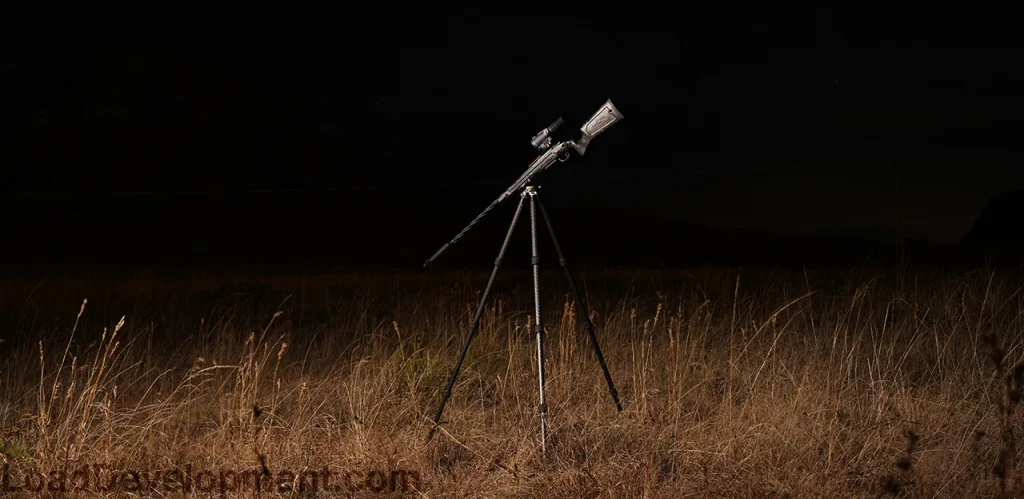
This scope fits the hunter who wants to step into thermal without spending mortgage money. Predator callers working coyotes and bobcats inside 150 yards, hog hunters shooting feeders at 75 to 125 yards, and varmint shooters scanning open pasture at night will get genuine, usable performance.
If you already own a quality day scope and understand how to zero an optic, the GRL335 will not frustrate you. The integrated Picatinny mount is tool-free and finger-adjustable, so swapping it between rifles is straightforward.
Where Its Limits Show Up
Positive identification past 200 yards gets difficult. The 384×288 sensor simply does not resolve fine anatomical detail the way a 640×512 sensor does at distance. You will see a hot blob at 400 yards, but you will not confirm species or shot placement with confidence.
The 4x base magnification also means the field of view at close range is narrower than a 2x or 2.5x base unit. Digital zoom compounds this by degrading image clarity. I would not rely on heavy digital zoom for critical shot decisions.
Core Specifications At A Glance
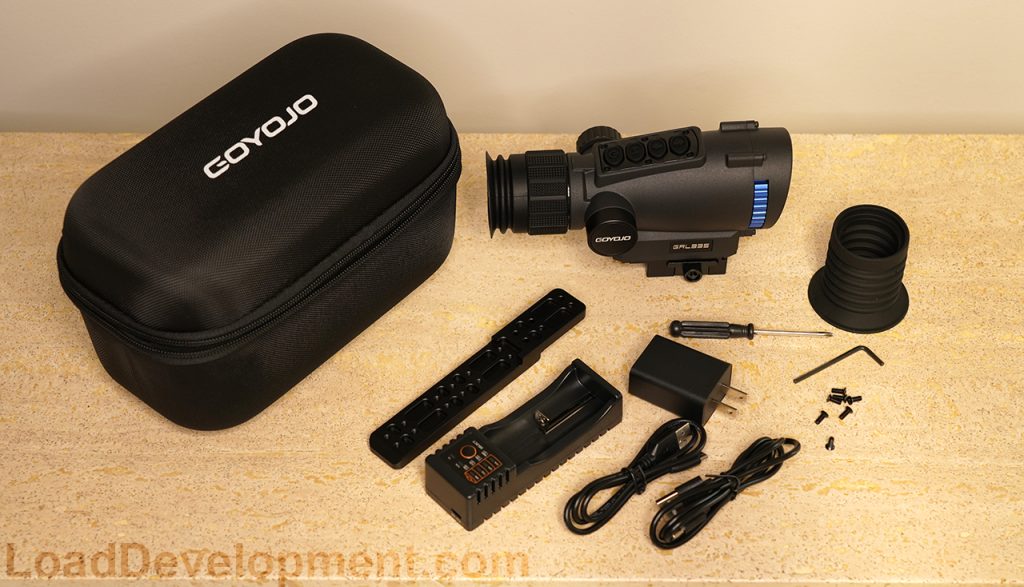
The GRL335 builds its thermal engine around a 12 μm pixel pitch VOx sensor paired with a 35mm germanium objective lens. The housing is aluminum-magnesium alloy, and power comes from a single 18650 lithium-ion cell.
Sensor And Optical Configuration
| Specification | Value |
|---|---|
| Sensor Resolution | 384 x 288 |
| Pixel Pitch | 12 μm |
| Sensor Material | Vanadium Oxide (VOx) |
| NETD | < 25 mK |
| Refresh Rate | 55 Hz |
| Objective Lens | 35mm Germanium |
| Base Magnification | 4x |
| Detection Range (claimed) | ~1,968 yards |
The 12 μm pixel pitch is the current standard in this price class. Paired with the 35mm objective, it produces a tighter field of view than a 25mm model but pulls in more thermal energy per pixel for better contrast at distance.
Power System And Mounting Hardware
The scope runs on a single 18650 rechargeable battery. Expect roughly 5 to 7 hours of runtime depending on temperature and display brightness. Swapping cells takes seconds, and spare 18650s cost a few dollars each.
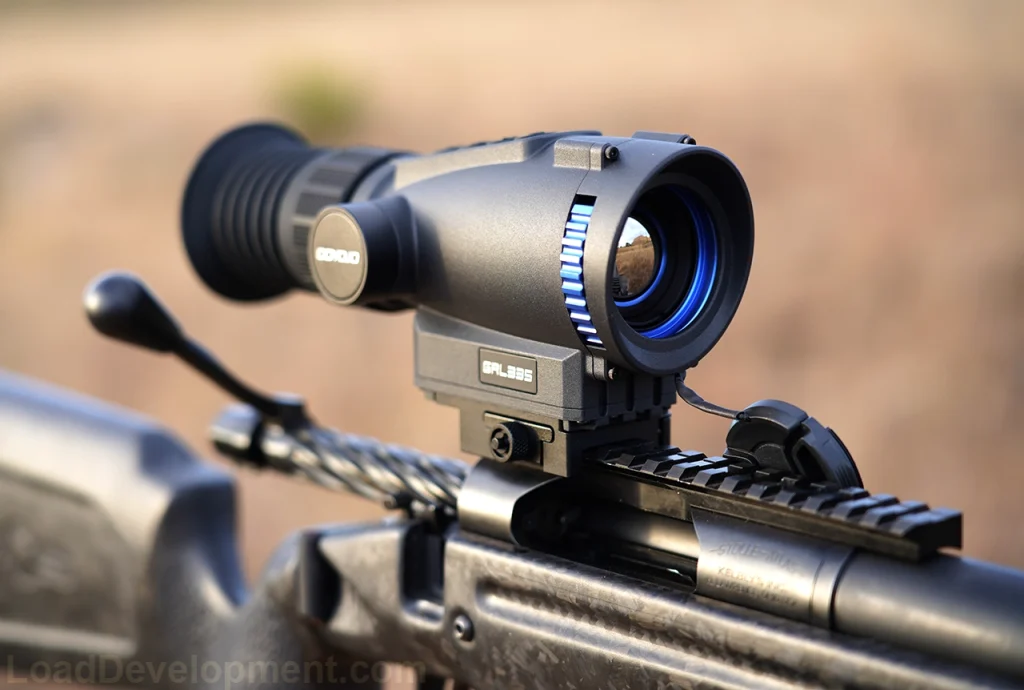
The integrated Picatinny mount uses a finger-adjustable tension system. No torque wrench, no tools. It locks solidly enough to maintain zero through repeated removal and reinstallation on the same rail, which I verified across multiple range sessions.
Thermal Performance In Practical Terms
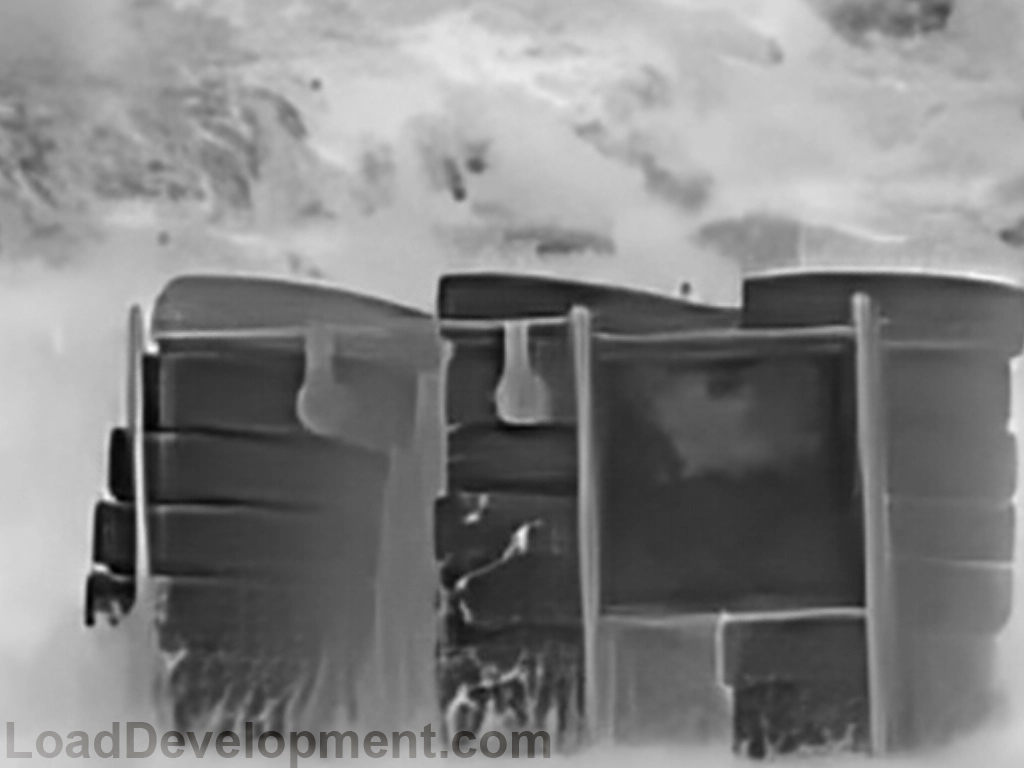
Thermal marketing loves big detection-range numbers. The GRL335 claims nearly 2,000 yards of detection range, and that figure is technically defensible under ideal atmospheric conditions against a large, high-contrast target. The practical story is more nuanced, and it matters for shot decisions.
Detection Range Versus Positive Identification
Detection means you can see something warm on the display. Identification means you can confirm what that warm object actually is, its orientation, and where to place a shot. These are two very different capabilities.
In my use, the GRL335 reliably detected deer-sized animals out to roughly 500 to 600 yards in moderate humidity. Positive identification, meaning I could distinguish a coyote from a domestic dog or confirm a hog’s body orientation, dropped to around 150 to 200 yards depending on conditions.
That gap is not a flaw unique to this scope. It is a physics-driven consequence of a 384×288 sensor and 35mm objective. Premium 640×512 units close that gap, but they cost four to eight times more.
What NETD And Pixel Pitch Mean In Use
NETD stands for Noise Equivalent Temperature Difference. The GRL335’s rating of under 25 mK means the sensor can distinguish temperature differences as small as 0.025 degrees Celsius. In practice, lower NETD translates to better contrast between an animal and its background, especially on humid nights when temperature gradients compress.
The 12 μm pixel pitch determines how much thermal data each pixel captures. Smaller pixels mean higher resolution potential, but they also collect less energy per pixel than a 17 μm design. The tradeoff at 12 μm is a sharper image in good conditions that can degrade faster in heavy fog or rain compared to older, larger-pitch sensors.
Field Handling And Shot Execution
The GRL335 handles like a compact, lightweight riflescope. At under two pounds, it does not dramatically shift the balance of a standard bolt gun or AR platform. Menu navigation through the buttons is adequate, though not as intuitive as higher-end units with OLED displays and rotary controls.
How The 4x Base Magnification Affects Scanning
A 4x base magnification is a double-edged choice. For target acquisition at moderate distances, it provides enough detail to read body shape and movement. For wide-area scanning, it restricts the field of view compared to a 2x or 2.5x base unit.
I found myself physically panning the rifle more during initial scans than I would with a lower-base thermal monocular. Once I located a target, the 4x provided enough magnification to confirm the animal and place the reticle without relying on digital zoom. That is the sweet spot for this optic: scan with a handheld thermal monocular if you have one, then transition to the GRL335 for the shot.
Close Range Tracking Versus 100 Yard Hunting Shots
Inside 100 yards, the image is crisp and detailed enough for confident shot placement on coyotes and hogs. Animal outlines are distinct, and the 55 Hz refresh rate keeps moving targets smooth on the display with minimal ghosting or lag.
Tracking a trotting coyote at 50 yards felt natural. The reticle placement on vitals was clear. At 100 yards on a still hog, I could distinguish the shoulder crease and place the shot with confidence. Past 150 yards, I started relying more on body silhouette than anatomical landmarks.
Zero Retention, Housing Strength, And Battery Management
Durability and zero retention are where budget thermals historically fail. The GRL335 addresses both with a few smart design choices that hold up under field conditions.
Aluminum Magnesium Construction In Real Use
The aluminum-magnesium alloy housing is lighter than steel and more rigid than polymer. After bouncing around in a truck bed, getting rained on, and absorbing recoil from a .223 and a .308, the scope showed no signs of structural compromise. No rattling internals, no loosened components.
The IP67-rated weather sealing kept moisture out during a humid, drizzly night hunt. I would not submerge it intentionally, but rain and condensation are not a concern.
18650 Battery Swaps As A Practical Advantage
This is one of the GRL335’s strongest practical features. The 18650 lithium-ion cell is the same battery used in high-end flashlights, vape devices, and countless other electronics. They are cheap, widely available, and rechargeable.
Carrying two spare cells in a pocket gives you an entire night of hunting without worrying about proprietary battery packs or USB charging in the field. Cold weather reduces lithium-ion output, so I keep spares in an inside jacket pocket where body heat maintains cell temperature. Swap time is under ten seconds with bare hands.
Value Compared With Higher Tier Thermals
The GRL335 occupies a specific niche: maximum usable thermal capability for minimum financial outlay. Understanding what it gives you and what it does not prevents buyer’s remorse.
What You Gain At The Price Point
At roughly $850, you get a functional thermal weapon sight with a sensor that produces genuinely usable imagery inside 200 yards. Zero retention is reliable. The housing is durable. Battery management is simple and cheap. The integrated mount eliminates the need for a separate ring setup.
For a hunter who calls predators two or three times a month and wants to extend hunts past sunset, the GRL335 delivers real capability that did not exist at this price two years ago. I have recommended it to several shooters through my content on LoadDevelopment.com, and the feedback has been consistently positive from those who kept their expectations calibrated.
What Premium Units Still Do Better
A $3,000 to $8,000 thermal scope with a 640×512 sensor, a larger objective, and a lower NETD rating will identify targets at twice the distance. Image processing algorithms in premium units produce smoother, higher-contrast displays. Menu systems are more refined. Reticle options are more diverse.
Premium thermals also tend to offer better digital zoom quality because there are more pixels to interpolate from. If your hunting involves long-range identification, mixed livestock environments where positive ID is critical, or professional pest control contracts, the investment in a higher-tier unit pays for itself in confidence and liability reduction.
The GRL335 does not replace those tools. It opens the door for hunters who otherwise would not have thermal capability at all.
Frequently Asked Questions
The GRL335 performs well for nighttime predator and hog hunting inside 200 yards. It handles humidity, light rain, and temperature swings without significant image degradation. The 55 Hz refresh rate keeps moving targets smooth on the display, and the lightweight housing does not disrupt rifle balance.
The GRL335 performs well for nighttime predator and hog hunting inside 200 yards. You can shoot further with it, but that is the ideal limit for animal identification. It handles humidity, light rain, and temperature swings without significant image degradation. The 55 Hz refresh rate keeps moving targets smooth on the display, and the lightweight housing does not disrupt rifle balance.
Zero retention is one of the GRL335’s strongest qualities. After zeroing on a 6.5mm Creedmoor rifle platform, the scope held point of impact through multiple range sessions and field hunts. The integrated Picatinny mount can be removed and reinstalled on the same rail without losing zero, provided the rail position is consistent.
Expect 5 to 7 hours of runtime per 18650 cell at moderate temperatures. Cold weather below freezing reduces this noticeably, so carrying warm spares in an inside pocket is essential. The 18650 cells are rechargeable via standard external chargers, and replacements cost just a few dollars each.
At the $850 price point, the GRL335 offers a competitive sensor specification with its 384×288 resolution, 12 μm pixel pitch, and sub-25 mK NETD. The aluminum-magnesium housing and tool-free Picatinny mount are build-quality advantages over some competitors using polymer housings or requiring separate ring mounts. Reliability through recoil and weather exposure has been solid in my testing.
The GRL335 is available through authorized dealers and directly from Goyojo’s website. Purchasing from an authorized source ensures warranty coverage. Goyojo offers customer support for warranty claims and technical questions, though response times may vary since the company is based overseas. Buying through a reputable U.S. retailer can simplify returns if needed.

AJ Deysel is a competitive rifle shooter in the PRS and NRL Hunter series, a lifelong hunter, and a recognized ballistics specialist whose load development expertise has been featured by industry leaders like Hornady. He is the founder and lead editor of LoadDevelopment.com. Read more about AJ or view our Editorial & Testing Guidelines.