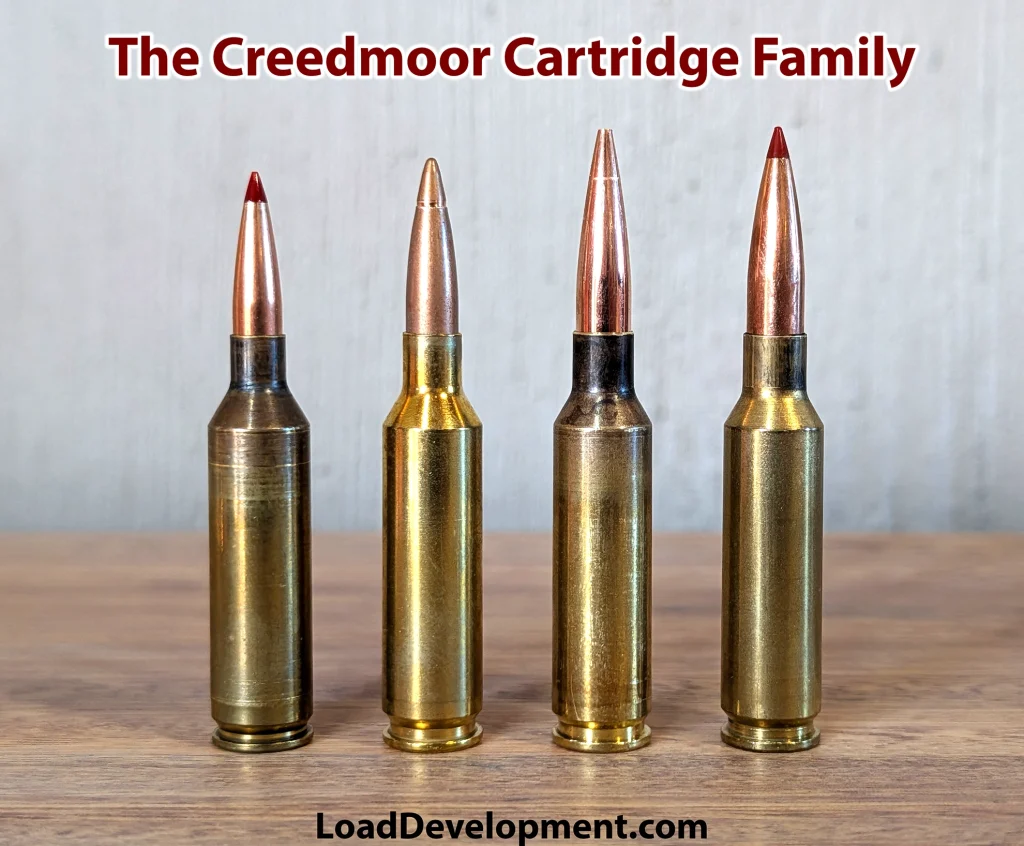
The 25 Creedmoor is a modern quarter bore cartridge built from the Creedmoor family, and it matters because it gives you a practical middle ground between light-recoiling 6mm rifle cartridges and harder-hitting 6.5 options.
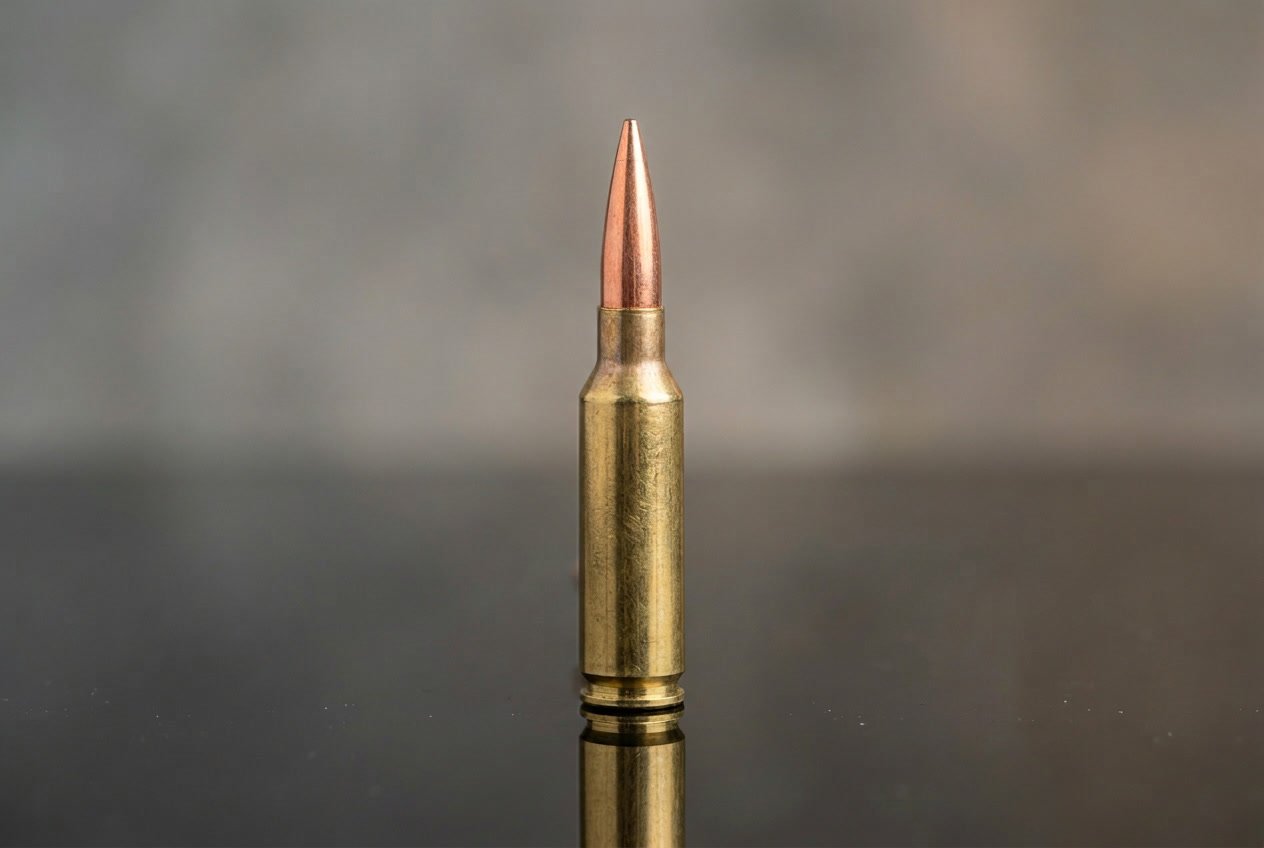
If you shoot long range, compete in PRS or NRL Hunter, or want a short-action hunting round with better wind behavior than many shooters expect from a .257, this cartridge deserves a close look. It is not just another necked-down experiment that looks good on paper.
What makes the 25 Creedmoor worth your attention is simple: it pairs modern case geometry with long, heavy .257 bullets that carry velocity well, drift less in wind, and stay very shootable from field positions.
25 Creedmoor Load Data (Popular Heavy Bullets)
The 25 Creedmoor shines when pushing heavy, high-BC bullets like the 133gr Berger Elite Hunter, 135gr Berger Hybrid Target, or 134gr Hornady ELD-M. Powders in the H4350 and N555 burn rate class offer the most consistent velocities and temperature stability.
| Bullet Weight | Powder | Starting Load (gr) | Max Load (gr) | Max Velocity (fps) |
|---|---|---|---|---|
| 133gr Berger Elite Hunter | N555 | 41 | 43.5 | 2880 |
| 135gr Berger Hybrid Target | H4350 | 37.0 | 40.0 | 2 800 |
| 134gr Hornady ELD-M | Vihtavuori N555 | 38.3 | 43.4 | 2 800 |
Disclaimer: Always start 10% below maximum loads and work up while watching for pressure signs. For access to our complete, interactive 25 Creedmoor powder and bullet database, check out LoadForge.
You will usually see it described as a bridge cartridge. That is accurate. It sits between the 6mm Creedmoor and 6.5 Creedmoor in recoil, bullet weight, and intended use, while giving you a very appealing mix of flat trajectory, useful hunting energy, and solid competition fit.
Key Takeaways
- You get a short-action quarter bore cartridge built around modern, high-BC .257 bullets.
- You can expect a useful balance of recoil, wind performance, and hunting capability.
- You will need the right twist rate and bullet choices to get the best from it.
- The lightest caliber that makes power factor for NRL Hunter matches.
What It Is and Why Shooters Care
The 25 Creedmoor is a .257 caliber cartridge based on the 6.5 Creedmoor case. Its appeal comes from modern case geometry, short-action compatibility, and access to better .257 bullets than older 25-caliber cartridges ever had.
Where It Sits Between 6mm Creedmoor and 6.5 Creedmoor
If you have spent time behind both a 6mm Creedmoor and a 6.5 Creedmoor, the 25 Creed gives you a familiar in-between feel. Recoil is usually softer than 6.5 Creedmoor, while barrel life tends to be more forgiving than many hot 6mm setups.
That matters in real use. From barricades or improvised hunting positions, the cartridge stays controllable enough to spot impacts, and it carries more bullet weight than the typical 6mm match setup.
How the 6.5 Creedmoor Case Was Necked Down
At its core, this is the 6.5 Creedmoor case necked down to accept .257 caliber bullets. That sounds simple, and in one sense it is, because the parent case already had the right dimensions for short-action feeding, useful powder capacity, and efficient combustion.
What shooters care about is not just the neck-down process. It is the way Creedmoor cartridges use case geometry and chamber design to let long bullets sit where they should without stealing too much powder space.

Why Modern .257 Bullets Changed the Conversation
Older 25-caliber cartridges were often tied to lighter hunting bullets. That limited their reputation in precision shooting.
Modern high ballistic coefficient .257 bullets changed that. Once bullets like the 128-grain ELD-X, 134-grain ELD Match, and 138-grain A-Tip showed up, the quarter bore cartridge category started looking much more serious at distance.
Origins, Standardization, and Market Adoption
The 25 Creedmoor started as a wildcat cartridge and moved into the mainstream once factory support and standardization arrived. That shift is what turned it from an enthusiast project into a cartridge rifle manufacturers now take seriously.
From Wildcat Cartridge to Hornady Factory Support
For years, shooters built 25 Creedmoor rifles by forming brass from 6.5 Creedmoor and running custom chambers. It had a loyal following because the concept worked long before factory ammo existed.
Hornady changed the market by giving it factory support and bringing it into formal standardization. With SAAMI acceptance, the cartridge gained pressure specs, chamber standards, and a real path for broader factory adoption.
The 2Fity-Hillbilly Backstory
If you followed quarter-bore conversations before factory launch, you probably heard the name 2Fity-Hillbilly. That nickname was tied to one of the early pushes for a practical .25-caliber precision cartridge built around modern bullets and Creedmoor-style efficiency.
The nickname stuck because it captured what many shooters liked about the idea. This was a serious performance cartridge without trying to be exotic.
Why Rifle Manufacturers Are Paying Attention
Factory support changes everything. Once ammo and chamber specs are available, rifle manufacturers can commit to it with much less risk.
That is why names like Christensen Arms and other makers have started paying attention. A cartridge in the Creedmoor family already fits familiar short-action platforms, magazine lengths, and buyer expectations.
Ballistics and Downrange Behavior
25 Creedmoor Ballistics & 1,000 Yard Drop Chart
To understand why the 25 Creedmoor is dominating PRS and hunting fields, you have to look at its trajectory. Pushing a high-BC bullet at 2,850 fps gives it a significant wind-drift advantage over the 6.5 Creedmoor, while hitting harder than the 6mm Creedmoor.
Below is a standard 1,000-yard drop chart for a 135gr Berger Hybrid Target leaving a 26-inch barrel at 2,850 fps (100-yard zero, standard atmospherics).
| Range (Yds) | Velocity (fps) | Energy (ft-lbs) | Drop (MOA) | Wind Drift (MOA @ 10mph) |
|---|---|---|---|---|
| 100 | 2 713 | 2 207 | 0.0 | 0.47 |
| 300 | 2 450 | 1 799 | 3.72 | 1.4 |
| 500 | 2 201 | 1 452 | 8.91 | 2.45 |
| 800 | 1 854 | 1 030 | 18.55 | 4.26 |
| 1000 | 1 640 | 806 | 26.45 | 5.66 |
Want to run these numbers for your exact rifle, altitude, and temperature? Use our free Trajek External Ballistics Calculator to generate a custom drop chart.
This cartridge earns its reputation through efficient muzzle velocity, strong ballistic coefficient values, and very respectable downrange performance. The real story is not raw speed alone, it is how the bullet behaves after 400, 600, and 800 yards.
25 Creedmoor Recoil Energy The 25 Creedmoor produces approximately 12 to 14 ft-lbs of recoil energy in a standard 9-pound rifle. This splits the difference perfectly between the 6mm Creedmoor (~10 ft-lbs) and the 6.5 Creedmoor (~15 to 17 ft-lbs), making it exceptionally easy to spot your own impacts through the scope during PRS matches or while hunting.
Muzzle Velocity, Muzzle Energy, and Kinetic Energy
Factory and field numbers vary by barrel length and bullet choice. A common reference point is a 128-grain ELD-X around 2,850 fps, while heavy match bullets like the 134-grain ELD Match often run in the low-to-mid 2,800s from 24- to 26-inch barrels.
Here is a practical snapshot:
| Load | Typical Muzzle Velocity | Approx. Muzzle Energy |
|---|---|---|
| 110-grain Hornady ELD-X | 3,000 to 3,150 fps | 2,200 to 2,420 ft-lbs |
| 128-grain ELD-X | 2,800 to 2,900 fps | 2,225 to 2,390 ft-lbs |
| 134-grain ELD Match | 2,780 to 2,860 fps | 2,300 to 2,435 ft-lbs |
| 138-grain A-Tip | 2,700 to 2,800 fps | 2,235 to 2,400 ft-lbs |
On the firing line, it feels efficient rather than fast for the sake of speed. You are getting useful kinetic energy without stepping into magnum recoil. Calculate your exact bullet energy on our free Muzzle Energy Calculator.
Trajectory, Bullet Drop, and Wind Drift
The 25 Creedmoor offers a flat trajectory, especially with the lighter hunting loads. Still, your real advantage at long range is often wind drift, not bullet drop.
That is where this cartridge tends to stand out. With sleek bullets and good bc numbers, it can show less wind drift than comparable 6mm Creedmoor or 6.5 Creedmoor loads under the same conditions. In practical terms, that can mean cleaner corrections and fewer borderline misses in switchy wind.
Ballistic Coefficient and Heavy-for-Caliber Bullets
Heavy-for-caliber bullets are the reason this cartridge became relevant so quickly. The 134-grain ELD Match and 138-grain A-Tip give you high ballistic coefficient numbers in a .257 package that older quarter-bores were never built around.
You see the benefit farther downrange. Velocity retention stays strong, drop stays manageable, and the bullet is less vulnerable to small wind-call errors.
Competition and Field Use
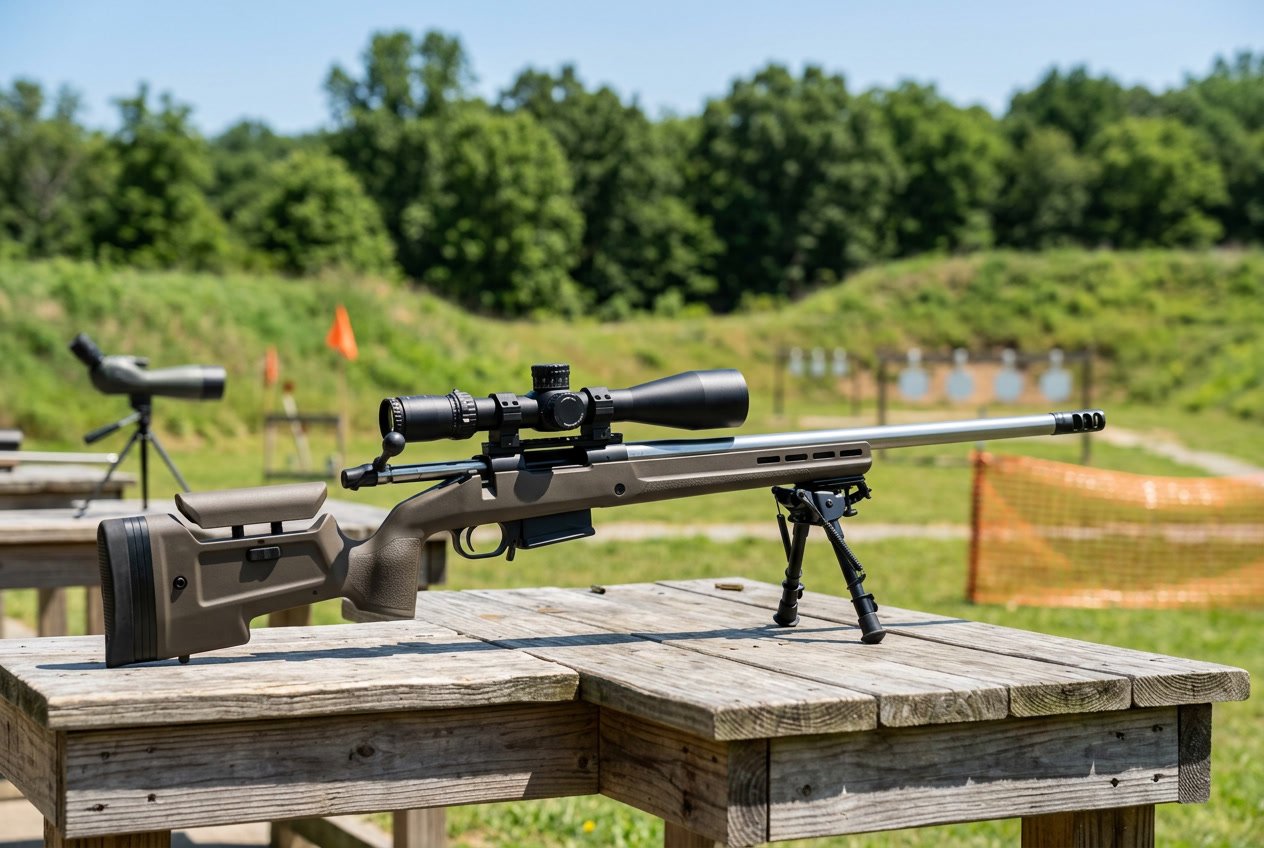
The 25 Creedmoor fits a narrow but very real overlap between match use and hunting use. If you want one rifle that can handle steel, field matches, predators, and deer-size game, this cartridge makes a lot of sense.
Why It Appeals to PRS and Long-Range Shooters
For PRS-style shooting, the draw is easy to explain. You get manageable recoil, strong shootability, and better-than-expected wind performance.
When I have watched shooters run these rifles well, the pattern is consistent. They can stay in the gun, track the reticle better than with a 6.5, and still hold onto more bullet weight and better downrange authority than many 6mm loads.
NRL Hunter Power Factor and Velocity Limits
NRL Hunter changes the conversation because power factor matters. The 25 Creedmoor can meet that requirement with the right bullet and velocity combination, especially with heavy bullets like the 138-grain A-Tip.
That gives you a factory-supported option that is efficient without being excessive. If you are trying to stay inside practical velocity limits while still clearing power factor, this cartridge lands in a useful spot.
Predator Hunting and Big-Game Practicality
For predator hunting, lighter bullets can make the cartridge flat-shooting and easy to place. For deer and similar game, the Hornady ELD-X line, especially the 110-grain Hornady ELD-X and 128-grain ELD-X, gives you a sensible hunting setup with reliable terminal performance.
This is not a do-everything elk round. For coyotes, antelope, whitetails, mule deer, and similar-sized game, it is very practical if your bullet choice matches the job. AJ at LoadDevelopment.com has also mentioned an upcoming ultimate all-round hunting and NRL Hunter rifle build in 25 Creedmoor, which makes sense because this cartridge lines up well with that exact dual-purpose role.
How It Compares to Other Quarter-Bores and Creedmoors
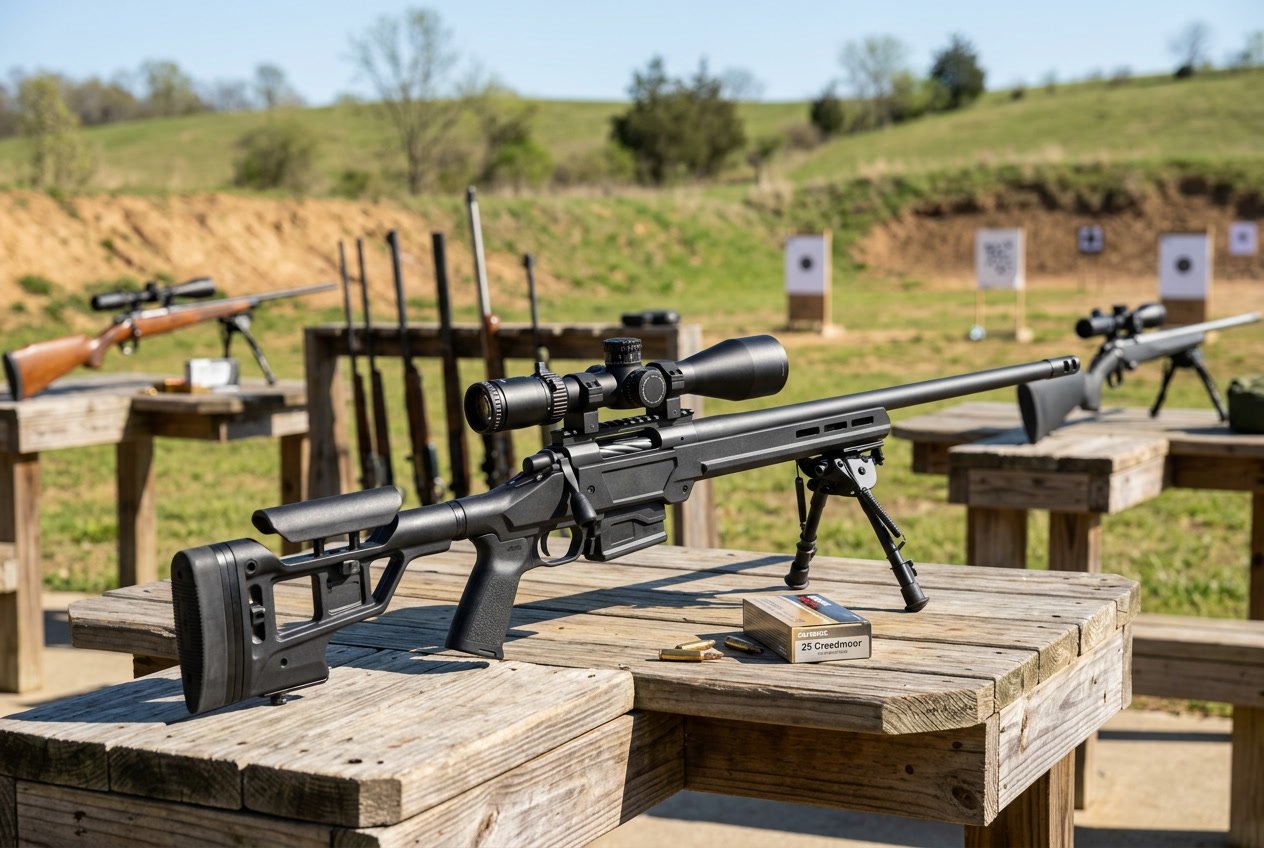
The easiest way to judge the 25 Creedmoor is to compare recoil, barrel life, and real downrange behavior against the cartridges you probably already know. It is not replacing every quarter bore cartridge, and it does fill a genuine gap.
25 Creedmoor vs 6.5 Creedmoor
Against 6.5 Creedmoor, the 25 Creedmoor usually gives you less recoil and flatter flight with comparable modern bullets. It can also show better wind behavior in certain match-style bullet pairings.
The 6.5 still wins on broad factory availability and bullet selection depth. If you want a more refined long-range and crossover hunting tool, the 25 often feels easier to shoot well.
25 Creedmoor vs 6mm Creedmoor
Against 6mm Creedmoor, the 25 Creedmoor gives you more bullet mass, more energy, and often better barrel life. Recoil is higher than a 6mm, though still moderate.
This is where many serious shooters see the trade. If you want the lightest recoil possible, 6mm still has a place. If you want a little more authority without jumping to 6.5 recoil, the 25 Creedmoor is very attractive.
25 Creedmoor vs 25-06 Remington, 257 Roberts, and 257 Weatherby Magnum
Compared to 25-06 Remington, the 25 Creedmoor gives you short-action fit, less powder use, and a better setup for long heavy bullets. The 25-06 still offers plenty of speed, especially with traditional hunting bullets.
Against the 257 Roberts and .257 Roberts, the Creedmoor is much more modern in chamber and bullet intent. Against the 257 Weatherby Magnum, it gives up speed, yet asks far less of the shooter in recoil, barrel wear, and rifle setup.
If shootability matters as much as raw velocity, the 25 Creedmoor is the more balanced choice.
Reloading Considerations and Rifle Setup

The 25 Creedmoor is especially appealing if you reload, because this is where you can tune the cartridge to your exact use. A good setup starts with twist rate, then bullet choice, then a realistic velocity goal that preserves barrel life.
Twist Rate, Bullet Selection, and Stability
If you want to run the modern heavy bullets that define this cartridge, a fast twist matters. A 1:7.5 twist has become a common answer because it stabilizes bullets like the 134-grain ELD Match and 138-grain A-Tip well.
For hunting, you can also go lighter with bullets like the Hornady V-MAX or Hornady ELD-X. Just be clear about your intended role before you choose a barrel, because the ideal predator rifle and the ideal heavy-match build are not exactly the same rifle.
Common Powders and Practical Velocity Windows
The cartridge tends to work well with medium to medium-slow powders. H4350 remains a natural starting point, and many serious reloaders also look at N555 and N150 depending on bullet weight, barrel length, and the pressure curve they want.
A practical approach is to chase consistency first and muzzle velocity second. In my experience, the most useful loads are rarely the absolute fastest. They are the ones that hold low SDs, feed cleanly, and stay stable across conditions. LoadDevelopment.com covers this kind of Creedmoor-family load work well if you want a broader context.
Barrel Length, Barrel Life, and Build Decisions
A 24- to 26-inch barrel is a common sweet spot. That gives you enough tube to realize good downrange performance without making the rifle awkward.
Barrel life is one of the cartridge’s selling points relative to many 6mm hot rods. It is still a performance round, so you should expect wear, just not at the same pace as the more aggressive small-bore options. If you are looking at a factory rifle from Christensen Arms or planning a custom build, decide early whether your priority is field carry, match balance, or one-rifle versatility.
Frequently Asked Questions


AJ Deysel is a competitive rifle shooter in the PRS and NRL Hunter series, a lifelong hunter, and a recognized ballistics specialist whose load development expertise has been featured by industry leaders like Hornady. He is the founder and lead editor of LoadDevelopment.com. Read more about AJ or view our Editorial & Testing Guidelines.