If you are still shooting through plastic screens and sunshades to get your muzzle velocity, you are wasting your time.
Over the last two years, the shooting chronograph market has undergone a complete revolution. The days of calling a public range ceasefire to set up a tripod 15 feet downrange—only to get an “Error” reading because a cloud blocked the sun—are officially over. Furthermore, strapping a magnetic bayonet to your barrel and destroying your rifle’s harmonics just to get a velocity reading is no longer acceptable for precision load development.
Today, compact Doppler radar is the undisputed standard.
As a competitive PRS and NRL Hunter shooter, I rely on pristine data. A single-digit Standard Deviation (SD) is the difference between a first-round impact at 1,000 yards and a complete miss. You need a chronograph that sits on the bench, ignores the muzzle blast from the guy next to you, and captures every single shot flawlessly without altering your point of impact.
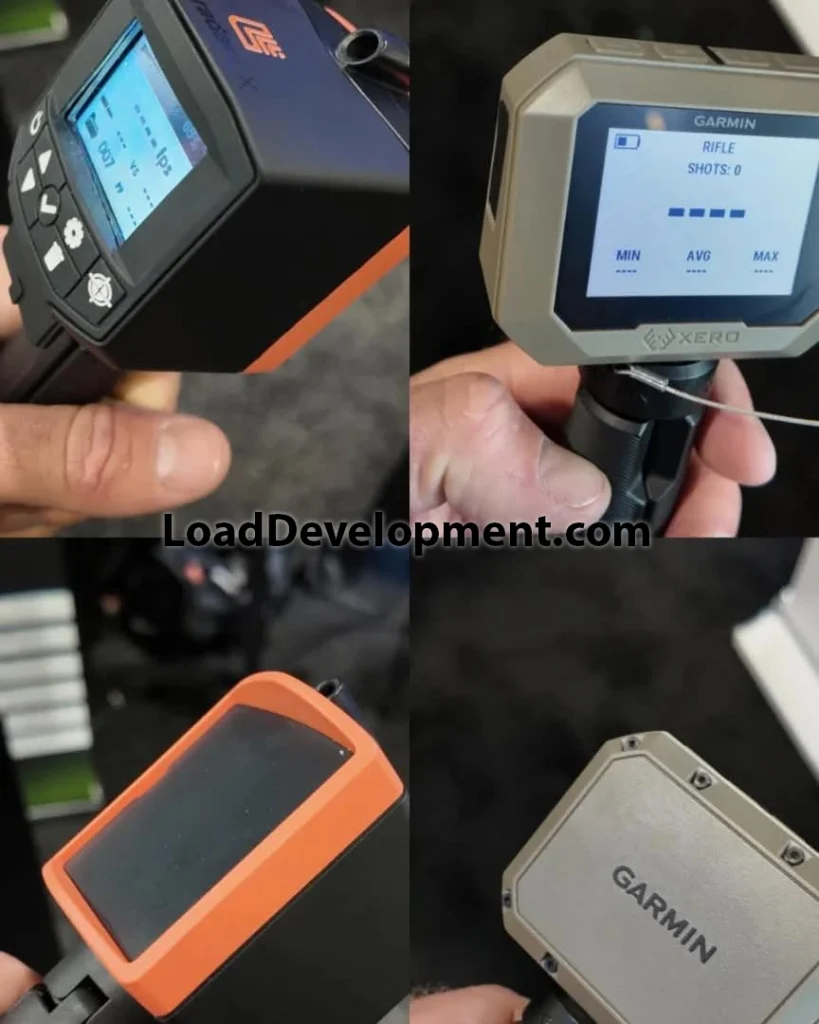
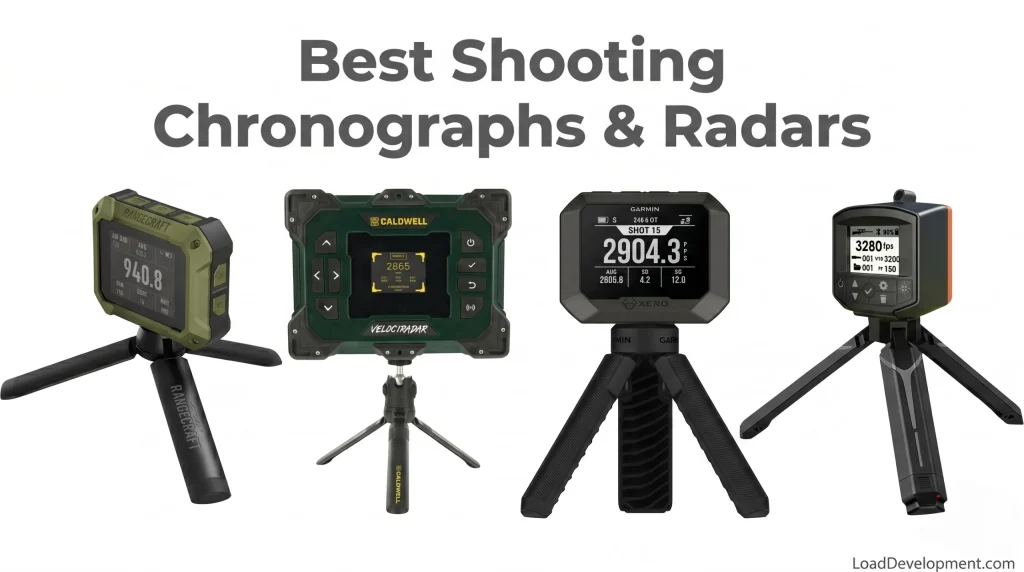
Whether you are looking for the absolute cutting-edge tracking of the new Garmin Xero C2, the massive value of the Athlon Rangecraft, or a budget-friendly entry into radar technology, these are the best shooting chronographs on the market right now.
Here is how the top units stack up.
| Model | Technology | Velocity Range | App Integration | AJ’s Verdict |
|---|---|---|---|---|
| Garmin Xero C2 | Doppler Radar | 100 – 5,000 FPS | Garmin ShotView™ | Best Overall. The new king. Tracks up to 10 shots per second—unbeatable for rapid-fire PRS stages. |
| Athlon Rangecraft Velocity Pro | Doppler Radar | 65 – 5,000 FPS | Athlon Ballistics Lite | Best Value. Stealing massive market share. Flawless 50-session storage and doesn’t mess with barrel harmonics. |
| Garmin Xero C1 Pro | Doppler Radar | 100 – 5,000 FPS | Garmin ShotView™ | Top Tier. The pocket-sized unit that killed optical chronos. Still elite if you don’t need the C2’s tracking speed. |
| Labradar LX | Doppler Radar | Sub-sonic to 4,000+ FPS | LabRadar App | Best Compact Upgrade. Finally fixes the bulky, wind-catching form factor of the original orange box. |
| Caldwell VelociRadar | Chirp Radar | Up to 4,000+ FPS | Caldwell App | Best Entry-Level Radar. A solid budget-friendly alternative to the Garmin units for casual load development. |
Pro Tip: Once you have your precise muzzle velocity and Standard Deviation (SD) from your radar, plug those numbers into Trajek for external ballistics, or LoadForge to refine your internal ballistics.
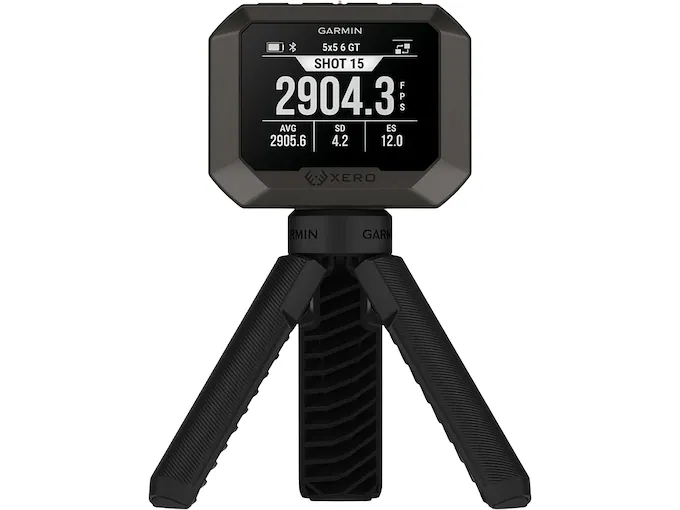
1. Garmin Xero C2 – Best Overall Radar Chronograph
When Garmin released the original Xero C1 Pro, it effectively killed the optical chronograph market overnight. The new Garmin Xero C2 takes that exact same pocket-sized, foolproof footprint and upgrades the internal processing for high-volume, rapid-fire shooters.
As a competitive shooter, the most significant upgrade in the C2 is its ability to track up to 10 shots per second. If you are running a fast PRS stage, doing a rapid string of fire to test barrel heat shift, or running a gas gun, older chronographs would frequently drop shots while processing. The C2 captures every single velocity reading from 100 FPS up to 5,000 FPS without missing a beat.
Because it operates on Doppler radar and sits next to your rifle rather than strapping to it, your barrel harmonics remain completely untouched. You get your true zero and your true velocity simultaneously.
Key Specs:
- Velocity Range: 100 to 5,000 FPS
- Tracking Speed: Up to 10 shots per second
- App Integration: Garmin ShotView™
- Footprint: Pocket-sized, tripod mountable
AJ’s Take: The Garmin Xero C2 is currently the gold standard. You turn it on, point it downrange, and shoot. The ShotView app instantly calculates your Extreme Spread (ES) and Standard Deviation (SD). Once you have that pristine SD data, you can confidently plug your muzzle velocity into Trajek to generate a flawless drop chart for your next match.
When you use the link above to shop for one of the products, we receive a small commission from the sale, at no extra cost to you. This helps us keep this site going, and does not affect the price you would pay usually in any way whatsoever.
Pros:
- Flawless tracking during rapid-fire strings (10 shots/sec).
- Zero impact on barrel harmonics or point of impact.
- Incredibly compact and easy to transport.
Cons
- Premium price point.
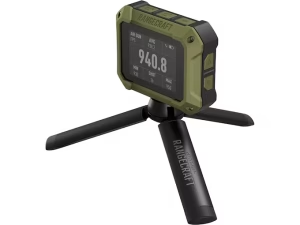
2. Athlon Rangecraft Velocity Pro – Best Value Doppler Radar
If there is one unit actively stealing market share from Garmin right now, it is the Athlon Rangecraft Velocity Pro. Athlon looked at the compact radar market and built a unit that matches the premium features of the top-tier models but adds a few highly practical field upgrades.
First, it has a massive velocity range, picking up projectiles from as slow as 65 FPS all the way to 5,000 FPS with +/- 0.1% accuracy. This makes it just as useful for archery and heavy subsonic load development as it is for centerfire rifles.
From a load development perspective, the session management on the Rangecraft is exceptional. The device itself stores up to 50 sessions (with 100 shots each) and displays your average velocity, SD, and ES on a bright 2.4″ LCD screen. If you pull a shot or get a bad read, you just hold the “DEL” button to scrub it from your string immediately without having to stop your session or dig into the app.
Key Specs:
- Velocity Range: 65 to 5,000 FPS (+/- 0.1% accuracy)
- Weight & Durability: 4.7 ounces, IP67 Waterproof
- Display: 2.4″ LCD
- App Integration: Athlon Ballistics Lite (Bluetooth)
AJ’s Take: Weighing only 4.7 ounces and boasting an IP67 waterproof rating, this is a rugged piece of kit. The Athlon Ballistics Lite app allows you to automatically calculate Kinetic Energy and Power Factor simply by entering your projectile weight—a massive time-saver for NRL Hunter competitors checking power factor limits. It gives you premium Doppler radar accuracy without the Garmin price tag.
When you use the link above to shop for one of the products, we receive a small commission from the sale, at no extra cost to you. This helps us keep this site going, and does not affect the price you would pay usually in any way whatsoever.
Pros:
- Exceptional value for a true Doppler radar unit.
- Reads down to 65 FPS (great for subsonics/archery).
- On-device shot deletion keeps your SD calculations clean in real-time.
- Calculates Kinetic Energy and Power Factor automatically.
Cons
- Slightly larger footprint than the Garmin units.
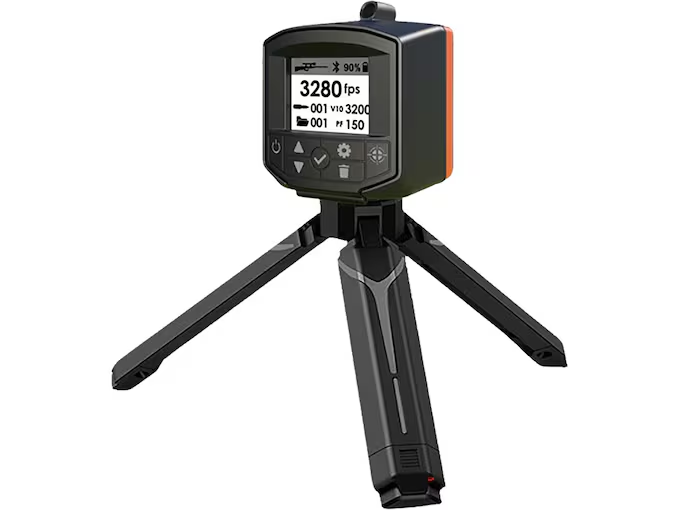
3. Labradar LX – Best Compact Upgrade
For years, the original orange Labradar was the undisputed king of the chronograph world. It brought Doppler radar to the consumer market, but it had a massive flaw: it was the size of a textbook, required a bulky tripod, and acted like a sail in heavy wind. Worse, it was notorious for picking up the muzzle blast of the guy shooting at the bench next to you.
The new Labradar LX is their answer to the Garmin Xero, and it finally fixes the form-factor problem.
The LX shrinks all of Labradar’s proven Doppler technology into a pocket-sized aluminum housing. It features a bright, easy-to-read display and comes out of the box with a mini-tripod. Most importantly for competitive shooters, they have vastly improved the triggering sensitivity. You no longer have to worry about false reads from adjacent shooters or missing shots because the mic didn’t pick up a suppressed .22 LR.
Key Specs:
- Velocity Range: Sub-sonic to 4,000+ FPS
- Build: Aluminum housing, highly durable
- App Integration: LabRadar App (Bluetooth)
- Footprint: Compact, includes mini-tripod
AJ’s Take: If you are a die-hard Labradar fan who refused to switch to Garmin, the LX is the upgrade you’ve been waiting for. It provides the same hyper-accurate, downrange tracking the original was famous for, but in a package that actually fits in your range bag. It’s a massive improvement over the legacy unit.
They are however currently not available in the US temporarily due to them changing US distributors.
When you use the link above to shop for one of the products, we receive a small commission from the sale, at no extra cost to you. This helps us keep this site going, and does not affect the price you would pay usually in any way whatsoever.
Pros:
- Fixes the bulky, wind-catching design of the original.
- Aluminum housing is exceptionally durable.
- Improved triggering eliminates false reads from adjacent benches.
Cons
- Facing incredibly stiff competition from Garmin and Athlon at its price point.

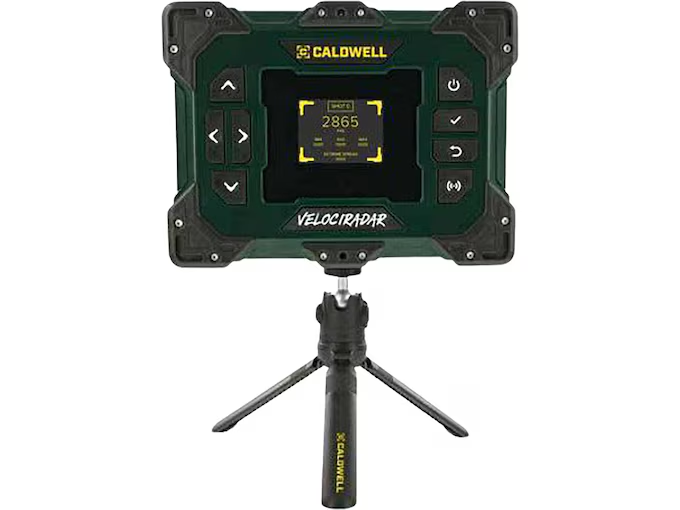
4. Caldwell VelociRadar – Best Entry-Level Radar
Caldwell has long been the go-to brand for budget-friendly optical chronographs (the classic green Ballistic Precision model). But as the market shifted away from optical screens, Caldwell adapted by releasing the VelociRadar.
Unlike the Garmin or Athlon which use Doppler radar, the Caldwell VelociRadar utilizes “Chirp” radar technology. This allows it to track the bullet continuously downrange to provide highly precise muzzle velocities without the need for downrange setup or strapping anything to your barrel.
While it doesn’t have the ultra-compact footprint of the Xero or the Rangecraft, it is significantly safer and simpler to operate than traditional hooded chronographs. You set it on the bench, point it at the target, and shoot. It connects seamlessly to the Caldwell app, which is surprisingly robust for recording strings and calculating your Standard Deviation.
Key Specs:
- Technology: Chirp Radar
- Velocity Range: Up to 4,000+ FPS
- App Integration: Caldwell App (Bluetooth)
- Mounting: 1/4-20 threaded housing for tripod mounting
AJ’s Take: The VelociRadar is a bridge product. It is ideal for the casual reloader or hunter who knows optical chronographs are dead, but can’t quite justify the $600 price tag of a Garmin C2. It gives you the primary benefits of radar—no downrange setup and no barrel harmonic interference—at a more accessible price point.
When you use the link above to shop for one of the products, we receive a small commission from the sale, at no extra cost to you. This helps us keep this site going, and does not affect the price you would pay usually in any way whatsoever.
Pros:
- More affordable entry point into radar technology.
- No screens, no downrange setup, no lighting restrictions.
- Solid app integration for basic load data tracking.
Cons
- Bulkier than the Garmin or Athlon units.
- Chirp radar is slightly different from true Doppler, though practically unnoticeable for casual use.
How to Choose a Shooting Chronograph: A Buyer’s Guide
If you are new to precision shooting or load development, the sheer number of chronographs on the market can be overwhelming. As a competitive PRS and NRL Hunter shooter, I can tell you that the chronograph market has completely shifted over the last two years.
To make the right choice, you need to understand the three primary technologies used to measure bullet velocity, and why precision shooters are abandoning two of them.
1. Optical Chronographs (The Old Standard)
Examples: Caldwell Ballistic Precision, Competition Electronics ProChrono
Optical chronographs use light sensors (the “screens”) to detect the shadow of the bullet as it passes over them.
- How they work: You shoot through a V-shaped sunshade. The device measures the time it takes the bullet to travel from the first sensor to the second.
- The Problem: They are highly dependent on lighting conditions. If it’s too cloudy, too sunny, or if the sun is at a low angle, you will get error readings. Furthermore, you have to set them up 10 to 15 feet downrange, which means calling a ceasefire at a public range every time you need to adjust them.
- AJ’s Verdict: Dead technology for precision rifle shooters. They are fine for casual pistol shooters on a tight budget, but if you are doing serious load development, the error rate and setup hassle are unacceptable.
2. Magnetic Chronographs (The Bridge Technology)
Examples: MagnetoSpeed V3, MagnetoSpeed Sporter
Magnetic chronographs strap directly to the barrel or suppressor of your rifle.
- How they work: They use electromagnetic sensors in a bayonet-style deck. As the copper or lead bullet passes over the sensors, it disrupts the magnetic field, and the device calculates the speed.
- The Problem: Because you are strapping a weight to the end of your barrel, it fundamentally alters your barrel harmonics. You cannot check your velocity and shoot for groups at the same time. Your point of impact (POI) will shift, sometimes drastically. You have to shoot a string to get your velocity, take the device off, and then shoot another string to check your zero and group size. This burns expensive components and barrel life. Unless you get a third party additional mount, that holds it on another rod attached to your stock or chassis through a picatinny rail.
- AJ’s Verdict: Still a viable budget option if you buy a used one, but the hassle of altering barrel harmonics makes them obsolete compared to modern radar.
3. Doppler and Chirp Radar (The Modern Standard)
Examples: Garmin Xero C2, Athlon Rangecraft, Labradar LX
Radar chronographs sit on the bench next to your rifle, completely detached from the firearm.
- How they work: They bounce continuous radar waves off the base of the bullet as it travels downrange, measuring the shift in frequency (the Doppler effect) to calculate exact velocity.
- The Advantage: This is the ultimate setup. There are no lighting restrictions, no downrange setup, and absolutely zero impact on your barrel harmonics. You can shoot for your 100-yard zero, measure your group size, and record your Muzzle Velocity, Extreme Spread (ES), and Standard Deviation (SD) all in the exact same string of fire.
- AJ’s Verdict: This is the only technology you should be buying today. The release of pocket-sized units like the Garmin Xero and Athlon Rangecraft means you get lab-grade data in a device the size of a deck of cards.
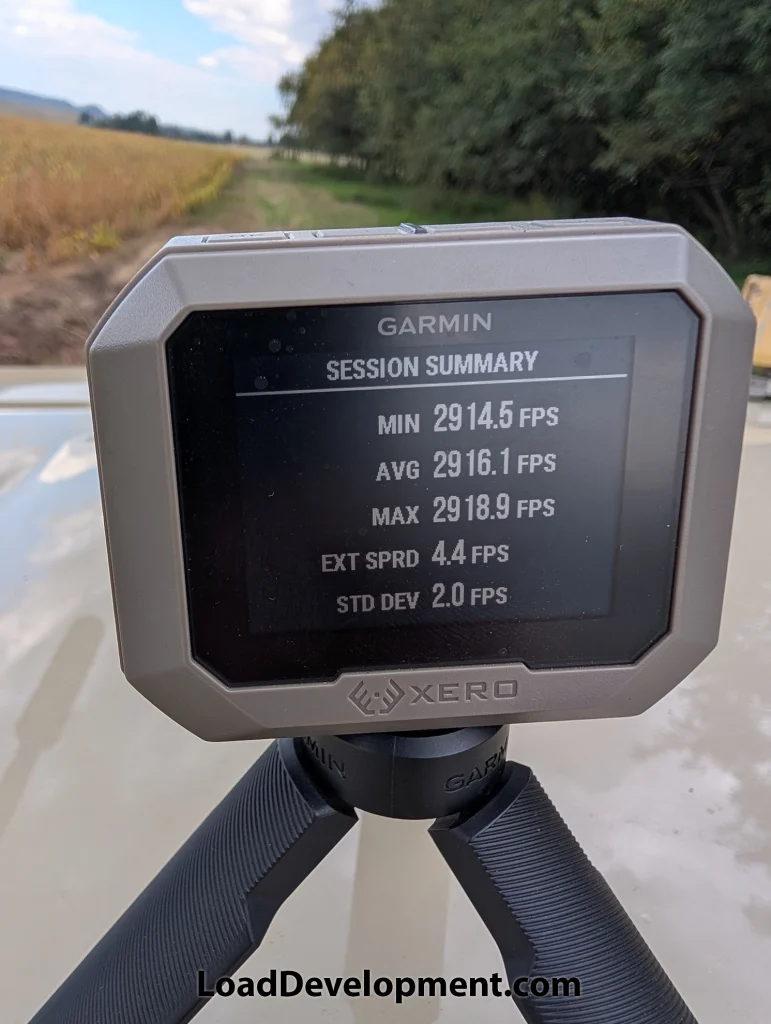
What to Do With Your Chronograph Data
Buying a high-end chronograph is only half the equation. A Garmin or Athlon unit will give you pristine data, but that data is useless if you don’t know how to apply it.
Once you have your true Muzzle Velocity and your Standard Deviation, you need to put those numbers to work:
- Refine Your Load: If your chronograph shows an Extreme Spread of 40 FPS, your load is not finished. Plug your bullet data and powder charges into LoadForge to find the optimal internal ballistics and powder nodes to tighten that ES down to single digits.
- Build Your Drop Chart: Once your load is tuned, take your exact muzzle velocity and plug it into Trajek. Trajek will use your true velocity to calculate exact external ballistics, giving you a flawless drop chart for windage and elevation out to 1,000+ yards.
Stop guessing. Get a radar chronograph, gather the data, and let the math do the work.

Must-Have Upgrades for Your Radar Chronograph
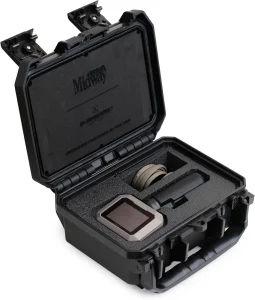
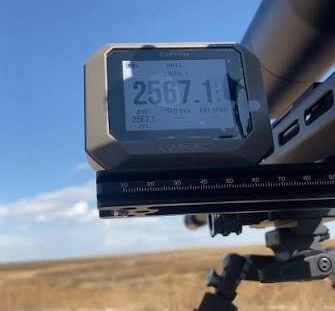
If you are investing $500 to $700 in a Garmin Xero or Athlon Rangecraft, you need to protect it and mount it correctly. The factory tripods are fine for a concrete bench, but for field use or PRS matches, you need a better setup. First, ditch the flimsy cardboard box and get the Chronograph Case. It features a crushproof, IP67 waterproof hard shell with custom pre-cut EVA foam that perfectly fits the Garmin Xero or Athlon Rangecraft, its tripod, and the charging cable. Second, to mount the radar directly to your rifle chassis or a heavy-duty shooting tripod, grab the Arca-Swiss Nodal Slide Clamp. This lightweight, CNC-machined aluminum rail attaches directly onto the bottom of your Garmin or chronograph, allowing you to instantly snap the unit onto any standard Arca-Swiss rail on your rifle without messing around with tiny 1/4-20 threads in the dirt. It allows you to check your rifle muzzle velocity during a shooting stage or shooting from anywhere.
Chronograph Case for Garmin Xero or Athlon Rangecraft:
When you use the link above to shop for one of the products, we receive a small commission from the sale, at no extra cost to you. This helps us keep this site going, and does not affect the price you would pay usually in any way whatsoever.
Quick Release Plate Clamp for Arca Swiss rail for Radar Chronographs:
When you use the link above to shop for one of the products, we receive a small commission from the sale, at no extra cost to you. This helps us keep this site going, and does not affect the price you would pay usually in any way whatsoever.
Frequently Asked Questions About Shooting Chronographs

AJ Deysel is a competitive rifle shooter in the PRS and NRL Hunter series, a lifelong hunter, and a recognized ballistics specialist whose load development expertise has been featured by industry leaders like Hornady. He is the founder and lead editor of LoadDevelopment.com. Read more about AJ or view our Editorial & Testing Guidelines.