If you think a shot timer is only for USPSA pistol shooters running around in tactical vests, you are leaving free points on the table at your next PRS match.
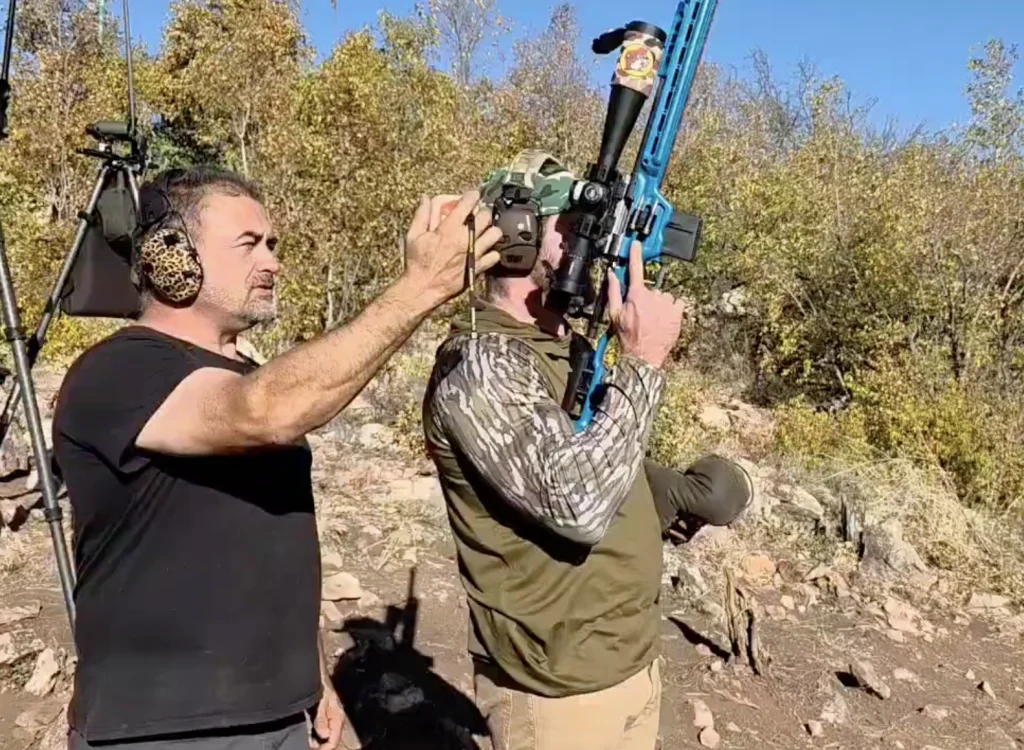
In precision rifle shooting, a shot timer does more than just measure your stage time. It is a critical diagnostic tool. When you are doing load development, how do you choose between two powder charges that both yield a single-digit Standard Deviation? You use a shot timer. The load that allows you to get back on target and fire your second shot faster is the load with the better recoil impulse.
Furthermore, with the advent of modern Bluetooth timers, you can now track your dry fire practice, measure your barricade transition times, and log everything directly to your phone.
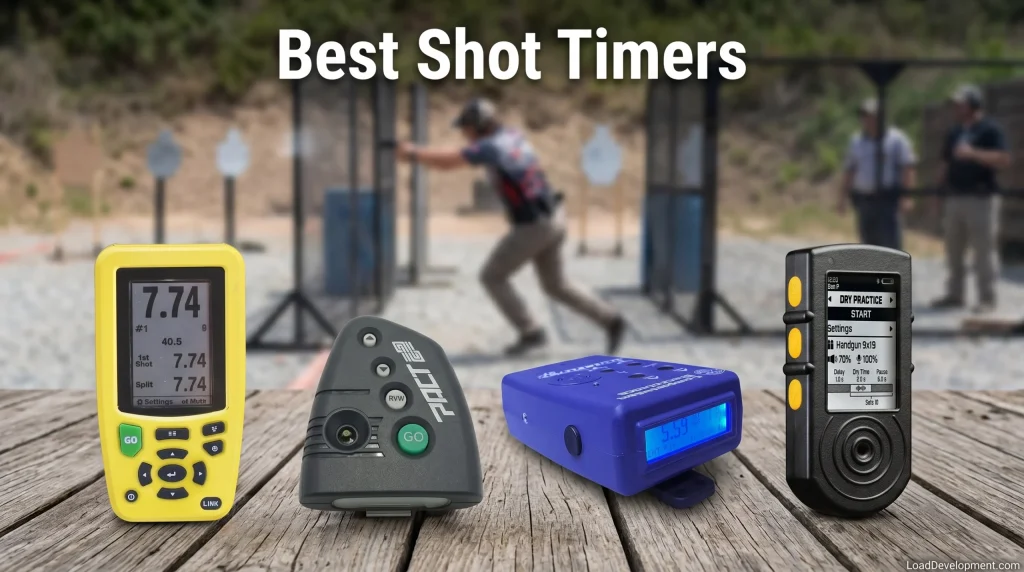
Whether you are looking for the cutting-edge tech of the SG Timer, the bomb-proof durability of the Kestrel KST1000, or the legacy reliability of the PACT Club Timer III, here are the best shot timers on the market for precision shooters.
| Model | Connectivity | Dry Fire Capable? | AJ’s Verdict |
|---|---|---|---|
| Shooters Global (SG) Timer 2 | Bluetooth / App | Yes (Highly Sensitive) | Best Overall. The modern standard. Incredible app integration and picks up suppressed rifles flawlessly. |
| Kestrel KST1000 | Bluetooth / Link App | Yes | Most Durable. Built like a tank. Waterproof, drop-proof, and features the loudest buzzer on the market. |
| Competition Electronics ProTimer BT | Bluetooth / App | No (Live Fire Only) | Best Value. Takes the classic Pocket Pro II design and adds modern Bluetooth logging at a fair price. |
| PACT Club Timer III | None | No (Live Fire Only) | Best Legacy. No screens to break, no apps to crash. Just push the button and shoot. |
1. Shooters Global (SG) Timer 2 – Best Overall Shot Timer
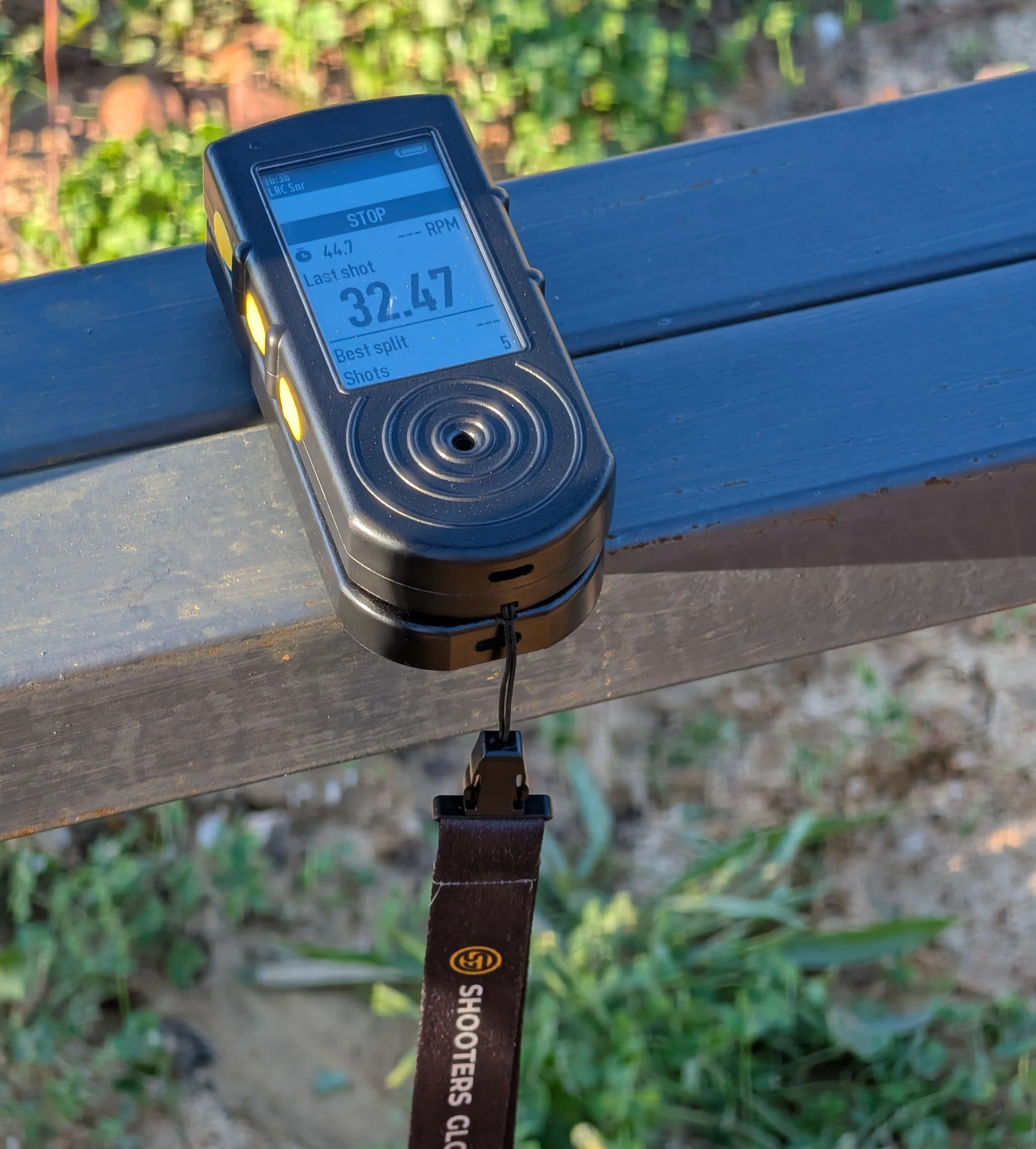
The SG Timer 2 has completely disrupted the shot timer market. For years, shooters were stuck with clunky plastic boxes that looked like they were built in 1995. Shooters Global modernized the concept by focusing heavily on app integration and sensor sensitivity.
For PRS and NRL Hunter competitors, the biggest selling point of the SG Timer is its sensor. Legacy timers often fail to pick up the report of a heavily suppressed 6mm Dasher or .22 LR trainer. The SG Timer’s sensor is so sensitive that you can adjust it to pick up the click of your firing pin during dry fire practice in your living room, or tune it to ignore adjacent shooters at a crowded public range.
When you use the link above to shop for one of the products, we receive a small commission from the sale, at no extra cost to you. This helps us keep this site going, and does not affect the price you would pay usually in any way whatsoever.
Pros:
- Flawless Bluetooth integration with the Drills app.
- Captures dry fire practice (firing pin clicks).
- Easily picks up suppressed rifles and rimfire.
- Magnetic screen allows you to stick it to barricades during training.
Cons
- Premium price point.
2. Kestrel KST1000 – Most Durable / Premium
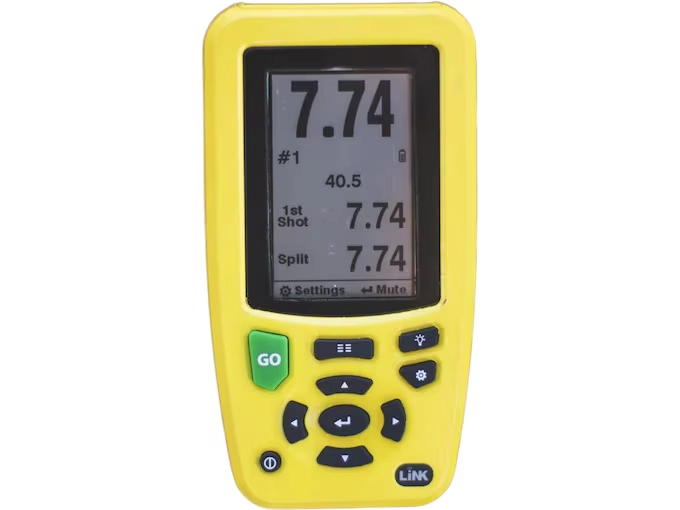
If you shoot precision rifles, you already know and trust the Kestrel name for weather meters. They took that exact same bomb-proof, IP67 waterproof, drop-tested housing and built a shot timer inside it: the Kestrel KST1000.
This timer is designed for Match Directors and shooters who abuse their gear. It features two screens (one on top so you can read it while it hangs from your belt) and an exceptionally loud buzzer that can be heard clearly through double hearing protection. If you frequently shoot in the rain, dust, or mud, this is the timer you want.
When you use the link above to shop for one of the products, we receive a small commission from the sale, at no extra cost to you. This helps us keep this site going, and does not affect the price you would pay usually in any way whatsoever.
Pros:
- Indestructible build quality (IP67 waterproof).
- Dual screens for easy reading on the belt.
- Extremely loud buzzer with adjustable volume.
Cons
- The most expensive timer on this list.
3. Competition Electronics ProTimer BT – Best Value
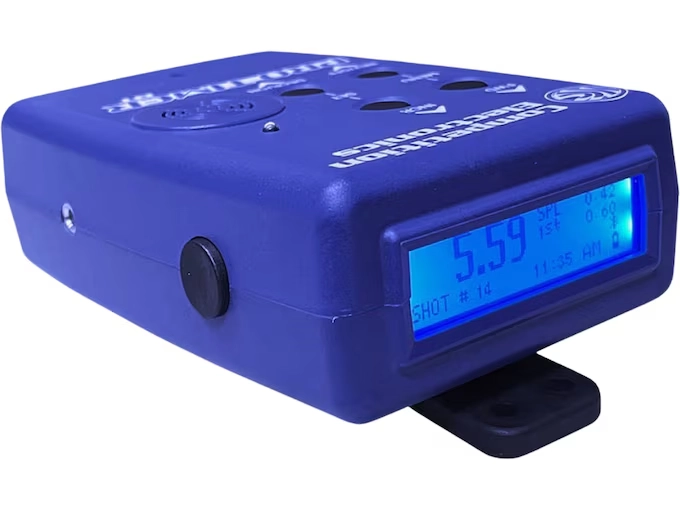
The blue Competition Electronics Pocket Pro II has been a staple on shooting ranges for decades. The new ProTimer BT takes that exact same reliable, ergonomic shape and updates the internals with Bluetooth connectivity.
You get the familiar, easy-to-read screen and simple button layout, but now you can sync your split times to your phone to analyze your strings later. It is the perfect middle-ground for shooters who want modern data logging but prefer the physical feel of a traditional timer over the smartphone-esque SG Timer.
When you use the link above to shop for one of the products, we receive a small commission from the sale, at no extra cost to you. This helps us keep this site going, and does not affect the price you would pay usually in any way whatsoever.
Pros:
- Familiar, highly ergonomic design.
- Reliable Bluetooth app integration.
- Excellent battery life.
Cons
- Not sensitive enough for reliable dry fire practice.
4. PACT Club Timer III – Best Legacy Timer
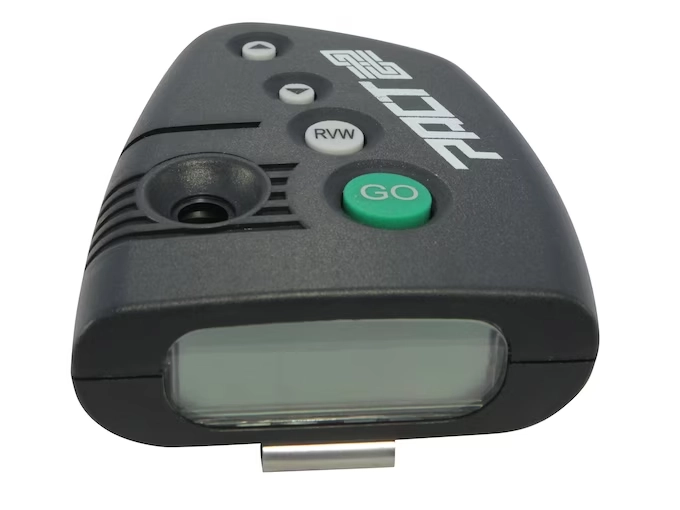
The PACT Club Timer III is the definition of “if it ain’t broke, don’t fix it.” There is no Bluetooth, no app, and no complex menus. It is a rugged piece of plastic with a massive, easy-to-hit “GO” button.
For the shooter who just wants to measure their time on a barricade without fiddling with a smartphone connection, the PACT is still the king. It was designed by shooters, for shooters, and the fact that its design hasn’t changed in years is a testament to its reliability.
When you use the link above to shop for one of the products, we receive a small commission from the sale, at no extra cost to you. This helps us keep this site going, and does not affect the price you would pay usually in any way whatsoever.
Pros:
- Incredibly simple to use—just press GO.
- Ergonomic shape fits perfectly in the hand.
- Very affordable.
Cons
- No modern features, no app logging, and cannot record dry fire.

How to Use a Shot Timer for Load Development
Most shooters think a shot timer is just for measuring speed. But if you are serious about load development, your timer is actually a tool for measuring recoil management.
Let’s say you are running a ladder test for your 6.5 Creedmoor. You find two powder nodes that both yield an excellent Standard Deviation (SD) of 5 FPS. One node is at 2,750 FPS, and the other is at 2,820 FPS. Which one do you choose?
You take your shot timer, set up a target at 100 yards, and fire a 5-shot string with both loads as fast as you can reacquire the target.
- If the 2,820 FPS load gives you an average split time of 1.5 seconds between shots…
- But the 2,750 FPS load gives you an average split time of 0.9 seconds…
You choose the slower load. The shot timer mathematically proves that the lower recoil impulse of the 2,750 FPS load allows you to spot your trace, stay in the scope, and get back on target significantly faster. But that is if you are at the level where the seconds on a PRS barricade timed stage means a podium or not.
The Next Step: Once you use your chronograph and shot timer to find the load with the lowest SD and the fastest split times, you need to log that data permanently. Plug your powder charges, bullet weights, and velocity data into LoadForge to track your exact internal ballistics and ensure you can replicate that perfect load every single time.
Frequently Asked Questions
Only high-end, modern shot timers with adjustable microphone sensitivity (like the SG Timer 2) can pick up the click of a firing pin during dry fire practice. Legacy timers like the PACT Club Timer III are designed only for the loud report of live fire.
Yes, but you may need to adjust the microphone sensitivity. Because suppressors alter the sound signature and decibel level of the gunshot, older timers sometimes struggle to register the shot. Modern timers easily detect suppressed centerfire and even rimfire rifles.
A split time is the exact amount of time that elapses between two consecutive shots. Tracking your split times is the best way to measure your recoil management; faster split times mean the rifle is recoiling straight back and you are reacquiring your sight picture efficiently.

AJ Deysel is a competitive rifle shooter in the PRS and NRL Hunter series, a lifelong hunter, and a recognized ballistics specialist whose load development expertise has been featured by industry leaders like Hornady. He is the founder and lead editor of LoadDevelopment.com. Read more about AJ or view our Editorial & Testing Guidelines.