Fix It Sticks are not cheap, and after two years of running them through PRS matches, hunting season, and general workbench abuse, that price tag makes a lot more sense to me now. This review breaks down exactly what you get, why the cost is what it is, and whether it holds up when your rifle, optic, or pistol actually needs work done right.
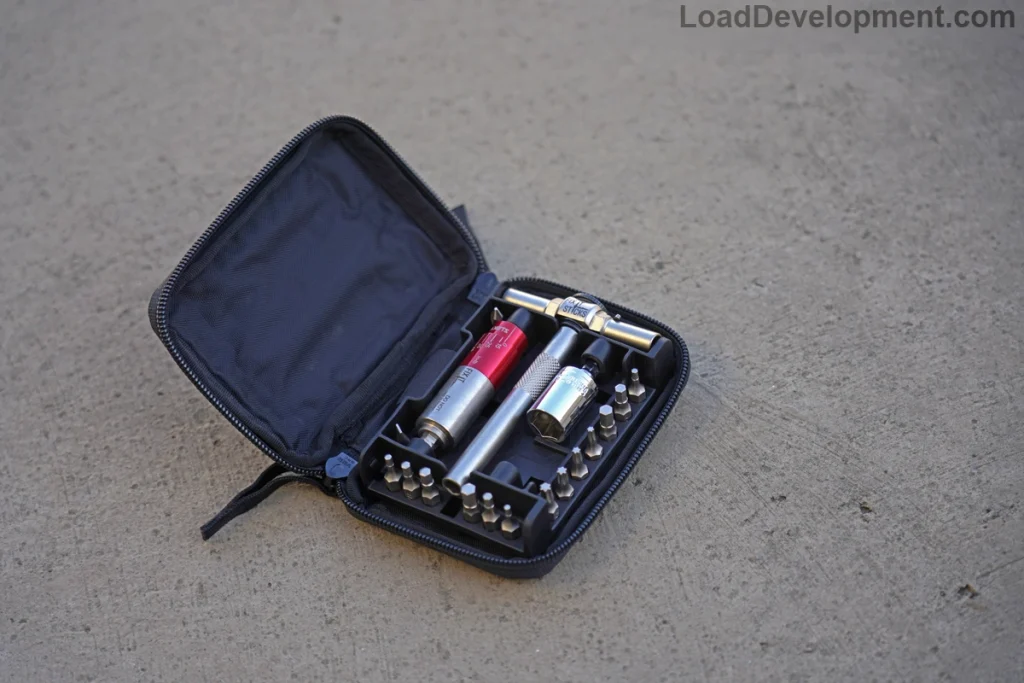
If you shoot competitively, hunt seriously, or carry a duty weapon, the torque on your fasteners is not a detail you can afford to guess at. I have watched a loose scope base cost someone a match, and I have personally dealt with a rail that backed out because I trusted someone else’s torque job instead of checking it myself. This review focuses on the two kits that matter most: the All-in-One Torque Driver Kit, which covers the vast majority of shooters, and The Works Kit, built for people who need a full mobile gunsmithing setup.
How Fix It Sticks Work
Fix It Sticks builds two categories of torque tools: individual torque limiters and all-in-one torque drivers. Both exist to solve the same problem, making it physically difficult to over-torque a fastener on your rifle, pistol, or optic.
Individual torque limiters are small, dedicated tools that snap onto any standard 1/4-inch hex driver or wrench and accept any 1/4-inch hex bit. Each one is locked to a single inch-pound setting. Tighten a fastener with one installed, and once you hit that torque value, it clicks and free-spins, so you physically cannot keep cranking past spec.
They come in two sizes. Small limiters run from 4 to 55 in-lbs in roughly 5 in-lb steps. Large limiters cover 60 through 100 in-lbs. Every one is color-coded and stamped with its torque rating, so sorting through a kit in the field takes seconds, not guesswork.
The limiting factor, no pun intended, is that each tool only does one number. If your action screws call for 65 in-lbs and your scope rings call for 20, you need two separate limiters on hand. That is exactly the gap the all-in-one torque driver was built to close, which is where most shooters should actually start.
The Works Tool Kit with Torque Driver
The Works is the flagship kit, and the version reviewed here includes the All-in-One Torque Driver alongside the full spread of individual torque limiters, not one or the other. That combination is what pushes the price up, but it also makes this the closest thing to a mobile gunsmith bench you can zip into a case.
The torque driver itself covers 0 to 65 in-lbs in a single adjustable tool. Instead of swapping limiters for every fastener, you dial it to the spec you need. Hit an odd number like 24 in-lbs, and you crank it to just under 25 and you’re set. No individual limiter exists for every single obscure spec you’ll run into, but this tool gets you close enough for every real-world application.
The Works Kit makes sense if you need to service everything, rifles, pistols, shotguns, and optics, in one trip, without leaving a tool at home. If you strictly run bolt guns for hunting or PRS, this is more kit than you need. In that case, the All-in-One Torque Driver Kit below covers your bases at a fraction of the cost.

When you use the link above to shop for one of the products, we receive a small commission from the sale, at no extra cost to you. This helps us keep this site going, and does not affect the price you would pay usually in any way whatsoever.
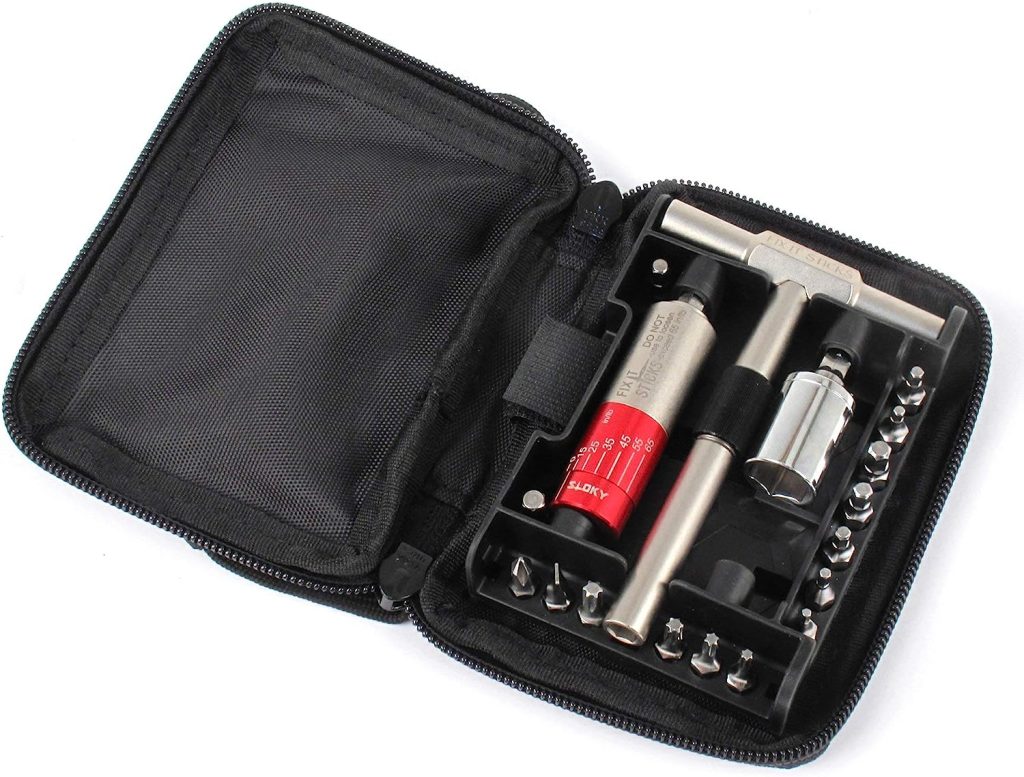
Fix It Sticks all-in-one Torque Driver
This is the kit I have actually carried in my PRS bag and hunting pack for two straight seasons, and it’s the one I recommend to almost everyone who asks me about torque tools. Lighter, cheaper, and simpler than The Works, it still covers the 15 to 65 in-lb range that handles the overwhelming majority of rifle, optic, and action screw specs you’ll ever need.
If you’re not servicing shotguns or running a rotating cast of pistols, you don’t need the specialty bits and extra limiters that come in the bigger kit. You need something that mounts your scope rings correctly, torques your action screws to spec, and does it without adding bulk to your range bag.
Where the All-in-One Torque Driver Kit really earns its keep is in how little you have to think about it. Set the dial, drive the fastener, done. No hunting through a case of color-coded limiters trying to find the 20 in-lb one you swear you packed.
When you use the link above to shop for one of the products, we receive a small commission from the sale, at no extra cost to you. This helps us keep this site going, and does not affect the price you would pay usually in any way whatsoever.
Fix It Sticks Quality
The precision-ground chrome bits are the real difference-maker here. Compared to the generic bit sets I have run through in years past, these grip fastener heads cleanly and resist camming out, which means they don’t chew up expensive action screws or scope ring bolts the way cheaper steel does.
A small but genuinely useful detail: the chrome finish is easy to spot if a bit drops in dim light or gets lost in grass at a match. I have found more than one dropped bit thanks to that reflective glint alone.
The neodymium magnet built into the T-handle deserves its own mention. It holds bits firmly enough that in two years of field use, hauling this kit through matches, hunts, and truck beds, I have never had one fall out unintentionally. If anything, it grips so well that pulling a bit free sometimes takes a deliberate tug.
Build quality like this is exactly why cheap alternatives end up costing more in the long run, a point worth returning to later.
Testing The Torque Calibration
Fix It Sticks doesn’t ship a calibration certificate with these tools, unlike some torque wrenches on the market. That would be a nice touch, though I’ll admit I’m skeptical those certificates reflect testing on every single unit off the line rather than a batch sample.
To check accuracy myself, I torqued several fasteners to specific settings on the All-in-One driver, then cross-checked those same fasteners with three separately calibrated torque wrenches, including a Wheeler Fat Wrench and a Vortex torque wrench. The readings lined up consistently enough that I trust the tool without reservation.
More telling than the bench test is the field record. Every fastener I have torqued with Fix It Sticks, on rifles and optics alike, has stayed put through hunts and competitions. The only fastener that ever backed out on me was a picatinny rail torqued by a gunsmith I didn’t double-check myself, a lesson I don’t plan to repeat.
Conclusion
Every shooter should have one of these kits packed and ready, whether that means a range bag, a truck box, or a hunting pack. When something works loose or needs adjustment in the field, you want the right tool on hand, not a multi-tool that half-strips the fastener while you’re at it.
This isn’t strictly a field tool for me anymore either. The bits and the driver are precise and gentle enough on fasteners that I reach for them first for almost any work on my rifles and optics, even at the bench in the shop.
The price is real, and I won’t pretend otherwise. But from a buy-once-cry-once standpoint, these have earned their keep for me.
I’ve seen the argument elsewhere that Fix It Sticks are unnecessary for most shooters. I disagree, and honestly, that take makes me question how seriously that advice treats gun and optic maintenance. Under-torqued or over-torqued fasteners are a safety and performance issue, not a minor inconvenience, and over-tightening a scope ring alone can crush a scope tube and ruin it permanently.
Any decent torque wrench will get a fastener to spec. But recommending anything less than a high-quality tool, one that won’t strip your fasteners in the process, does shooters a disservice. At minimum, the basic All-in-One kit belongs in every rifle owner’s toolbox.
Fix it sticks alternative
Plenty of alternative torque tool kits exist, some from well-known brands, and it’s tempting to assume they perform the same. They don’t, at least not consistently.
Cheap bit sets are the real problem. Soft steel bits cam out of fastener heads under torque, rounding screw heads and stripping action screws, scope ring bolts, and pistol take-down fasteners. I have personally rounded off more than one fastener over the years using bargain-bin bits that slipped right when it mattered.
Once a fastener rounds out, getting it removed and replaced becomes a real hassle, often requiring specialty extraction tools or a trip to a gunsmith. That cost, in time and money, quickly outweighs whatever you saved buying the cheaper set in the first place.
Precision-ground bits that grip properly the first time, every time, are worth paying for. That’s the entire argument for spending more upfront on Fix It Sticks instead of gambling on a generic alternative.
Frequently Asked Questions
For anyone who regularly mounts optics, swaps parts, or maintains a rifle to spec, yes. The precision bits prevent stripped fasteners, and the torque-limiting design removes the guesswork, which saves money on damaged gear and gunsmith visits over time.
In side-by-side testing against three separately calibrated torque wrenches, including a Wheeler Fat Wrench and a Vortex wrench, the readings stayed consistent within a trustworthy margin. Fix It Sticks doesn’t ship individual calibration certificates, but real-world accuracy has held up over two years of field use.
Every fastener torqued correctly with a Fix It Sticks tool has stayed secure through hunts and competitions over two years of use. The neodymium magnet also keeps bits locked in the T-handle, so you’re not fumbling for dropped bits mid-match.
The All-in-One Torque Driver Kit covers the needs of most hunters and rifle competitors, especially those running bolt-action rifles. It’s lighter, more affordable, and handles the 15 to 65 in-lb range that covers the vast majority of common fasteners.
The All-in-One kit is a single adjustable driver built for rifle and optic work, ideal if you don’t need specialty tools for pistols or shotguns. The Works Kit adds individual torque limiters and specialty bits for a full range of firearms, making it better suited to serious competitors or anyone servicing multiple gun types.
Fix It Sticks products are designed and manufactured with a focus on precision-ground components built to withstand repeated field use. Check the manufacturer’s current warranty terms directly before purchase, as coverage details can vary by product and change over time.

AJ Deysel is a competitive rifle shooter in the PRS and NRL Hunter series, a lifelong hunter, and a recognized ballistics specialist whose load development expertise has been featured by industry leaders like Hornady. He is the founder and lead editor of LoadDevelopment.com. Read more about AJ or view our Editorial & Testing Guidelines.